BTODigital reports more than 6.5 million social-media views and more than 2,000 leads in its case study of Demosaica , the Spanish handmade-tile company. Published on July 30, 2026, the account describes a strategy combining website optimisation, social management, content and advertising aimed at people with interior-design projects.
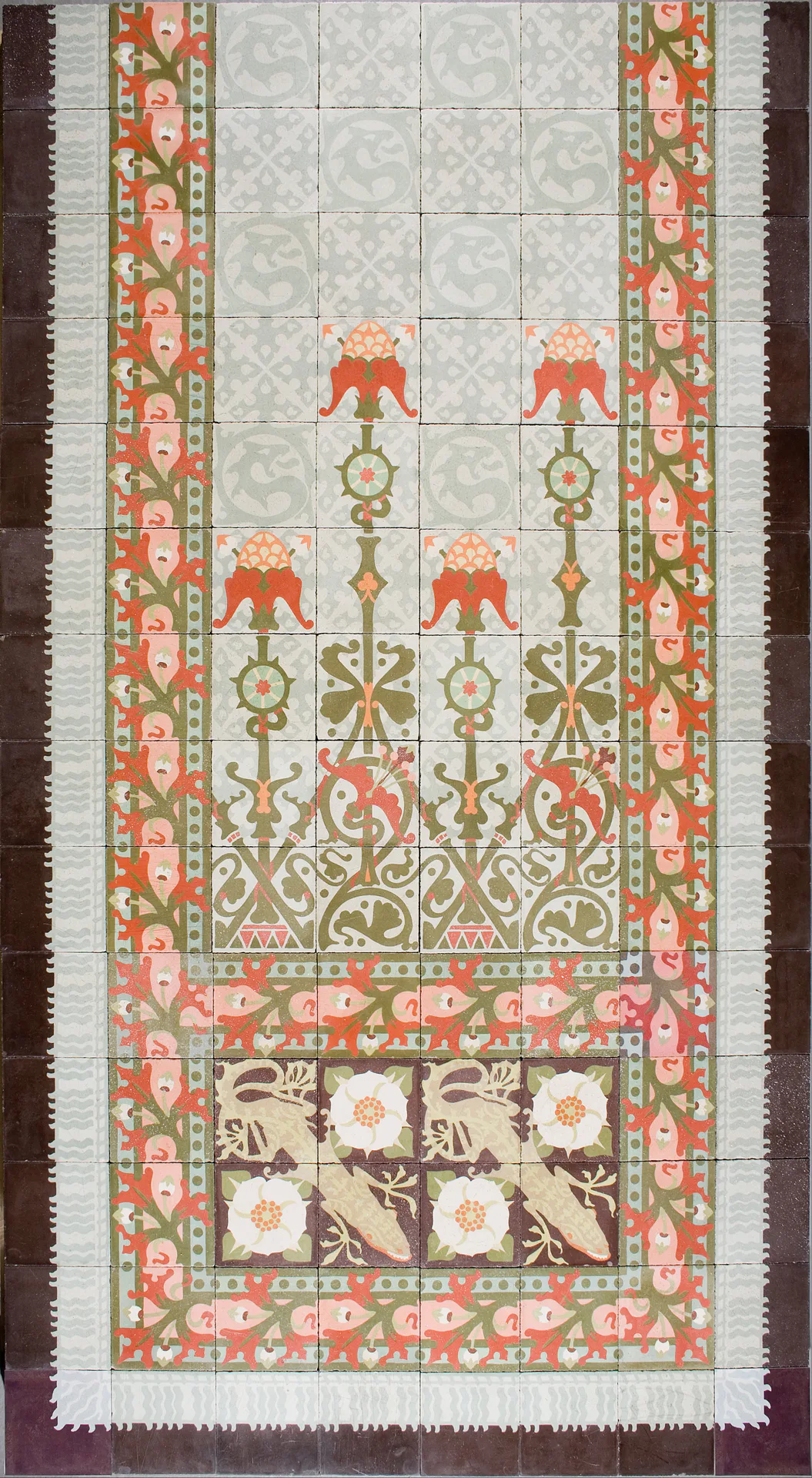
The agency's visual proposition starts with the product: hydraulic mosaics, their patterns and combinations, completed applications and the craft process. The intended audiences include individual buyers alongside architecture, interiors and decoration professionals. The commercial objective is to connect that inspiration with a project enquiry, giving a potential customer reasons to move from looking at an image to choosing material for a particular space.
Demosaica's currently published offer makes that route tangible. A catalogue of more than 500 hydraulic-tile models leads into formats, colours, examples and an online floor simulator. The website then directs visitors towards quotation requests and its commercial team. Different minimum quantities, production routes and order terms shape the conversation after the initial interest, providing a concrete setting for the lead-generation strategy described by BTODigital.
A visual campaign connected to a project enquiry
In the agency's case study , the challenge was to communicate artisanal value digitally and introduce the mosaics to new audiences and projects. BTODigital says it showed designs, combinations, real applications and the production process. Its account connects those creative materials with website work and advertising directed at qualified traffic interested in interior design.
The two published counters concern different parts of that activity. More than 6.5 million refers to social-media views, while more than 2,000 refers to leads generated. The agency presents them as results of its work with the brand. For the marketing story, the relevant connection is the route it describes between content, the website and commercial contacts, rather than treating a view as the same action as a project request.
That route suits a product with many possible configurations. A person can be attracted by one photographed combination while needing a different format, colour or quantity. Demosaica's own website gives those choices a destination: model collections, a palette, a simulator and ways to ask for a quotation. These are current observations of the manufacturer's offer, explaining the kind of sales process into which digital interest can enter.
The catalogue gives inspiration several directions
The hydraulic-tile page says the collection contains more than 500 models. It separates square tiles, borders, hexagonal tiles, skirting and special formats. The catalogue therefore offers several ways to develop the initial visual idea, from choosing a patterned floor to considering the surrounding border and finish.
The same page sends visitors towards stock, the floor simulator, a gallery and the colour palette. Those routes address different stages of choice. Photographs show a tile in an installed setting; a palette offers the manufacturer's available colours; stock provides another buying route from a personalised order. The catalogue connects a visual product with decisions that become specific enough for a commercial conversation.
The applications named on the product page include kitchens, showers, patios and stairs. The homepage's completed-project section brings hydraulic tiles together with zellige, terracotta, terrazzo and hand-painted tiles in customers' spaces. The gallery consequently provides a way to see materials in an architectural setting, while the model catalogue isolates the individual design. That is a specific bridge between the installed applications highlighted in the agency's creative strategy and the choices offered by the manufacturer's website.
Demosaica also describes the material's composition and manufacturing process. Its hydraulic tiles use cement, marble powder and pigments, are compressed in a hydraulic press and cure without firing. This is the physical process behind the artisanal imagery in BTODigital's account. The manufacturing story gives the content identifiable subject matter, beyond photographing a finished decorative surface.
The manufacturer says handmade production can produce variations in tone, colour and finish. It publishes information about sealing, cleaning and installation alongside the catalogue. In the acquisition journey, those materials answer questions that arise after someone has found an attractive design. An architecture or interiors project needs to understand the material as well as picture it in a room.
A simulator changes a repeated pattern into a personal choice
The hydraulic-floor simulator publishes a three-stage sequence. First, the visitor selects a tile format and model. Second, an editor offers a colour choice for the selected design, instructing the user to click the area to colour. Third, the floor fills as the tile is coloured, with an option to inspect the result in a 3D view.
Its model choices include traditional, contemporary, geometric, Victorian, floral, Mudéjar and plain designs. Borders have their own selection, while skirting asks for a colour. This gives the visual vocabulary of the campaign a more detailed expression. The visitor is working with a pattern and its repetition across a surface, including elements surrounding the main tile.
The interface also displays controls to save a tile, save a floor, clear the design, see room settings and request a quotation. The published workflow brings the sales request beside the design exercise. Instead of ending with a generic photograph, the route lets a person explore a specific combination before approaching the commercial team. The website's instructions describe those functions; the page is not presented here as a newly launched tool or a tested purchase.
Demosaica's homepage links both the hydraulic-tile simulator and a separate zellige simulator. The distinction reflects its wider handmade-materials offer. Its main product families include hydraulic tile, zellige and terracotta. The company presents online personalisation as one way to develop a desired design, while also inviting customers to consult the team when the tools do not resolve their requirements.
The hydraulic simulator also publishes language choices for Spanish, French, English, German and Italian. Alongside the quotation form's country and city fields, these controls show that the digital enquiry route has a language and a location dimension. The model can be explored through an interface offering those language options, while the commercial request identifies where the prospective project is located. Those are observable elements of the customer-facing offer, giving the design exercise a place in a geographically specified project conversation.
Designers add authorship to the selection
The simulator also offers named design collections. Demosaica's existing designer page identifies independent contributors including Maria Starling, Yela Álvarez Ariza, Blanca Gortari and Hanna Uggla. Their names appear among the simulator's model choices, placing authorship inside the product-selection interface rather than only in an editorial biography.
The manufacturer's older account describes Starling's art and design background and mosaic work in London. It identifies Álvarez Ariza with technical architecture, interiors and the use of handmade materials. These established associations add context to the collections visitors encounter. They are part of the brand's documented catalogue, rather than new appointments announced in the July agency case.
For a visual acquisition strategy, a named collection provides another point of recognition between content and product. A prospective buyer can move from a designer's style towards the models carrying that name, then examine colour and floor composition. The website combines that route with the wider style categories, serving people who arrive with a particular author in mind and those beginning with a general decorative preference.
The enquiry form starts to describe a real project
The product page contains a quotation form with required name, email, country and city fields. Telephone is optional, as are an area field in square metres and a message. A required privacy acceptance accompanies it. Those published fields begin to turn the visitor's interest into information for a project conversation: who is asking, where the enquiry comes from and, when supplied, how much surface is involved.
The area field is particularly connected to this product. A patterned floor, a border, a wall section and a larger commercial interior can require different quantities. Demosaica's catalogue distinguishes formats and offers contact for samples or other format requirements. The quotation request therefore sits alongside practical product choices, with the commercial team providing the route for questions beyond the displayed catalogue.
The homepage separately says quotations and orders should be sent to the company's email address and that its commercial team will reply. The published journey contains both an enquiry form and this direct contact route. It is a process organised around a quotation and agreed order, with the digital catalogue and simulator helping visitors develop the idea they want to discuss.
This explains the business meaning of a lead in the agency's account without converting it into a sale. The content can attract someone interested in architecture or decoration; the website can help them choose a model and colours; the request can introduce a particular location and area. BTODigital describes connecting content, website and campaigns, while the manufacturer's current pages show the decisions and contact points surrounding that connection.
Three quantity thresholds for different buying routes
Demosaica's FAQ lists minimum quantities for common formats. For hydraulic tile, it publishes 2.4 square metres for stock orders and 4.2 square metres for personalised orders. The product page separately describes the possibility of producing a customer's original pattern, requiring a specific dividing mould, with a minimum of 10 square metres and a separate cost for creating the model.
Published minimum order for three purchasing routes
Demosaica publishes 2.4 m² for stocked hydraulic tiles and 4.2 m² for personalisation in common formats. Producing an original customer-designed pattern with a specific mould requires at least 10 m², according to its product page.
m²
Tap or hover for details. All values are also available in the data table.
Collapse notes
The 2.4 and 4.2 m² minimums apply to the common hydraulic-tile formats specified by the brand. The 10 m² minimum is for an original pattern requiring its own mould. Other products and formats have their own conditions.
Explore the data table
| Category | Minimum area |
|---|---|
| Stock, common formats | 2.4 m² |
| Personalised, common formats | 4.2 m² |
| Original pattern with new mould | 10.0 m² |
These thresholds distinguish different kinds of project. The stock route begins with an existing available product; ordinary personalisation concerns the manufacturer's configurable offer; an original customer-designed pattern introduces its own tooling requirement. The 10-square-metre condition belongs to that last option, rather than replacing every minimum in the catalogue. Format and product type remain part of the quotation.
The homepage also gives different minima for zellige formats, reinforcing why an enquiry about surface and material matters. For standard 10-by-10 and 5-by-15 zellige, it lists one square metre from stock and four for personalisation. Zellige plates have a one-square-metre minimum in either route. The hydraulic-tile comparison therefore belongs to one product family within a broader configurable offer.
Demosaica recommends ordering an additional 5% to 10% above the required quantity. It also asks customers to confirm quantities and designs before a personalised order enters production because changes become difficult afterwards. These published conditions make product information part of commercial qualification: the visitor is specifying a material for a measured space, with choices that need to be settled before manufacture.
Stock and personalisation have different commercial timing
The manufacturer's current FAQ says stocked models normally leave its warehouse within 24 to 48 hours. Delivery then depends on the destination. For personalised orders, it publishes an approximate seven-to-eight-week delivery period. Dispatch from stock and delivery of a made-to-order product describe different milestones, providing two distinct timing questions for a customer planning a space.
The company also offers customer collection or collection arranged through a transport company chosen by the buyer, at its warehouse in San José de la Rinconada, Seville. That option sits beside destination-dependent delivery in the published service. A project enquiry can therefore concern how the material will be obtained as well as which pattern will be produced.
The sales conditions specify a payment of 50% of the quotation when placing an order, with the remainder at collection or before shipment. Stock orders require full payment before collection or dispatch. They also set a three-day point after acceptance of a quotation beyond which a personalised order cannot be revoked. These are the supplier's published terms for agreeing the order, rather than an observed online checkout transaction.
The distinction between a customised and stocked purchase also changes what the commercial conversation needs to establish. Stock relates to an existing product and its departure from the warehouse. Personalisation adds decisions about design, quantity and production. The website publishes those branches before a buyer speaks to the team, alongside its recommendation to settle choices before production begins.
Craft content has a job after the first view
The product information continues into the use of the material. Demosaica explains that cement tiles are porous and require a protective sealing treatment, and recommends neutral soap and water for cleaning. It also discusses colour variation and the care needed with the pigment surface. These are examples of product questions that can arise between visual discovery and agreeing a specification.
That content gives the campaign's craft positioning a practical continuation. BTODigital describes showing real applications, combinations and the handmade process. The manufacturer's pages connect those subjects with format choice, the available palette, personalisation and preparation for an order. The same product can supply an attractive image, a configuration exercise and a detailed project enquiry, with each addressing a different question from the prospective customer.
The case is consequently about linking a visual category with a quotation-led sales process. Its reported views describe the scale communicated for social content; its reported leads describe commercial contacts. The current customer journey shows how a brand selling patterned handmade material can give those contacts a more specific starting point: a model, colours, surface, destination and a choice between stock and production.
Who's who and how to read the figures
Demosaica is the brand of Suelos Hidráulicos Demosaica S.L., identified on its own website with a Seville address and Spanish tax identity. Its legal notice records registration in Seville's commercial register. BTODigital is the agency publishing the July case; Bto Consultora Digital S.L. is its Spanish legal company, registered in Toledo. The hydraulic-floor simulator is linked from Demosaica's own website.
Hydraulic tile refers here to handmade cement tile compacted in a hydraulic press. A pattern is the design that repeats across the installed surface; a border and skirting are separate catalogue elements. Creating an original pattern with a specific mould differs from choosing colours within the existing product offer. The website states that its available colours follow its own palette.
Views, leads and square metres measure different things. The agency's two results are published with plus signs, indicating more than the displayed amounts; they are not a view-to-sale conversion rate. The area figures are minimum order conditions for the stated routes, while the time figures concern stock dispatch or personalised delivery. Those distinctions place the numbers within the actual sales process described by the sources.
In this article

Marian Vasile
Marian Vasile is a MarTech and growth professional. His work spans product marketing, SEO, paid advertising and deep online tracking, including behavioral analytics and attribution.