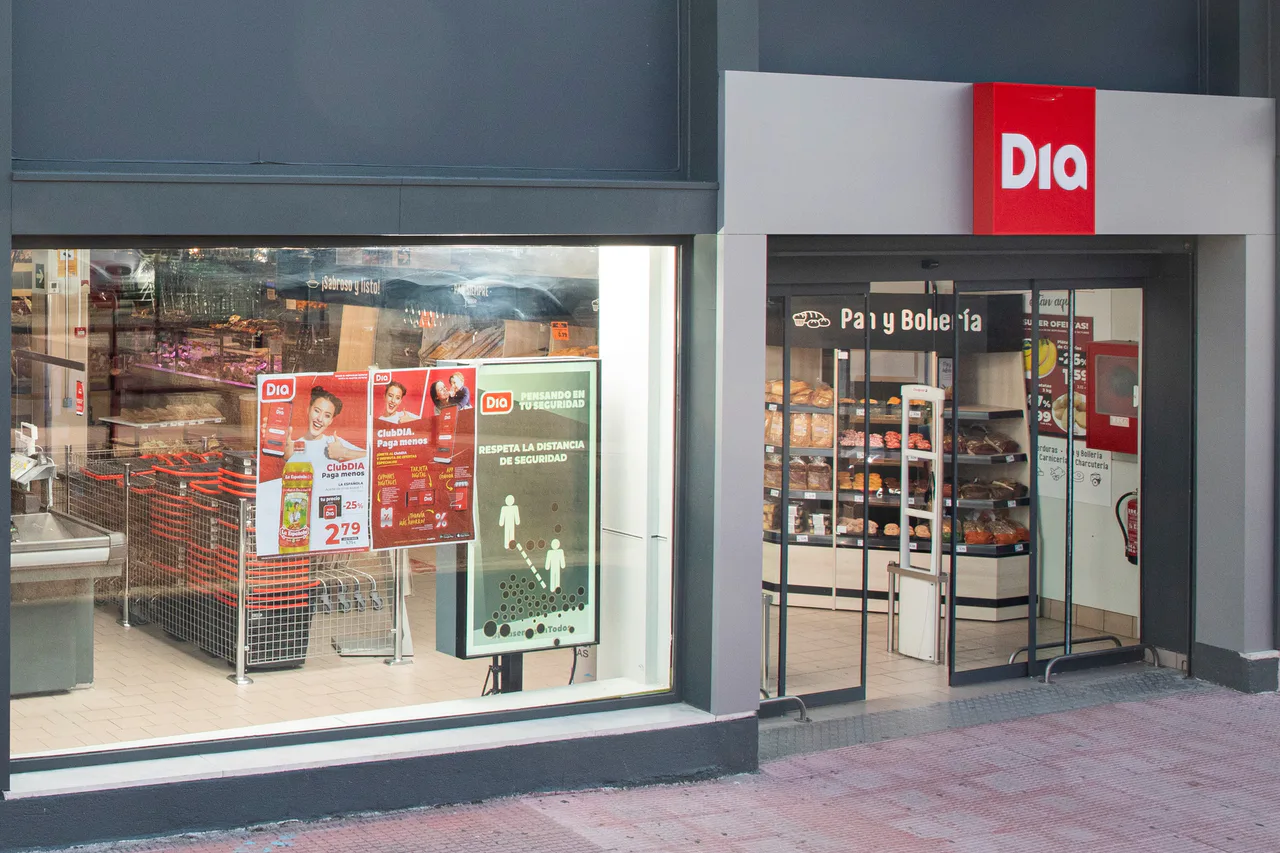
WiZink has connected a credit card to Club Dia so purchases generate funds customers can spend at the supermarket. The partnership combines banking acquisition and a return to the retailer through an existing membership identity.
MaX Dia currently returns 3% of purchases at Dia and Dia.es, capped at €5 a month, and 1% of purchases at other retailers, capped at €3 monthly. The money goes into Dia's loyalty wallet. The incentive therefore has a specific commercial destination: another purchase within the chain, even when some of the reward was earned through spending elsewhere.
The agreement appeared in a Taurus Corporate article dated September 30 and was reported by Cinco Días on October 1. The latter placed commercialisation during the summer; Taurus referred to the preceding few days. WiZink's current offer makes it possible to follow the complete journey, from membership identification and application through mobile activation to the monthly reward credit. Those details explain how the partnership reported at the end of September works in practice.
An existing loyalty base takes on another role
The starting point is an established retail relationship. Cinco Días put the number of customers with a Dia loyalty card at close to six million at the end of 2025 and reported that around 56% of gross sales came from club customers. It also cited the objective of adding another million members by 2030. These figures describe the supermarket programme's scale and commercial importance before the new financial card.
For WiZink, that community provides a familiar setting in which to introduce a product. The proposition is expressed through a benefit tied to a routine purchase: money to spend at the supermarket. Rather than beginning exclusively with the bank's brand, the journey begins with the relationship a customer already has with Dia. The contract requires applicants to have completed their club registration and maintain their membership when applying for credit.
That requirement also defines what acquisition means here. The bank receives a credit application from an identified retail community; the supermarket adds another way for its members to generate wallet funds. Taurus placed the agreement within a strategy under which WiZink wants partnerships to represent more than 85% of its credit-card business originations. That figure describes the bank's distribution ambition, while the six-million figure describes the existing club being approached with MaX Dia.
From a membership number to an activated card
Club membership is checked within the commercial journey: applicants must enter their member number. WiZink's public FAQ also specifies Spanish residency and an age above 25. Applicants do not need an existing relationship with WiZink or a current account there. Payment can be collected from their usual bank account, removing a change of bank from the requirements attached to the incentive.
The application then goes through WiZink's checks. Its contract allows acceptance or rejection following a credit assessment and says the limit is assigned according to each applicant's creditworthiness. The commercial offer advertises a credit line of up to €6,000. An approval email communicates the decision and the granted limit, and reminds the customer of the following steps: download the app, register and activate the card. Club membership and credit approval are separate stages.
Electronic signing also has an identified provider. The contract provides for Lleidanetworks Serveis Telemátics to act as a trusted third party: it sends an operation code to the applicant's mobile by SMS, and the applicant enters that code to sign. WiZink subsequently delivers the signed document by email. This part of the journey connects the commercial message with a document accepted by an identified person before routine card management begins in the app. The membership number links the loyalty programme; signing and the credit-limit communication complete the banking relationship.
The documentation describes automated decisions used to assess creditworthiness, prevent money laundering and detect fraud in applications. It also provides for applicants who disagree with an assessment to submit information and request a manual review. That phase introduces a financial-product selection process between interest in the reward and a card ready for payment. The incentive can attract an application, while the bank retains identity and risk checks to decide whether to grant credit and determine its limit. These are specific stages of the acquisition process described by the issuer.
Following approval, the card is initially issued virtually. Customers activate it in WiZink's app and can add it to a mobile wallet for payment. The app also supports card management, notifications and payment confirmation. The contract provides for a physical card to be requested after the virtual one is activated; the FAQ says it can be ordered by telephone. Digital acquisition structures the beginning of the relationship while retaining a physical option.
The contract makes another distinction: WiZink opens a card account to record transactions, separate from the current account at another bank used for payment collection. Avoiding a new current account removes a commercial step, while issuance and activation still establish a credit relationship with WiZink. Distinguishing those two accounts describes the product more accurately than presenting the arrangement simply as a supermarket discount.
Two places to earn, one destination for the reward
The reward has two rates. Purchases paid for with MaX Dia at the supermarket and on Dia.es generate the higher rate, 3%, up to €5 monthly. Purchases at other retailers generate 1%, capped at €3. The distinction gives the same product two functions: encouraging use of the card within Dia and keeping it relevant to payments elsewhere. Both amounts ultimately attach to the retailer's loyalty programme.
The advertised maximum is €8 a month and €96 annually, subject to Spanish personal income tax, IRPF. These are offer limits rather than a uniform return on all spending: the amount depends on qualifying purchases and each category's cap. The chart therefore separates €5 and €3 instead of showing 3% as an unlimited rate across all card activity. The reward's structure matters as much as the percentage used to introduce the proposition.
Maximum monthly reward by purchase category
The current offer separates monthly caps for Dia and Dia.es purchases and purchases at other retailers. These amounts are advertised reward maxima rather than average customer savings.
euros per month
Tap or hover for details. All values are also available in the data table.
Collapse notes
Limits in the issuer offer read on 19 October 2026: 3% at Dia and Dia.es capped at €5/month; 1% at other retailers capped at €3/month. Combined maximum €8/month and €96/year, subject to IRPF and programme conditions. These are commercial caps, not observed usage results or a calculation of net financing cost.
Explore the data table
| Category | Maximum monthly reward |
|---|---|
| Dia and Dia.es | 5 euros per month |
| Other retailers | 3 euros per month |
The contribution from other retailers gives the programme a particular extension. Members can earn part of their wallet funds through payments unrelated to grocery shopping, but receive a benefit that brings those funds back into Dia's commercial circuit. The card contract refers customers to the supermarket's published programme rules for reward conditions. Its commercial promise connects acceptance of a payment instrument to a specific destination for the resulting benefit.
The statement links payment activity with loyalty
Reward credit follows the card's monthly cycle. According to the bank's FAQ, money reaches the Club Dia wallet within a maximum of seven days after the monthly statement is issued. The reference point is statement issuance, rather than each individual purchase. Between paying and having the benefit available, there is a settlement process customers can follow through their card documentation and then through the supermarket's loyalty environment.
The statement shows spending, the payment date and the amount corresponding to the chosen repayment method. It also distinguishes rewards generated at Dia from those earned at other retailers and includes the accumulated annual total. The bank's monthly communication therefore explains the retail benefit by showing where the funds subsequently credited at Dia originate. The contract says the billing period does not necessarily coincide with a calendar month, a relevant detail when interpreting dates.
WiZink keeps the previous twelve months of statements in the private area of its app and website. The banking history allows customers to return to the document behind the reward credit, while Dia shows the wallet funds available to spend. The records serve different purposes: one explains transactions, repayment and rewards generated; the other shows the benefit currently available for shopping. For a product introduced digitally, being able to retrieve that information extends service beyond the approval message and the first reward credit, with a separate record for each monthly statement.
Two different wallets operate alongside each other. The one on the phone allows the virtual card to be used for payment; Mi Monedero, in Dia's app or website, receives the programme funds. Customers move from WiZink's issuance and card-management environment to the place where they can view and spend the supermarket reward. Continuity depends on both parties recognising the same member and assigning the benefit from their purchases correctly.
The next visit has a time window
The availability of the reward includes another loyalty decision: its validity. The FAQ specifies at least two months to spend the money received. If the existing wallet has less than one month remaining when the credit arrives, an additional two months are automatically added when that expiry date is reached. Unused funds expire after the extension. The effective duration therefore depends on the expiry date already attached to the wallet when the reward is received.
This timetable gives substance to the relationship after registration. Approval and the first payment begin the process; the statement, the reward credit and checking the balance provide subsequent contact points. For the supermarket, the reward becomes a sum available for another purchase within a period. For the bank, a monthly summary makes use of its card visible. The same commercial arrangement generates communications with different functions and timing.
The programme also accommodates people who use only a physical Club Dia membership card. WiZink says their benefit is delivered through a printed wallet coupon, with the balance visible on their shopping receipt. That distinguishes loyalty identity from the payment medium. Holding a physical supermarket membership card does not mean the whole relationship must move into Dia's app, nor should it be confused with the optional physical financial card.
Dia.es and physical stores share an incentive
Explicit inclusion of Dia.es puts ecommerce in the same reward category as physical stores. The percentage and cap are presented jointly for purchases at Dia and on its website. For a brand operating across both channels, that rule gives members a common commercial explanation: the reward is tied to shopping with the chain using its associated payment instrument, while the loyalty programme has its own digital route for checking wallet funds.
What happens after registration distinguishes this arrangement from a one-off acquisition coupon. MaX Dia connects a club identity, a credit line and periodic reward settlement. The contract makes continued programme membership a condition and says losing that status excludes the cardholder from programme benefits associated with the card. The connection with Dia continues through the product's life, beyond the initial application attracted by the offer.
Rewards and financing follow different accounts
WiZink lists zero issuance and maintenance fees in both its offer and the contract's first page. The document separates full monthly repayment, which does not generate interest, from deferred repayment of a fixed amount. The latter carries a 21.58% nominal annual interest rate, TIN, and a 23.85% annual percentage rate, TAE. Customers explicitly choose a repayment method when applying for or activating the card and can change it with the contractual notice. The retail reward accompanies an instrument with different repayment options.
Plan Aplaza is an additional service with its own conditions. In the offer reviewed, WiZink illustrates a €350 purchase spread over six months with a €2.50 fee and €352.50 total owed; the example's TAE is 2.49%, although its TIN is 0%. That example is separate from general revolving pricing. The distinction explains how a campaign can communicate purchase rewards alongside different financing costs according to the option contracted.
Club Dia funds and card debt take separate routes. The reward goes to the supermarket wallet; credit repayment is collected from the designated bank account and depends on the chosen method. The €96 advertised annual maximum is not a measure of the net cost of using credit. In this partnership, explaining both movements is part of how the relationship with members is presented and maintained, extending beyond the final contractual step of an application.
The data needed by a co-branded programme
Integration starts with a member number, but the contract describes further operations required to maintain it. WiZink provides for processing data to perform the contract and manage reward programmes, including discounts, updates and sending programme information to the partner of a co-branded card. It also provides for sharing cardholder data to manage loyalty. That documented connection links payment activity with a benefit attributed to the relevant member.
The document separates that administration from other commercial communications. For similar WiZink products it provides for segmentation using internal sources; for dissimilar offers, certain partner products or a commercial profile using external sources, it specifies consent-based circumstances. When customers hold several products and express different preferences, the bank says it will apply the most restrictive preference to its marketing communications. Shared programme identification therefore has specific functions rather than being an unrestricted permission for every commercial use of data.
There is also a documented intervention in the acquisition funnel: the contract provides for contacting an applicant to help complete an unfinished product application. Contractual communications are preferably electronic; when email delivery fails, the document provides for the private account area with an SMS notification and successive alternatives. The proposition consequently combines the supermarket incentive with a banking process of application, approval, activation and follow-up, each carrying its own information.
Who's who and how to read the figures
WiZink Bank, S.A.U. issues the card, assesses applications, grants limits and maintains the transaction account. It is registered in Madrid's commercial register and under number 0229 in the Bank of Spain's register of institutions. The contract identifies Dia Retail España, S.A.U. as the Club Dia operator. MaX Dia is the financial product associated with that programme; Aplazame is another brand of the same bank, whose documentation corroborates its corporate identity.
Membership totals describe the existing retail community; the 3% and 1% rates describe purchase rewards; the €5 and €3 amounts cap the monthly benefit in each category. TIN and TAE describe the cost of a credit option rather than loyalty performance. The partnership's commercial mechanism becomes clear by following those components in sequence: an identified member applies for a payment instrument, purchases generate a reward, and the resulting funds become available to spend again at Dia.
In this article

Marian Vasile
Marian Vasile is a MarTech and growth professional. His work spans product marketing, SEO, paid advertising and deep online tracking, including behavioral analytics and attribution.