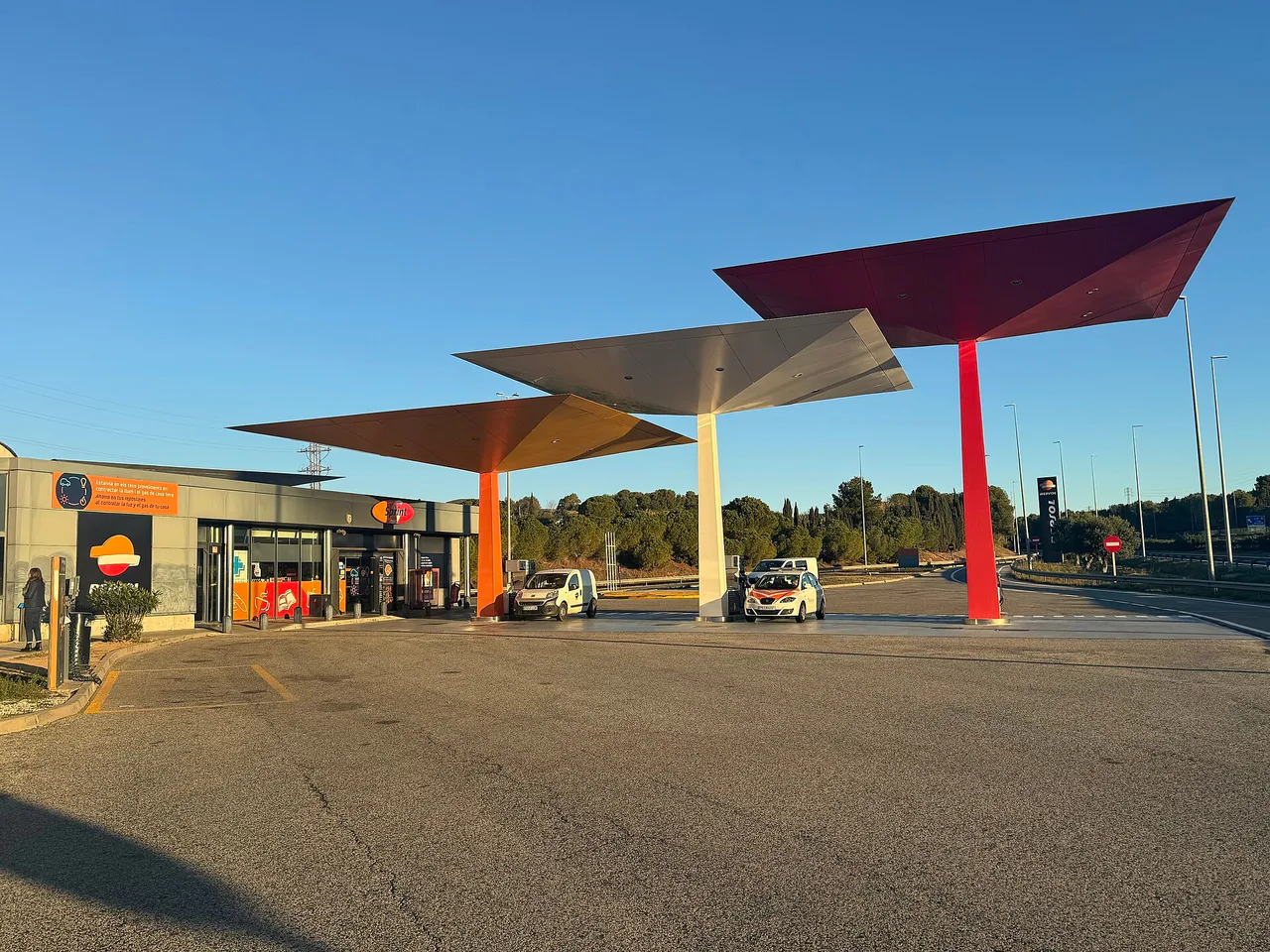
Repsol extended a promotion linking fuel savings to payment through Waylet to every day of September 2026. Its August 27 announcement put the maximum private-customer benefit at forty-five cents per litre, depending on contracted energy services and the associated card. The campaign ended on September 30. Its relevance as a growth case lies in how an everyday operation connects digital payment, recognition and a possible continuing relationship with the customer. Original campaign, August 2026
The application creates a distinction from an anonymous discount at a pump. People use a recognisable service and receive a benefit associated with that relationship. The announcement does not publish September outcomes or allow incremental sales to be calculated. It does establish a particular mechanism for analysis: the promotion encourages a payment method that can also become a recurring point of contact, extending beyond an isolated visit to a service station.
| Reported measure | Value | Period / scope |
|---|---|---|
| Digital customers | 11.6 million | End of first half 2026; mainly Waylet |
| Digital-customer growth | 15% year on year | Reported population; not monthly active users |
| Waylet users | More than 10 million | August 27 campaign statement; no activity breakdown |
The figures describe scale within different boundaries
In its first-half 2026 results, Repsol reported 11.6 million digital customers, 15% more than a year earlier, mainly through Waylet. The later campaign statement described the application as having more than ten million users. These are different formulations at different moments. The whole digital-customer base should not automatically be identified with the application's monthly active users or participants in September's promotion. Retaining the reporting perimeter prevents an apparently simple comparison from becoming a misleading growth claim. Repsol half-year results
The distinction matters when assessing reach. A registration base can include people who used a service at some point, whereas an activity measure requires a defined action and time window. The documentation does not provide that distribution here. Neither the base's size nor its growth establishes how many people saw the offer, paid through it or returned afterwards. Scale makes the channel relevant, but it does not establish campaign effectiveness or the proportion of users whose behaviour changed.
The company also reported fifty million euros in customer-support discounts during two months within the context of its half-year results. The amount relates to earlier measures; it is not the published September budget. Preserving chronology prevents dividing it by a later user base to invent an acquisition cost. A commercial account would need to identify the campaign, period, beneficiaries and additional behaviour more precisely, rather than treating all discounts as one intervention with a single audience.
The two user figures establish an opportunity for communication at scale, but discount spending belongs to a different account and period. September's economic question has a narrower scope: which additional payments and relationships its specific benefit produced. Using 11.6 million as the denominator for the fifty million euros would produce a striking average, but mix digital customers, earlier measures and a later campaign whose participation has not been disclosed.
The calendar expanded opportunities to use the offer
The previous promotion concentrated on summer weekends. Extending it to every day of the month changed the occasions on which people could encounter the advantage. The announcement connected its continuation with the return to routine. That change might affect who receives the offer and when it is used, although the source does not compare weekend behaviour with habitual journeys or report whether one customer group responded more strongly than another.
From a marketing perspective, the calendar defines part of the actual audience. A benefit available at limited times may attract a different consumption pattern from one accompanying a frequent need. Examining the distinction would require separating days, territories and user types while retaining commercial conditions and availability. Comparing only two periods' total operations when their durations differ would confuse additional exposure time with changed behaviour. The campaign window therefore belongs inside the interpretation, rather than appearing as an incidental date.
The campaign covered more than 3,300 stations in Spain, according to the statement. That coverage places the digital mechanism within a substantial physical network. The point of contact does not begin and end on a screen: choosing a station, obtaining fuel and resolving payment all belong to the experience. An application can support the relationship without removing the importance of proximity, displayed price, service or the convenience of the particular site.
The product page adds more than 4,000 associated merchants where people can pay through Waylet and accumulate credit. This is a different network from the more than 3,300 stations covered by the campaign. The counts should not be added as if describing one set of promotional locations. Commercially, the distinction expands the occasions on which the application can be useful: refuelling is an entry into the relationship, but does not exhaust the places where it can continue.
Accumulating credit and discounting an invoice are different mechanisms
For private customers, the campaign communication describes accumulating savings through Waylet. The product page explains credit as a benefit usable in later payments. That structure adds a temporal connection to the relationship: one operation's benefit can influence consideration of a subsequent operation. It is a possible retention mechanism, rather than a published return rate. Establishing its effect would require consistent definitions for credit generation, use and continuing activity, with a clear distinction between receiving a balance and deciding to return. Waylet product description
People also need to understand when they obtain the benefit and where they can use it. A prominently displayed maximum can be attractive without describing every eligible situation. September's communication made the amount conditional on services and card advantages. The experience needs to distinguish the promotional headline from the benefit applicable to a particular relationship. The source does not publish a comprehension assessment or the volume of questions generated by that distinction.
For professional customers, the statement described a different mechanism: at least ten cents per litre through Solred, applied automatically to the invoice without additional services. The programmes should not be treated as the same reward. They differ in how the benefit is received, the applicable conditions and the commercial relationship. Measurement combining their operations can conceal important differences between private use, professional activity and a need to control operating expenses.
Duration also forms part of the communicated price. The general Waylet page, updated in August, advertises up to twenty cents per litre, while September's statement presents a promotional maximum of forty-five under its conditions. These are offers with different contexts; the headline difference does not constitute a guaranteed increase for every user. After September ends, retaining the campaign maximum as though it remained current would misstate the benefit and the expectations of later readers.
Waylet does not restrict its proposition to awarding credit. The page describes paying for refuelling at the till or through the application and buying Way&Go products without visiting the till. These functions connect the benefit with a specific service task: completing the visit through another payment route. Someone can choose the application for convenience as well as the incentive. Increased digital payments therefore cannot automatically separate price attraction from a perceived improvement in the journey.
Mobile payment use already has a context preceding the promotion. In Statista Consumer Insights data for Spain, 26% of respondents had used it at points of sale in the window ending in the fourth quarter of 2024; the figure is 24% in the second quarter of 2026. These are people within rolling twelve-month windows, not shares of transactions. Waylet competes for a task other payment methods also perform. Recording an app payment therefore does not establish that the incentive created an additional visit to the station.
Mobile payment identifies users, not additional transactions
Spain; reported POS use during the twelve months preceding each cut-off.
Tap or hover for details. All values are also available in the data table.
Collapse notes
Statista Consumer Insights, residential online population aged 18–64, online survey with multiple answers. The source reports 12,000+ participants per country without an exact base for each cut-off. Overlapping rolling windows; smartphones and smartwatches. Not Waylet users, shares of payments, monetary volume or independent quarterly observations.
Explore the data table
| Category | Respondents |
|---|---|
| Q4 2024 | 26% |
| Q1 2025 | 25% |
| Q2 2025 | 24% |
| Q3 2025 | 24% |
| Q4 2025 | 23% |
| Q1 2026 | 24% |
| Q2 2026 | 24% |
The product also includes finding and booking charging points, planning electric-vehicle routes and an electric-mobility subscription. These are announced application capabilities, rather than September adoption outcomes. They introduce journeys different from refuelling: locating availability or resolving payment for charging. If the digital relationship continues through those tasks, counting only fuel litres would omit part of its usefulness. If only application opens increase, the additional use would not be established either.
Transactional payment information may establish a completed operation more securely than an advertisement visit. It does not establish what caused the operation. If someone had already decided to buy fuel at the station, the application might change how they pay without changing where they purchase. Commercial analysis needs to distinguish that channel change from a transaction that would not have happened without the benefit. The distinction remains important even when every recorded payment is accurate.
Credit for future payments and a professional invoice generate different expectations after the transaction. A private customer needs to recognise the benefit retained for another occasion; a professional receives a reduction automatically applied to the Solred invoice. The first mechanism introduces a potential reason to return, while the second resolves a cost within the existing professional relationship. Combining them into one repeat-use figure would prevent identification of the benefit accompanying each payment and the continuity it produces.
Multiple energy services create an additional decision
The private-customer maximum depended partly on contracted energy services. That condition connects a mobility task with the provider's broader proposition. The design creates an opportunity to consider another service, but the announcement provides no cross-service conversion outcome attributable to the campaign. Someone consulting information about another energy service may be comparing prices, resolving a need or seeking to understand a benefit. Opening the information alone does not establish an intention to contract.
The Waylet product page presents greater benefits when more energy services are contracted. This describes the commercial proposition. Examining it requires retaining the total cost and conditions of the connected services rather than treating one visible saving as an explanation of the whole decision. The article does not recommend switching providers. It examines how an advantage encountered during a frequent activity can introduce another offer into a customer's consideration without demonstrating whether that additional offer is appropriate for them.
Separating convenience from contracting also protects data interpretation. A benefit enquiry can indicate an attempt to understand an existing arrangement, rather than readiness to contract a new service. Treating both behaviours as the same sales signal would produce weak segmentation. Public evidence does not explain how Repsol classifies those interactions. That remains a question for journey evaluation, rather than a capability or practice that this article can fill in from a plausible technical model.
The presence of merchants and mobility tasks explains how Waylet can retain usefulness beyond a fuel promotion. Users could return for another task available in the product even when September's maximum no longer applies. The commercial test is to distinguish that usefulness from outstanding credit. A second transaction driven solely by a previous reward has a different meaning from recurring use chosen because the service resolves an everyday need more effectively.
What should be observed after the promotion
The September 30 close provides a specific boundary for examining that behaviour. Activity during the promotion and subsequent activity do not respond to the same advertised price. Comparing them requires retaining the conditions applicable to each person and the credit carried into the next period. This would distinguish use depending on the enhanced incentive, consumption of an already generated benefit and continuity of the service. Without that separation, October's rise or fall would mix different commercial motivations.
The subsequent window is particularly important in a credit programme. If all activity occurs while the stronger advantage is available, the channel may have served primarily to obtain a temporary offer. If activity continues, its connection with habit, convenience, available credit or an ordinary purchasing need still needs to be understood. Retaining the temporal sequence helps distinguish those hypotheses without declaring loyalty every time a second operation appears or assuming that credit use measures an enduring preference.
Continuity requires more than a promotional maximum. In Qualtrics’ third-quarter 2023 survey, 59% of Spanish consumers selected good products or services and 48% low prices among two criteria for choosing a company; support received 47% and an easy website or app 28%. This is a stated preference preceding the campaign. The distinction identifies what October’s assessment would need to establish: whether service and convenience keep the transaction useful after the enhanced incentive ends, separately from spending outstanding credit.
Price, service and digital ease are different reasons
Spain, third quarter of 2023; two company-choice criteria selected from five.
Tap or hover for details. All values are also available in the data table.
Collapse notes
Qualtrics XM Institute: 1,200 consumers aged 18+, online panel with age, gender and income quotas. Two answers selected. Values confirmed on page 27 of the original report. Hypothetical choice preferences, not observed retention, causality or Repsol customers.
Explore the data table
| Category | Respondents |
|---|---|
| Good products or services | 59% |
| Low prices | 48% |
| Good customer support | 47% |
| Easy-to-use website or app | 28% |
| Contribution to society | 18% |
An economic comparison needs to consider margin and relevant costs, rather than only revenue associated with programme users. Incentives, support, operation and changes in product mix can affect contribution. The documentation does not publish a campaign account with that detail. Nor does it establish that every euro of benefit purchases a euro of additional growth. Attribution needs a defensible comparison with what would have happened without the promotion, using defined outcomes rather than a retrospectively convenient success measure.
The competitive setting can change at the same time. Price, availability and mobility needs can influence a visit independently of the incentive. A period comparison should document such changes and avoid choosing the window that looks most favourable after inspecting outcomes. This discipline matters when a promotion accompanies a recurring need: some transactions would have happened regardless, and total activity may exaggerate the incremental effect. A useful assessment preserves that alternative explanation even when the reported activity is commercially substantial.
The application also allows available stations to be consulted, according to its official description. That consultation addresses a need before payment: finding where to complete the task. Someone opening a map and someone using credit are not at the same stage of the relationship. For a network of thousands of stations, recognising the difference establishes whether the application helps select the destination of a visit or intervenes after that decision has already been made.
Connecting search and payment does not require assuming an internal automation platform unidentified by the sources. The public journey is sufficient to delimit two questions: whether the application helps find a convenient option and whether it completes the chosen transaction correctly. A benefit message is relevant when it clarifies the advantage of that specific transaction. Repeating a conditional maximum without considering the customer's energy-services profile can create an expectation that the actual price fails to meet.
Digital usage should also be distinguished from exclusively digital usage. Customers can pay through an application and need help at the station. Physical and digital relationships support each other when conditions are understandable. An assessment looking only at application openings would miss part of the service. Coverage across more than three thousand stations makes the connection between a communication's promise and the resolution of a real operation especially important, even when the payment itself is completed without difficulty.
What the Waylet case establishes
The campaign turns an everyday visit into an identified relationship through two specific decisions: linking the benefit to the payment method and, for private customers, creating usefulness that can continue into another transaction. Extending availability to every day adds access occasions, while energy contracts define part of the maximum benefit. The physical network, associated merchants and mobility services place that identity within real tasks; September's economic outcome remains unpublished.
The next decisive outcome would be continuity after September 30, separating additional spending, a change of payment method and use of previously earned credit. If Waylet retains profitable transactions after the enhanced maximum ends, the promotion will have contributed to a relationship extending beyond its pricing window. If activity depends solely on the incentive, it will have purchased a temporary occasion. That difference determines whether another promotion merits funding or whether the functions customers continue choosing deserve reinforcement.
In this article

Marian Vasile
Marian Vasile is a MarTech and growth professional. His work spans product marketing, SEO, paid advertising and deep online tracking, including behavioral analytics and attribution.