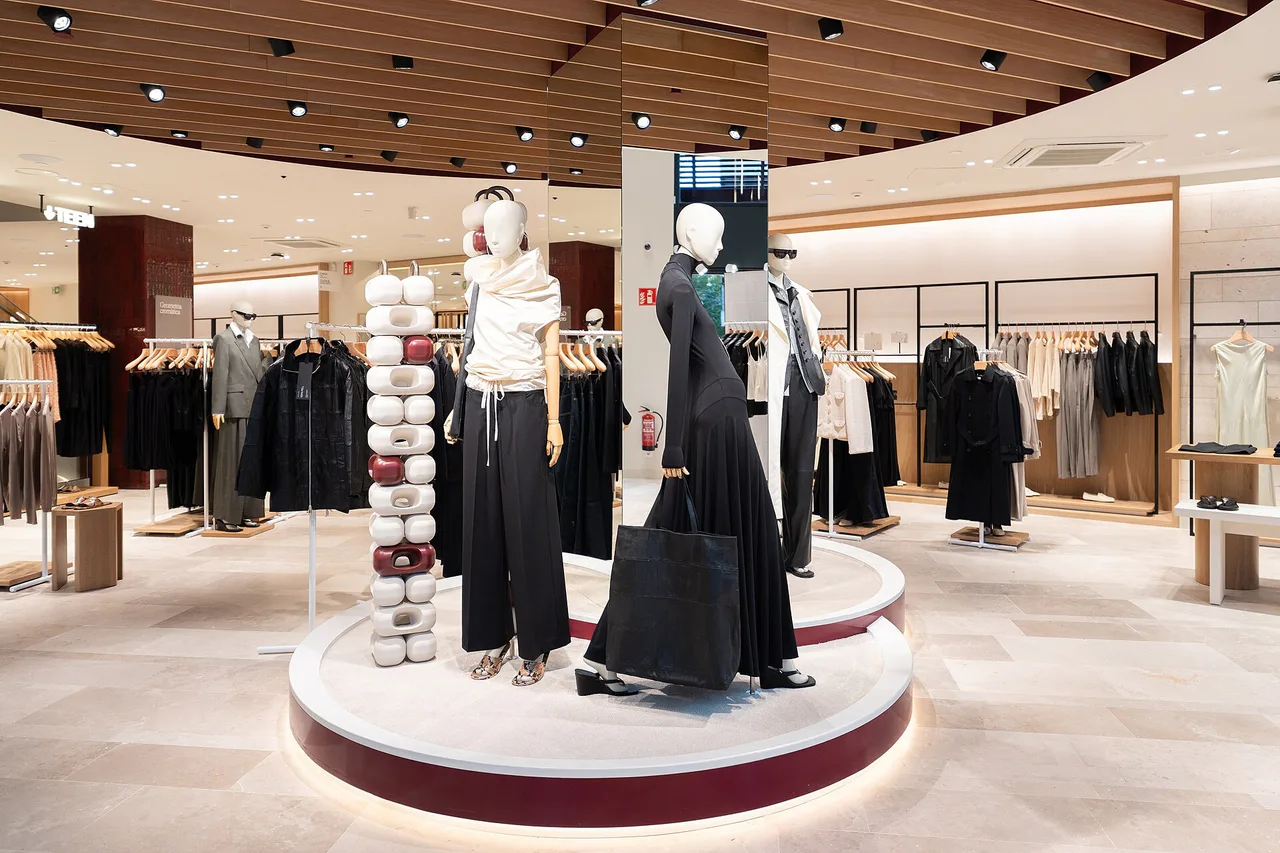
Mango grants points for a return made in a store, but waits until the return period ends before consolidating purchase points. That distinction, set out in the Spanish Style Club terms, reveals a more precise logic than rewarding spending alone: the programme distinguishes money ultimately retained from identified contact with the brand. A return removes merchandise from the original sale, but can bring the customer into a store and keep the relationship within Mango's owned system. Spanish Style Club conditions.
The detail matters following the Style Club expansion announced on September 16, 2026, into the United Kingdom, Ireland, Italy, Germany, Austria and Switzerland. Mango presents the programme as an evolution of its digital customer relationship. The Spanish rules allow a specific mechanism within that relationship to be examined, although they should not automatically be applied to the six new markets. The economic interest lies in how a programme connects online transactions, physical visits and opportunities to buy again. Expansion announcement.
The scale of the business makes that connection significant. In the first half of 2026, Mango reported revenue of €1,852 million, growth of 7.2%, and an online revenue share of 32%. The club therefore develops within a company where stores retain a central part in selling and digital commerce accounts for a substantial volume. Loyalty can connect both journeys; its contribution depends on that connection retaining profitable purchases, rather than merely accumulating registrations. First-half results.
A return also enters the commercial relationship
The Spanish terms, dated July 9, establish a reward of 50 points for certain identified returns in physical stores. The detailed wording limits accumulation to ten times per calendar month, while the summary table refers to thirty days. That drafting difference must remain visible when interpreting frequency. The reward itself is documented; an assumed reduction in return costs or an increase in sales resulting from it is not.
The rule introduces two different outcomes into the same transaction. Returned merchandise stops supporting the original sale, while the person remains connected to their account. For the customer, the visit receives recognition within the club. For the brand, it preserves continuity between a purchase, its resolution and a physical interaction. That continuity is the commercial mechanism observable in the rules; the document does not quantify how many rewarded returns subsequently produced another purchase.
Choosing the store as the rewarded location matters too. A return sent through another route does not constitute the same visit to a selling environment. The incentive distinguishes store contact, where a need concerning size, fit or product can be resolved. There is no need to attribute a particular recommendation system to Mango to understand the potential value: the person returns to an environment with a fresh buying opportunity, alongside the handling of the return.
The return route defines that opportunity. DHL’s 2026 report, reproduced by Statista, identifies a parcel shop or convenience store as the predominant route reported by 41% of shoppers surveyed in Spain; 33% use home collection and 25%, a parcel locker. The report asks which route shoppers predominantly use, although Statista presents it as a preference. A parcel shop is not equivalent to a Mango store: the club rewards a particular retail visit in a market that also returns goods through other routes.
Spanish returns use three distinct routes
Reported predominant route for returning goods bought online. Spain, December 2025 to February 2026.
Tap or hover for details. All values are also available in the data table.
Collapse notes
DHL: 1,000 shoppers per country; an online purchase within the previous three months, excluding groceries, tickets and flights. Reported route, not parcel volume or hypothetical preference. Total 99% due to rounding. A parcel shop does not identify a Mango store.
Explore the data table
| Category | Respondents |
|---|---|
| Parcel shop or convenience store | 41% |
| Home collection | 33% |
| Parcel locker | 25% |
The economic result depends on which of those functions predominates. If the visit resolves a problem correctly and maintains trust, it can protect a relationship that the failed order might have weakened. If it produces only contact and points without later purchases, it increases club activity without recovering the lost sale. Counting both situations as successful loyalty would produce too broad an interpretation of the same event.
The incentive does not turn returning merchandise into a source of cash. Points determine a participant's programme tier and cannot be redeemed for money or their equivalent value in kind. The 50 points should therefore not be presented as an extra €50 refund or as currency with an automatic exchange value. That distinction preserves the rule's meaning: it recognises an interaction within a system of access to benefits, rather than directly paying for returned merchandise.
A purchase counts when it survives the return
In Spain, identified purchases generate ten points per euro spent, with points pending for thirty days. They consolidate on the part of the purchase that has not been returned. This waiting period separates an initial spending decision from spending ultimately retained. Under the club's published logic, a large purchase sent back entirely should not provide the same tier progress as another whose merchandise the customer keeps.
The marketing technology significance of the delay lies in the event's state. Recording payment does not conclude the commercial journey: the order can change afterwards. For Style Club, purchase identity and return identity need continuity so that the balance reflects the final transaction. This analysis follows from the rules without claiming which technology supplier Mango uses. The functional requirement is recognisable even when the internal architecture is not public.
The delay also changes the meaning of an acquisition campaign. An advertisement can attract a high-value order and a new account while the programme still holds its points as pending. Evaluating that campaign only when checkout completes would favour a result that can unravel weeks later. In this case, club consolidation supplies a specific time boundary for distinguishing the initial sale from the retained purchase.
Clothing makes that boundary particularly relevant, without allowing the survey to estimate Mango’s cost. In Statista Consumer Insights, 27% of 1,806 Spanish respondents aged 18–64 reported returning clothing bought online in the preceding twelve months. Shoes accounted for 15% and accessories, 9%; 49% said they had returned nothing. These are shares of people, not order return rates. The distinction prevents a market statistic from becoming an estimate of the company’s lost margin and strengthens the case for evaluating campaigns after refunds.
Clothing stands out among returned categories
People reporting returns in each category after an online purchase in the preceding twelve months. Spain, survey fielded September 2024 to August 2025.
Tap or hover for details. All values are also available in the data table.
Collapse notes
Statista Consumer Insights, 1,806 respondents aged 18–64. Multiple answers. Selected categories, including the returned-nothing option. Incidence among people, not the share of orders returned or Mango’s results.
Explore the data table
| Category | Respondents |
|---|---|
| Clothing | 27% |
| Shoes | 15% |
| Accessories | 9% |
| Consumer electronics | 7% |
| Bags and luggage | 6% |
| Returned nothing | 49% |
The three Spanish tiers place Style Curator at 1,700 points and Style Icon at 5,000. If points came exclusively from eligible purchases that were kept, those thresholds would arithmetically correspond to €170 and €500. This is a conditional spending equivalence for reaching tiers, rather than the price of a benefit or a recommended consumption target. Since other actions also earn points, the actual spending required can differ.
An arithmetic comparison illustrates how much those actions can affect a tier. Ten rewards of 50 points would total 500 points, approximately 29.4% of the 1,700-point threshold. This follows from the rules, rather than representing observed behaviour or a recommendation to return purchases. It shows why a balance cannot be read as euros spent: those points could arise from recognised interactions, while the purchase points attached to returned merchandise do not consolidate as retained spending.
That equivalence helps interpret how the programme changes when it recognises more than purchasing. One person can approach a tier through store contacts and another through retained spending. Both may finish with a similar balance but with different economic relationships for Mango. The tier therefore summarises a score defined by rules; it does not necessarily equal margin, purchase frequency or the customer's future value.
The same distinction affects comparisons between tiers after a promotion. An action awarding points can move participants without producing additional sales. That movement makes commercial sense if it facilitates a valuable later relationship, but the tier change alone does not demonstrate one. In Mango's case, the relevant question is whether recognised interactions connect to retained purchases in subsequent months, and at what cost in benefits.
The store extends a purchase begun online
Collecting online orders in a store also receives recognition under the Spanish conditions. The transaction combines a digital selection with physical presence. Rather than viewing store and website as competing channels, the club allows them to be read as stages of the same identified relationship. The person chooses a product remotely and continues the interaction where they collect it or resolve a problem.
The half-year information adds context to that continuity. Mango closed June with more than 2,960 points of sale and reported 127 openings and 37 refurbishments during the half-year. These figures concern the global network rather than eligible Spanish club stores. They nevertheless show that the digital relationship strategy coexists with physical investment. A programme recognising visits operates around a commercial asset the company continues to expand.
The online share of 32% does not mean that the remaining 68% belongs to one uniform store format or that every sale can be connected to an account. The network includes formats governed by different rules. Programme terms define where points are earned and exclude certain sales routes. Loyalty must respect that boundary: a map of selling locations covers more ground than the set of identified, eligible transactions.
For a customer who buys online and collects in a store, the commercial experience does not end with receiving confirmation. Actual order availability, correct handover and the resolution of any discrepancy form part of the service that will encourage or hinder the next choice. Points can recognise the journey but cannot replace its execution. In a programme connected to stores, a poor collection experience may matter more than the advertised benefit.
Something similar happens with an identified return. The club retains the connection, but the reason for the return determines what is useful to understand about that relationship. A sizing problem poses a different need from a defective product or a purchase no longer required. The points balance does not explain those causes. The growth opportunity emerges when the brand resolves the specific problem before requesting another transaction.
A historical benchmark helps distinguish the response each return requires. Cetelem and CanalSondeo’s Consumo España 2024 study, reproduced by Statista, found that 48% of buyers who had returned an online purchase cited a change of size, colour or model, compared with 28% who reported a faulty item. The former allows a selection-based solution; the latter requires a product-quality response. The study covers different sectors and does not describe Mango’s customers. Points can accompany both visits, but cannot replace the service each reason requires.
Different return reasons require different responses
Reasons reported by buyers who returned online purchases in the preceding twelve months. Spain, July 2024.
Tap or hover for details. All values are also available in the data table.
Collapse notes
Cetelem / CanalSondeo, CAWI, ages 18–65; multiple answers. Overall study of 2,200 respondents; returner-subgroup base not separately published. Historical data across sectors, not fashion-only or Mango-specific.
Explore the data table
| Category | Respondents |
|---|---|
| Change of size, colour or model | 48% |
| Faulty item | 28% |
| Change of mind | 18% |
| Wrong or different product | 17% |
| Late delivery | 5% |
| Other | 4% |
An account does not authorise every communication
The Spanish conditions allow a person to join without accepting advertising or promotional communications. Participants receive transactional communications concerning the programme. This separation changes a new account's value for marketing: a recognisable identity enables club operations but does not automatically authorise including that person in every commercial campaign. Confusing the two would inflate the size of the audience actually available for promotional use.
The distinction has a practical consequence for data collected in stores. Identifying a return or collection allows the transaction to be associated with a participant in order to apply programme rules. The immediate purpose is completing that operation and maintaining their balance. Turning the event into a promotional message requires attention to the relevant permission. The programme can connect data across channels without all identified people having the same communication relationship with Mango.
It also changes the interpretation of historical figures. In its expansion announcement, Mango describes a community of more than 42 million customers across sixteen countries for the former Mango Likes You programme. This establishes the relationship base from which Style Club evolves. It does not correspond to newly acquired accounts in September or establish how many people actively purchase, permit marketing or have already moved into the new tiers.
Migration between programmes can increase Style Club participation without the business acquiring an additional customer. In that situation, growth in registrations describes a reorganisation of an existing relationship. Commercial success would depend on the new structure improving experience, repeat purchasing or contribution relative to its predecessor. The community figure is relevant for sizing the transition, but cannot substitute for that comparison.
The announcement also states that interactions and viewed products or content help personalise the relationship. That describes the programme's direction; it does not disclose personalisation results or the technology model executing it. The information permits analysis of a specific commercial intention: using participant continuity to increase relevance. The step still to be demonstrated is whether that relevance produces retained purchases and a better experience for each type of customer.
Expansion needs more than translated messages
The six new markets introduce an additional dimension. The announcement describes rollout after Spain and France, but the terms examined concern the territory defined in the Spanish document. Currencies, benefits, rules and channels can have different boundaries elsewhere. The 50-point return example therefore explains the Spanish mechanism, rather than promising a uniform benefit to every European member.
Market differences also affect comparisons of performance. One programme launch may bring in members already linked to the previous club, while another region registers entirely new buyers. Both will show additional Style Club participants, but with different commercial origins. Separating migration from acquisition would prevent expansion of the system from being interpreted as acquisition of an entirely new community.
Stores introduce another source of variation. Rewarding a physical return depends on that route being accessible to the customer. A person living near a store has a different opportunity to use it from someone purchasing only remotely. During international rollout alongside network expansion, the distribution of stores determines which members can participate in the actions connecting the two channels.
Personalisation will therefore have a service dimension alongside promotion. A collection offer or an invitation to return in a store is relevant only when the location can resolve that need. Within Style Club, knowing the previous interaction is insufficient if the next recommendation ignores channel accessibility. Continuity of identity is valuable when it connects the customer to an option they can actually use.
Profitable repetition begins after the balance
The published evidence does not include a repeat-purchase rate attributable to Style Club, a reduction in returns or the incremental profit of its tiers. This is the principal boundary of economic evaluation. The programme documents rules and scope, while subsequent purchasing outcomes remain undisclosed separately. The strongest interpretation explains the behaviour it organises and the outcome that would establish its value.
For a rewarded return, the decisive outcome would be a subsequent retained purchase, considered alongside the cost of resolving the previous order and applying benefits. For collection, the relevant outcome would be continuity after correct product handover. For purchases with pending points, consolidation distinguishes initial volume from retained spending. These are three specific journeys that the same club balance cannot adequately summarise on its own.
Customers who would already repeat also need to be distinguished from those whose behaviour changes through the programme. A regular customer may reach a higher tier without the incentive altering their choice. Another may return because a store experience resolved their problem. Comparing only their tiers would recognise observed behaviour while leaving unidentified how much growth the club actually added and how much accompanied purchases that would happen anyway.
Mango's most revealing detail remains that initial asymmetry: purchases wait to consolidate, while an in-store return receives recognition as contact. The programme protects two different things, retained spending and identified continuity. Its next economic test will be to demonstrate that they reinforce each other: that the customer returning to resolve a failed purchase maintains trust and later chooses another profitable purchase, instead of leaving only more points in an account.
In this article

Marian Vasile
Marian Vasile is a MarTech and growth professional. His work spans product marketing, SEO, paid advertising and deep online tracking, including behavioral analytics and attribution.