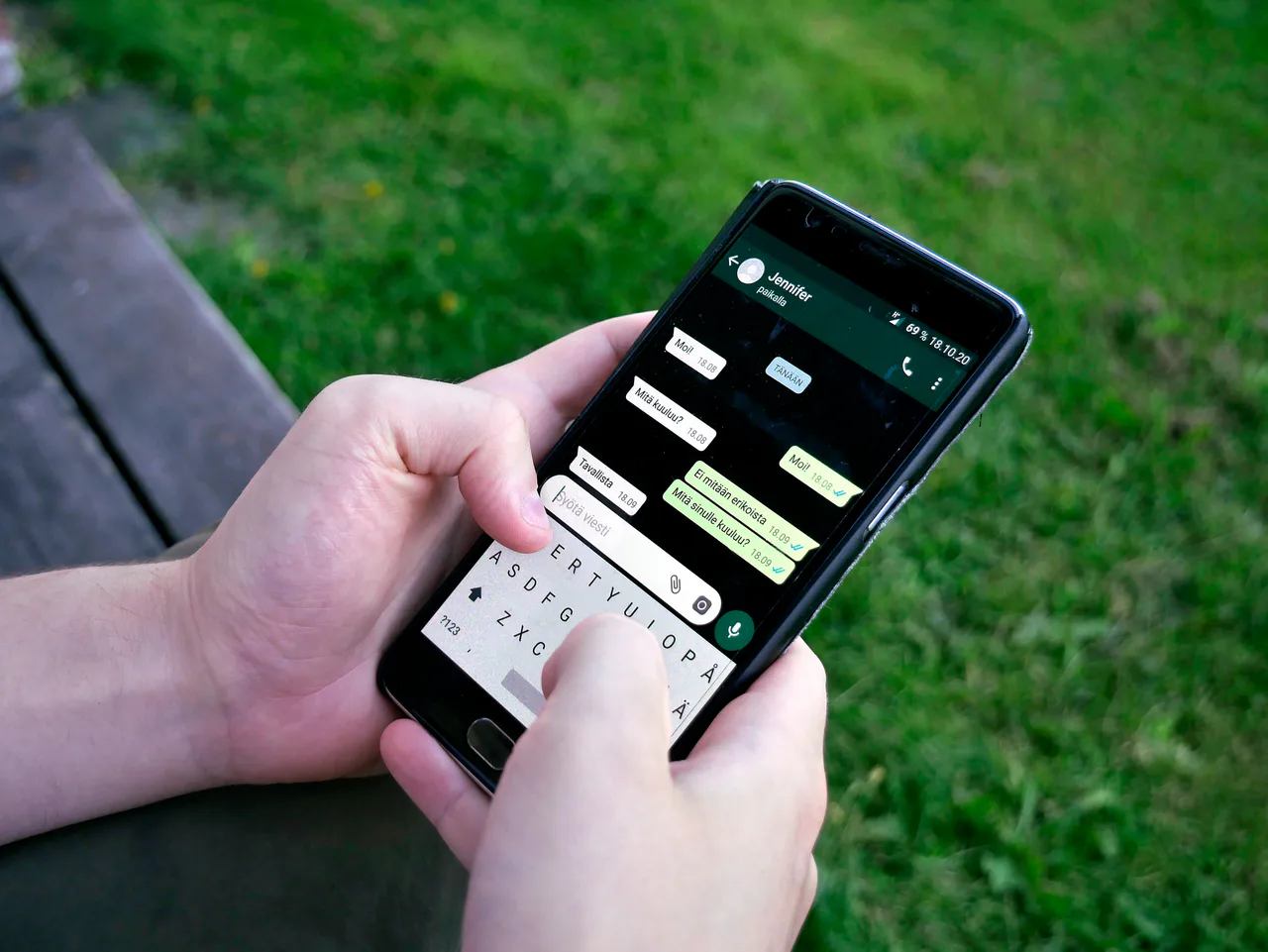
Requesting insurance through WhatsApp takes on a different value when the conversation reaches the price. In Verti ’s case, users can gradually supply the information needed, receive a quote and continue on the website without starting again. When they need advice, a specialist agent takes over with the context of their request. Messaging becomes part of a digital insurer’s commercial process, from acquisition to the point at which someone decides whether to buy a policy.
Aunoa describes that journey in a case study first published on July 14, 2026. The provider attributes an improvement of between 15% and 25% in final conversion to sale to offering WhatsApp as an alternative within the digital journey. It also reports a conversion increase of between 3% and 5% compared with the website among users who reach the final step, where the insurance price is displayed. These are observations about different stages of the funnel.
The project’s interest lies in the connections between those stages. Entry from a campaign, information gathering, quote calculation, switching channels and human assistance all belong to the same request. Conversational technology presents that work as a dialogue. Integration with the insurer’s systems allows the dialogue to produce an offer and ensures that the information already supplied remains useful as the customer moves towards the next part of the purchase.
An insurer built to sell remotely
Verti began operating in January 2011. Its corporate website describes a Spanish-owned direct insurer with offices in Madrid. Aunoa identifies it as a MAPFRE Group company specialising in sales through digital and telephone channels. WhatsApp is therefore being added to a business whose model already depends on customers being able to complete an important purchase without visiting a physical insurance office. Remote service is part of the starting point rather than an additional benefit introduced by messaging.
That foundation appears in MAPFRE’s historical communication of February 16, 2021. Marking ten years of activity, the group explained that creating Verti had taken it into direct insurance sales. The company particularly addressed people who valued an agile, secure digital experience and wanted to manage their relationship through self-service. The internet was its main sales channel, accompanied by the telephone. The combination of customer autonomy and access to assistance was already part of the proposition.
The same communication placed Verti close to 300,000 customers in Spain and reported premiums of approximately €84.5 million in 2020, up more than 6% on the previous year. Those figures describe that earlier period, before the WhatsApp case. They help establish the context in which the new conversation sits: an existing direct insurance business, with a relationship between digital acquisition, insurance products and telephone service that had developed well before this particular implementation.
The company page now lists car, motorcycle, home and pet insurance, alongside products addressing particular uses. CuentaKms is aimed at drivers who use their vehicle infrequently; 6Ruedas combines a car and motorcycle in one insurance product. The breadth of the catalogue explains why a request requires more than a welcome message. Customers need a proposal suited to a particular asset and situation, and they must understand what is being quoted before deciding whether to proceed.
From an advertisement to a quote inside the chat
The journey described by Aunoa accepts entry from social media campaigns, links on the website and other points in the digital customer journey. For marketing, that makes WhatsApp a commercial destination for those activities. A campaign can lead to a conversation that advances towards a quote rather than ending in a general enquiry. The connection between the initial message and the work that follows becomes part of the channel’s role in acquiring potential customers.
The initial task is to collect the information needed about the person, vehicle or property. The project turns that collection into a progressive sequence within the conversation. On a mobile device, the difference is practical: the user can complete the process while receiving the next prompts, without confronting the entire request structure at the outset. Aunoa presents this simplification as a response to abandonment during quotation, linking the conversational interface to a specific difficulty in the insurance buying process.
The dialogue does more than organise answers. Using the information collected, the system connects to Verti’s pricing systems, calculates the quote and displays the insurance price within WhatsApp. That connection to the business distinguishes the project from an assistant dedicated to frequently asked questions. Instead of explaining how to request an offer, the conversation produces one within the same journey through which the interested customer arrived. The price makes the conversation commercially actionable.
The case specifies quotes for car, motorcycle and home insurance. Each category requires information relating to what is being insured, so the progression of questions serves both a commercial and a product function. A link that collects only a telephone number leaves someone else to reconstruct the request. Here, the request takes shape before specialist intervention, and the quote turns that progress into a concrete reference on which the customer can base a decision.
Verti’s corporate website also links its positioning to speed. Under its fast-and-simple principle, it offers to calculate an insurance price in less than two minutes. That is a brand promise on the company page, distinct from the results of Aunoa’s case. It places ease of quotation at the centre of the proposition: for WhatsApp to fit that offer, the conversation needs to advance towards a price while retaining the usefulness of every answer it asks the customer to provide.
Switching channels without losing completed work
An important part of the project takes place when the customer stops chatting. Aunoa explains that the solution synchronises information between WhatsApp and Verti’s website. If users choose to continue online, the system retrieves the details they have already entered and directs them to the exact point they had reached. Changing interface therefore preserves the work completed, rather than turning arrival on the website into a second request that has to be filled in from the beginning.
From the perspective of the buying journey, preserving the exact step matters as much as preserving the contact. Knowing that someone is interested is different from knowing what they have already supplied and what remains to be completed. The described solution retains that context so the user can choose where to continue. The website keeps its role as an environment for taking out insurance, while the conversation provides another way to reach that stage and work through it.
This continuity addresses behaviour explicitly contemplated in the case: people may start a request from different campaigns and contact points, then switch channels during the process. The design does not require conversion to occur entirely within the interface receiving the first click. It connects the stages so that a preference for the website or messaging does not oblige the customer to repeat information. Channel choice becomes compatible with a request that is already under way.
Another principle highlighted in Verti’s corporate presentation is transparency: customers should know their cover and its limits. That need accompanies the display of a price. Continuity with the website retains an environment in which to continue taking out the policy, while the quote displayed in WhatsApp gives the customer a concrete proposition to ask about. The specialist assistance described by Aunoa connects those two needs: understanding the offer and being able to advance without reconstructing the original request.
The point at which human help becomes useful
Receiving a quote does not automatically end the commercial interaction. Once a user has an offer, the conversation can transfer to a specialist agent. That professional receives the context and information gathered during the process, with the aim of answering questions and supporting the purchase decision. Assistance appears when there is already something concrete to discuss: an insurance quote and a request that has advanced beyond the first expression of interest in an advertisement or website link.
The allocation of work combines two forms of customer relationship. Automation organises information gathering and access to the price; advice addresses questions that arise when considering the offer. The company does not require customers to choose either self-service or personal assistance for their entire journey. It can retain the speed of the first stage while making specialist intervention available when the user needs it to progress. Both forms of service relate to the same prospective purchase.
This fits the direct model MAPFRE described in 2021: an insurer oriented towards online self-service that also sold over the telephone. The case adds WhatsApp conversation to that commercial work and carries its context to the next person involved. An agent receives a situated request rather than depending on the customer to explain again, from the beginning, what they wanted to insure. Human support becomes a continuation of the work already completed by the user.
After generating a quote, the solution can also identify opportunities to offer other relevant products. Aunoa provides a concrete example: someone requesting car insurance can be offered the possibility of also calculating a home or motorcycle insurance quote. Cross-selling begins with an expressed need and proposes a further quotation within the conversation. It uses a moment in which the customer is already considering a relationship with the insurer and has reached a tangible offer for the initial product.
The corporate catalogue provides context for the relationship between categories. Verti sells car, motorcycle and home policies separately and presents 6Ruedas as a product combining car and motorcycle cover. The WhatsApp case describes the ability to calculate other insurance products; the catalogue shows that the brand works with related needs. An additional proposition makes sense in relation to the product being considered, without turning every initial request into the same commercial combination for every customer.
Two ranges describing different stages
Aunoa’s first reported figure concerns final conversion to sale. Offering WhatsApp as an alternative within the digital journey contributed, according to the provider, to an increase ranging from 15% to 25%. The full interval is the outcome described in the case. It retains information that would disappear by using only the 25% highlighted in the page’s headline: the reported effect has a range rather than a single magnitude applying uniformly to the entire customer base.
The second observation focuses on users reaching the final step and seeing the insurance price. For that group, Aunoa reports a conversion improvement of between 3% and 5% compared with the website experience. The comparison point is particularly relevant because a quote is already visible. The commercial question at this stage is what happens after the customer knows the offer, which differs from entering through a campaign or beginning the collection of details needed for a quotation.
Reading both ranges from their position in the funnel makes the design easier to understand. Quoting inside the chat helps users reach a proposal; continuity with the website retains their progress; specialist assistance addresses the decision that follows. The provider’s reported results accompany that journey. Keeping them separate preserves the difference between the effect on final conversion and the channel comparison among people who have already reached the point of seeing the insurance price.
A conversation supplying an insurance decision
The simplicity of the interface sits alongside an activity that requires personal information. Verti’s privacy policy identifies the insurer as the controller of details supplied through its website and describes purposes associated with insurance requests and contracts. These include managing the relationship, assessing risk and statistical studies. That documentation helps put the quote in context: behind the conversation is a decision about an insurance product, with the customer’s information serving a defined role in making and managing that offer.
The same policy distinguishes insurance requests from commercial communications. For the latter, it provides for the user’s acceptance and processing for that purpose. The distinction is pertinent to a journey bringing together acquisition, quotation and possible additional propositions. These activities are commercially connected, but each has a particular relationship with the information a person supplies. The conversational design operates alongside the insurer’s framework, as well as making it easier to complete the practical stages leading towards a purchase.
Verti also presents its online customer office as a place to manage policies and access documents, including a three-year document history. That self-service offer places contracting within a broader subsequent relationship. The quote conversation handles an entry stage; the insurer maintains other environments for administering the policy. The commercial journey forms part of a digital experience that continues after an offer is accepted, with different tasks supported by the environments intended to carry them out.
What distinguishes the case is the combination of these components around a recognisable intention. A campaign opens the route into WhatsApp, questions build the request, Verti’s systems calculate a price and the customer retains alternatives for finishing the process. A familiar interface brings a specific transaction closer. Aunoa’s reported commercial improvement is easier to understand by examining the work between screens, systems and people than by attributing the entire result simply to the presence of a chatbot.
Who’s who and how to read the figures
Verti is the MAPFRE Group direct insurer at the centre of the case; Aunoa is the provider publishing the implementation and its results. WhatsApp is the conversational channel, while Verti’s pricing systems calculate the offer. The specialist agent provides advice with the context of the request. Quotation means calculating and presenting a price; taking out the policy is the subsequent commercial step to which the case’s final results refer. These roles remain distinct within the same buying journey.
The 15–25% range concerns the reported improvement in final conversion to sale when offering WhatsApp within the digital journey. The 3–5% range compares WhatsApp with the website experience among users reaching the price display stage. Keeping those populations and stages distinct makes clear what each observation measures. MAPFRE’s historical figures for 2020 explain the earlier business model and retain their own date, separate from the later conversation-led insurance case published by Aunoa.
In this article

Marian Vasile
Marian Vasile is a MarTech and growth professional. His work spans product marketing, SEO, paid advertising and deep online tracking, including behavioral analytics and attribution.