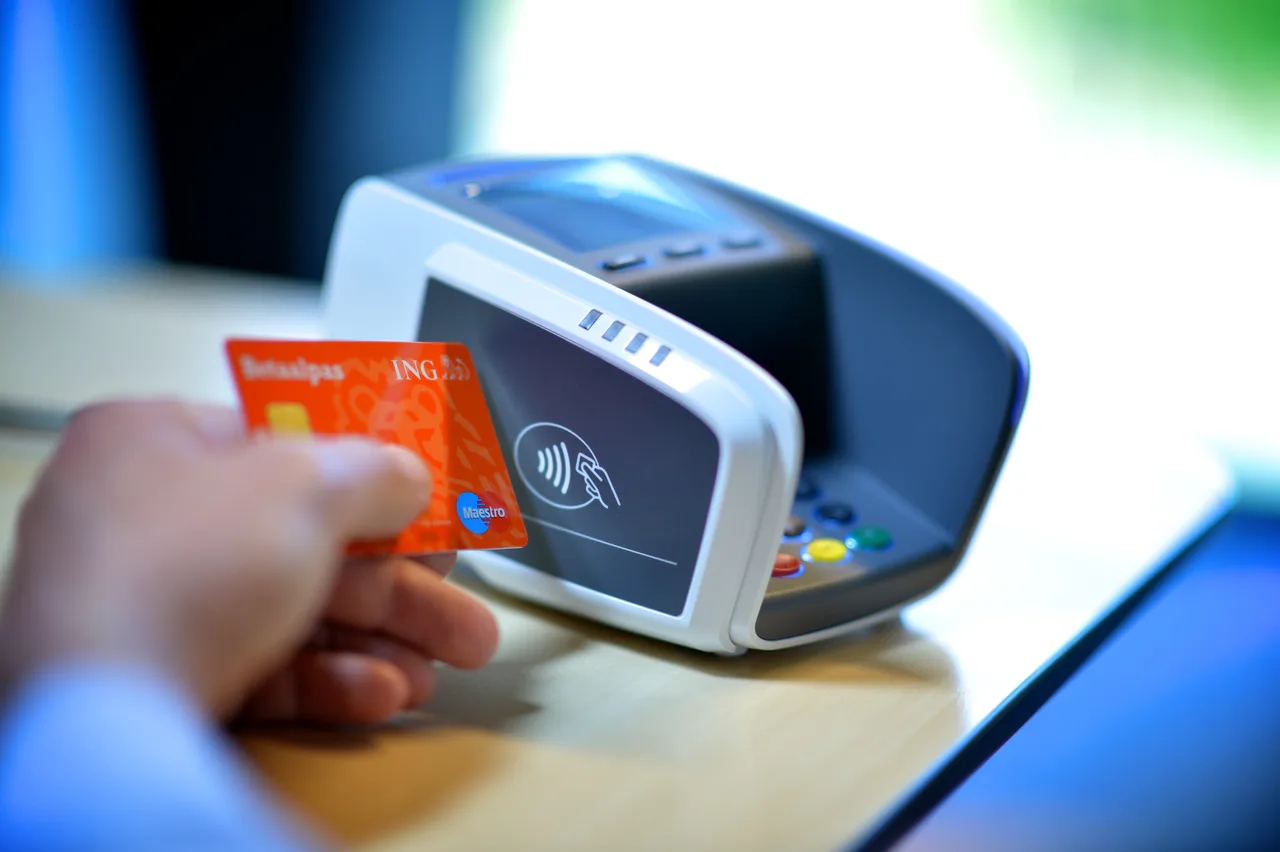
Paraty Tech has added Adyen 's payment infrastructure to its booking engine so that hotels can take payment without sending guests out of the purchase process. Announced on September 11, the integration expands the direct channel's payment alternatives and lets each property choose from more than 250 local and international methods, according to the company. The commercial decision sits at the end of the funnel: after attracting a traveller, the hotel needs them to complete the booking with an option that suits them.
The Torremolinos-based company places the agreement within a technology network serving more than 3,500 hotels in more than 40 countries. Those are the dimensions of its platform, which is adding this partner to its offer. For properties, the announcement proposes another combination of purchase experience, international reach and payment management. Each accommodation business retains flexibility to configure the gateways that best fit its operations.
Paraty identifies three Adyen capabilities as particularly relevant to that journey: risk management, tokenisation and authorisation optimisation. It connects them with payment for stays and additional services. Payment therefore enters the discussion about booking-engine conversion alongside the ability to offer methods that fit the preferences of guests arriving from different markets.
Daniel Romero, Paraty Tech's Communication and Partnerships Director, presents the collaboration as a way to expand the tools with which each hotel builds its technology ecosystem. Juan José Llorente, Adyen's Country Manager for Spain and Portugal, connects it with travellers finding their preferred payment methods inside the booking process. Both statements place the objective in direct sales and the guest experience, rather than treating the agreement simply as an administrative connection between suppliers.
The final part of acquisition also belongs to marketing
The booking engine is where an intention to stay becomes a commercial relationship with the hotel. The integration's promise is to keep payment within that journey. The announcement describes a native alternative without external redirects that interrupt the experience. The page on which travellers have decided to book can retain continuity through payment, a significant product decision for a company selling direct-channel technology.
The collaboration targets hotels and chains using Paraty Tech, with a proposition configurable by property. Its international purpose goes beyond translating the commercial message: the payment method also contributes to how familiar a purchase feels. The release emphasises adapting the selection to each property's market, customer type and operational needs. The choice of payment methods is tied to the audience the hotel is trying to convert.
This connects acquisition and transaction. The work of attracting travellers brings people with potentially different payment habits into the engine. By adding another payment infrastructure, Paraty expands the tools available to handle those differences within its product. The commercial proposition is to retain the purchase journey while providing more choice at the point where the guest must complete the transaction.
More than 250 potential methods, selected by each hotel
The figure of more than 250 methods describes the range presented in the announcement, rather than an obligation to show every option in every booking. Paraty says each property can choose those that best suit its market and customers. That selection capability matters to a hotel technology network present in more than 40 countries: the same booking-engine infrastructure can serve different payment needs across its destinations.
Adyen's online-payment documentation covers cards, wallets and local methods on websites and mobile applications. It also allows checkout styling to be customised and the payment form to be presented in the shopper's language. These are general platform capabilities that explain the logic of an international integration: payment can form part of a brand experience and a localised interface, rather than appearing separate from the rest of the purchase.
Method selection and the retention of payment credentials address different needs. Adyen explains that tokenisation is supported for many cards and certain local payment methods, and that its catalogue identifies which methods support recurring payments with tokens. That distinction matters in hospitality, where the initial payment and other payments associated with a stay may follow different paths. Catalogue breadth and the ability to reuse a method are separate attributes for a hotel to consider.
The interface is only part of the integration
Adyen describes its online-payment architecture in three parts. The first is a payments server that sends requests to the Checkout API and receives responses. The second is the website or application collecting the shopper's payment details. The third is the server receiving webhooks, the messages through which Adyen communicates payment statuses and other events associated with a transaction.
This separation explains what integrating infrastructure means beyond adding a button. The traveller sees the interface, but the transaction also needs a payment request and communication about its status. The product combines a visible interaction layer with processing behind it. In a booking engine, commercial continuity depends on payment being part of the complete journey, as well as the form fitting visually into the page.
Adyen's guide offers customisable components and a Drop-in interface for building the client side, alongside libraries for server requests. It also describes integrations through its own or partners' plugins. These are the general routes through which the platform connects commerce systems. Paraty's announcement presents the commercial outcome of its agreement, a native alternative inside the booking engine, while these elements explain the infrastructure on which online Adyen payments are built.
The platform also includes authentication with 3D Secure 2 and risk-management tools intended to prevent and respond to fraud. Authentication and authorisation belong to payment processing; an integrated booking journey is a user-experience decision. Paraty's announcement brings both concerns together: keeping the purchase fluid while adding security and authorisation capabilities to payment for a stay.
Another element is the single API through which Adyen processes different methods. The infrastructure provides a common way to request transactions even when the options shown to the shopper vary. That organisation matters to a booking-engine provider extending its international offer: behind the different payment choices lies a technology connection that must process and follow each transaction. The guide expressly includes accommodation and travel bookings among its online-payment use cases.
Subsequent management has its own space. Adyen brings the account, transactions and payment-channel reports together in Customer Area, with capabilities to view online and in-person information on the same platform. This product view complements checkout: beyond presenting shoppers with an option, the infrastructure lets a business consult its payment activity and statuses through the provider's management environment.
The documentation also emphasises keeping integrations current because Adyen releases new library versions and API changes. The commercial agreement introduces an infrastructure that continues to evolve. For Paraty, the partner relationship consequently sits within its booking engine's development, where purchase experience, processing and technology maintenance belong to the same service provided to a hotel.
What a token accompanying a booking represents
Tokenisation replaces sensitive data with a reference representing it. In payments, the token can represent the shopper's card details. Adyen explains that when shoppers consent to saving them, those details are stored in its Vault. When a shopper subsequently pays using the saved method, the transaction can use the token. This reference allows a method to be used again without every interaction starting by collecting all its details afresh.
For an activity in which booking and stay may be separated, continuity has a clear commercial application. Adyen's own hospitality offer includes securely retaining cardholder information for potential charges following missed reservations and serving payments through several channels. Paraty's announcement identifies tokenisation among the features associated with stays and additional services. The shared interest is in letting the payment relationship accompany the guest relationship.
Consent belongs within the feature's definition. The guide begins with shoppers agreeing to save their details and distinguishes transactions they initiate, such as another purchase using a stored method, from later transactions envisaged in contracts with non-fixed schedules. These are different situations within the product. A saved reference facilitates a transaction supported by that journey; its existence does not itself make any future amount a permitted charge.
The technology also changes where sensitive information is handled. Adyen says tokens reduce exposure risk and can reduce the scope of PCI DSS technical obligations by allowing the provider to manage sensitive data in its Vault. The documentation distinguishes collecting raw card information from integrations using its components and tokens. The architecture therefore determines how that work is distributed between the merchant and the payments infrastructure.
Adyen offers two server-side tokenisation flows. Sessions organises a secure session containing the information needed for components to create and use tokens; Advanced provides greater control over the experience and requires management of the data flow and its state. These are provider options for building checkout. In the hotel partnership, the announced capability is tokenisation within the new infrastructure, without identifying either flow as Paraty's chosen configuration.
Payment identity and the scope of the account
Saving a payment reference requires associating it with the correct shopper. Adyen's documentation requires a unique shopper reference when a token is stored. That association connects the retained information with the person to whom it belongs. It is an important part of continuity: retaining a payment method and knowing which shopper it belongs to are inseparable decisions when reusing it coherently in the product.
The reference has a defined account scope. By default, Adyen says tokens and shopper references can only be used with one merchant account. For a company with several merchant accounts, Token Groups allows those references to be shared and requires activation by the support team. The documentation therefore places the relationship between several establishments within an explicit configuration, rather than presenting it as an automatic consequence of storing a card.
Adyen's general hospitality-platform offer describes recognising returning customers across different channels. It lists booking engines, payment links, applications, reception, kiosks and digital guest journeys. This maps the provider's broader sector offer. The agreement announced by Paraty focuses on its booking engine, the direct-sales entry point receiving the new payment alternative.
That difference in scope helps explain the partnership. Adyen has a hospitality proposition connecting channels; Paraty integrates its payments infrastructure into a booking product. The more than 3,500 hotels cited describe Paraty's scale when announcing the addition. The combination creates another possibility for that technology base, with the choice of gateways and methods located at the individual property.
A stored credential also needs continuity
The tokenisation documentation addresses a practical issue in later payments: the physical card can expire or be replaced. Adyen presents network tokenisation as a reference created and managed by card networks, independent of the physical card's expiry date. It says it requests these tokens for stored cards when possible. The feature is intended to preserve credential continuity without relying exclusively on the card's original details.
The provider also describes Account Updater, which works with card schemes to update expired or replaced card details. These features extend its tokenisation and authorisation offer. In hospitality, they explain why retaining a reference is only part of the infrastructure: the information that enables payment can change during the customer relationship. Paraty's announcement places tokenisation and authorisation optimisation among its new partner's capabilities.
The same technical catalogue includes Forward, a feature for forwarding payment details stored with Adyen to a PCI DSS-compliant third party. It is a specific interoperability capability within the provider's offer, alongside the retention and updating of credentials. The distinction helps explain a payments architecture: a reference associated with an account, its potential use across several accounts and the forwarding of information to another provider are different mechanisms, each with its own conditions.
Information protection also relies on encryption. Adyen documents client-side and end-to-end encryption, with the provider managing cryptographic keys. Tokens and encryption have different functions: one represents retained information, while the other protects sensitive information within the payment infrastructure. The documentation explains these layers without reducing the security of the process to a form appearing inside a page. The visible experience and credential handling belong to the same journey, but call for different solutions.
Security and conversion consequently appear within the same system. A hotel's objective is to complete the payment corresponding to its commercial relationship with the guest, offering a comprehensible experience and a suitable method. Adyen presents tools for managing credentials, authentication and risk; Paraty brings them into its booking-engine proposition. The partnership connects the visible purchase experience with the infrastructure processing the transaction.
Another component in the direct-sales ecosystem
The integration expands a configurable offer. Paraty emphasises that each accommodation business can build a gateway combination suited to its operations. The new alternative is presented as an expansion of the partner network, rather than a compulsory replacement of all previous providers. For a company distributing technology among hotels and chains, that flexibility is part of its commercial proposition: a common engine with payment choices that can respond to different businesses and markets.
The announcement concentrates on three specific levers: keeping the transaction within the booking process, widening method choice and adding payment tools. This is where infrastructure meets the hotel's online strategy. Acquisition brings travellers into the reservation journey; the new collaboration seeks greater continuity and an appropriate selection of methods at its final stage. Both companies' representatives present that experience improvement as the partnership's commercial objective.
Who's who and how to read the figures
Paraty Tech is the hotel technology provider adding payment to its booking engine. Its website identifies the operator as Paraty Hoteles S.L.U., registered in Málaga and based in Torremolinos. Adyen is the global financial technology platform supplying the infrastructure. Daniel Romero speaks for Paraty in Communication and Partnerships; Juan José Llorente represents Adyen as its Spain and Portugal lead in the announcement.
More than 250 methods describes the potential selection presented for each property; more than 3,500 hotels and more than 40 countries describe Paraty's presence. A token represents payment details saved with consent; authorisation forms part of processing the transaction, while a webhook communicates statuses and events. These elements explain the agreement: a payment offer within direct booking, connected to international infrastructure and property-level configuration choices.
In this article

Marian Vasile
Marian Vasile is a MarTech and growth professional. His work spans product marketing, SEO, paid advertising and deep online tracking, including behavioral analytics and attribution.