Estival Hotels & Resorts increased conversions by 85% between January and May 2026 compared with the same period of 2025, using a strategy that combined Google advertising, metasearch and social advertising.
The value associated with those conversions rose by 74%, according to the case Paraty Tech presented on August 25. Digital marketing's contribution reached 27% of direct sales, an increase of 8.5 percentage points, according to commercial coverage subsequently published in Hosteltur. The change brings together two developments: recorded activity increased, and digital acquisition accounted for a larger share of the business reaching the hotel group's own sales channel.
The addition of Social Ads broadened the routes into that channel. Google Ads retained its role as the main acquisition channel, while Google Hotel Ads became more prominent. Paraty describes managing these media together, using analysis of results to adjust spending. That coordination makes the case interesting: a group with beach hotels, urban properties and mountain accommodation addresses different purchasing situations with tools that reach travelers at different moments.
The operation rests on a brand with family origins. Estival identifies Estival Gestió, S.L., based in Vila-seca and registered in the Commercial Registry of Tarragona, as its website owner. Its accommodation spans Costa Daurada, Costa del Sol, Costa de la Luz, Barcelona and Andorra. That variety means digital acquisition needs to lead travelers toward a specific property and dates, as well as generating interest in the brand itself.
Two increases that describe different things
The 85% increase refers to the number of conversions reported for the first five months of the year. The 74% refers to their value. The distinction matters because a conversion rate relates completed actions to a base of visits or clicks. Paraty's figure describes more recorded conversions; interpreting it as an 85% improvement in the probability that each visitor will buy would change the meaning of the news.
A comparison using a starting index of 100 shows the movement without assigning the group absolute figures that do not appear in the announcement. If the number of conversions between January and May 2025 is represented by 100, the 2026 figure reaches 185. Applying the same calculation to conversion value takes that measure from 100 to 174. Both rise substantially, although the number of conversions increases faster.
Conversions and value: January to May 2025 = 100
Indices calculated from the reported increases for January-May 2026 against the same period in 2025. Conversion count increased by 85% and conversion value by 74%.
index; 2025 = 100
Tap or hover for details. Select a series above to show or hide it.
Collapse notes
Editorial calculation: 100 × (1 + reported growth). These are not absolute counts, conversion rates or total group revenue.
Explore the data table
| Category | 2025 | 2026 |
|---|---|---|
| Conversion count | 100.0 index; 2025 = 100 | 185.0 index; 2025 = 100 |
| Conversion value | 100.0 index; 2025 = 100 | 174.0 index; 2025 = 100 |
The two indices also support another reading: dividing 174 by 185 puts relative value per conversion at approximately 94.1% of the previous reference. This is an arithmetic relationship between the reported aggregates, rather than a hotel room rate. It shows why growth in actions and growth in value deserve to be presented together: the second gives economic context to the expansion of the first without treating every conversion as an identical stay.
The other important figure uses a different denominator. Digital marketing came to represent 27% of direct sales. Subtracting the increase of 8.5 percentage points puts the previous reference at 18.5%. Expressed against a base of 100 in direct sales in each period, the contribution attributed to digital marketing moved from 18.5 to 27. That share helps explain the commercial importance digital media acquired within the group's own channel.
Digital marketing contribution to direct sales
Hosteltur reports a 27% contribution and an 8.5-percentage-point increase. The previous reference of 18.5% is calculated by subtraction.
Tap or hover for details. All values are also available in the data table.
Collapse notes
The denominator is direct sales, not all chain sales. The 18.5% reference is an editorial calculation of 27 − 8.5; the increase is expressed in percentage points.
Explore the data table
| Category | Percentage of direct sales |
|---|---|
| Calculated previous reference | 18.5% |
| Reported contribution | 27.0% |
Google Ads sustains acquisition as Hotel Ads brings the offer into comparison
The strategy developed with Paraty places digital marketing management with one team and brings together three channels. In the Hosteltur coverage, identified as sponsored commercial content, Google Ads retains the leading position. Google Hotel Ads becomes more prominent, and Social Ads joins Estival's approach for the first time. The reported result therefore describes the development of a coordinated combination of media.
The combination fits a purchase that involves several decisions. A traveler might start by considering a beach vacation, choose an area and eventually compare a hotel for particular dates. Search advertising and hotel ads encounter that traveler in different contexts. Social advertising adds another place to present the accommodation and its proposition, without waiting for all prospective demand to arrive through an explicit search query.
Google Hotel Ads also introduces a technical distinction: its ads are generated from hotel listings and pricing data. Google's official documentation explains that they show availability, rates and booking options. Accommodation information consequently becomes part of the advertisement. The brand competes with a specific offer on the screen where the traveler is evaluating possible purchases, connecting the advertising message to the details of the stay.
Within that system, Google separates the management of inventory and prices, handled through Hotel Center and its travel partner tools, from the management of advertising campaigns. Hotel Center and Google Ads accounts are linked so that accommodation data can be used in the relevant advertising formats. This describes how the product works generally and explains why the channel connects commercial data with media buying, extending beyond the wording of an advertisement.
That distinction helps explain the growing prominence of Hotel Ads in Estival's strategy. A search ad can present a proposition or respond to a query; a hotel ad also displays elements of the offer the user is comparing. Availability and price connect interest with an option that can be booked. For a group operating across several destinations, that connection places the property and stay at the center of the commercial journey.
The new presence of Social Ads broadens the coverage of the combined approach. The case attributes the advances to coordination between channels and adjustments to spending based on results. The reported change is managed diversification, with Google Ads remaining the main entry point as other media gain ground. The public information identifies that organization without assigning the entire reported increase to any single channel.
The website needs to resolve the choice the advertisement brings
The commercial journey becomes clearer when looking at the destination for the group's own acquisition activity. On Estival's website, booking is organized into three steps: choosing a hotel and destination, selecting dates, and specifying occupancy with any applicable promotions. The sequence turns a broad intention to travel into the parameters needed to offer particular accommodation. Selecting the number of adults and children forms part of that definition.
The catalog can be filtered by destination and by experience. Its options include all-inclusive stays, gastronomy, sport and spa, beach holidays and glamping. The filters show how one portfolio is presented through two entry points: where the traveler wants to go and the type of stay being sought. That organization is relevant to an acquisition strategy bringing together different kinds of messages and searches.
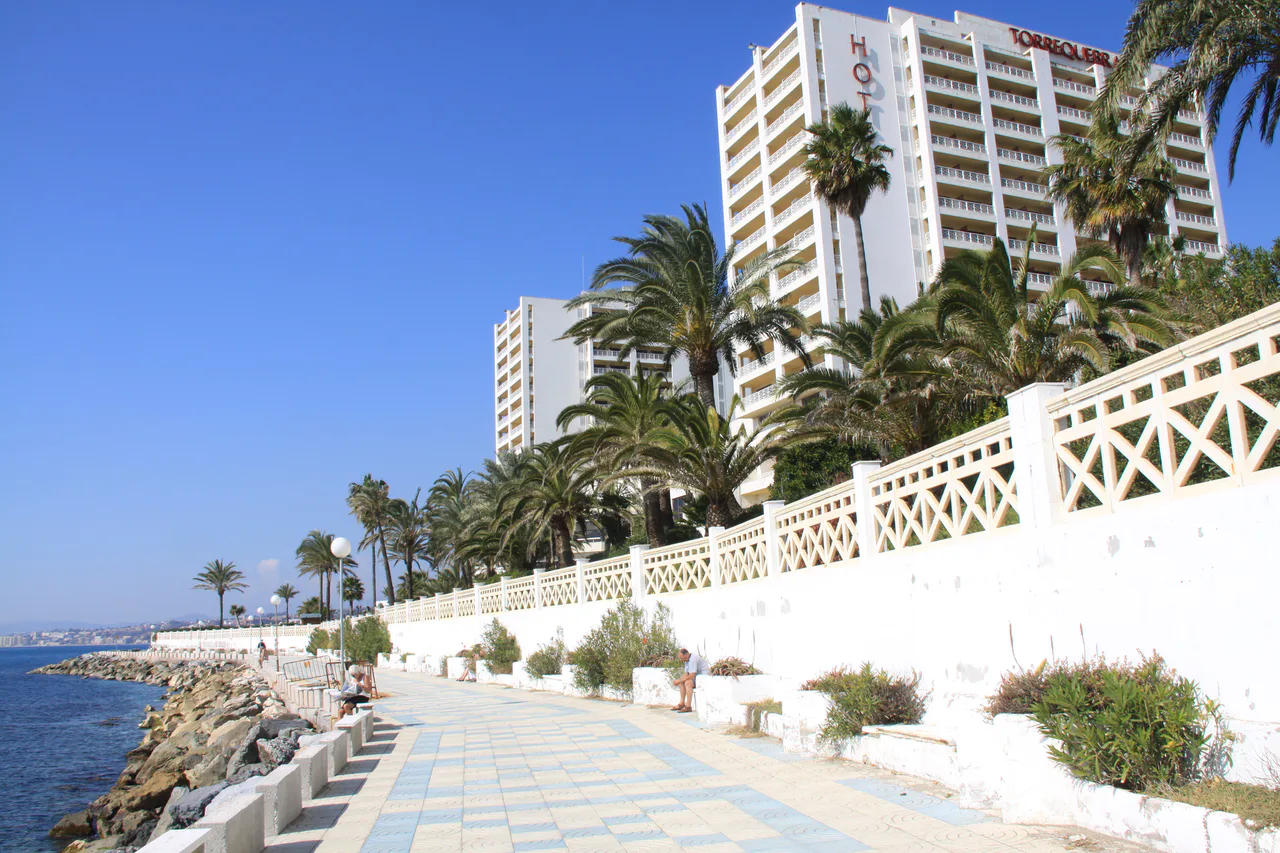
Examples from the catalog show the distinction. Estival Park Silmar in La Pineda appears as part of Estival Park Resort, with its dining and all-inclusive proposition. Estival Torrequebrada is associated with the Costa del Sol and seafront accommodation. Hotel Vilamarí is presented in Barcelona, near Plaza España and Fira. Sporting, in Pas de la Casa, is described through its proximity to skiing and Grandvalira.
These pages give substance to different commercial promises. The choice of a city break might depend on location, while a mountain stay could begin with access to the slopes. In the group's catalog, those characteristics appear alongside the action to book. The website turns the variety of the portfolio into identifiable purchasing propositions, rather than leaving the entire decision within a general description of the company.
Booking conditions add another part of the journey. The user enters dates, occupancy and additional services, then checks the reservation, billing details and payment method. The document provides for immediate confirmation where applicable, alongside availability information for the situations it specifies. It also distinguishes nonrefundable and flexible rates. These elements define what the traveler eventually purchases after arriving from a campaign.
Direct sales compete to become the place of purchase
The role of intermediaries helps explain why a hotel group would strengthen its direct access to travelers. In a survey covering Spain, 73% of participants who had booked accommodation online said they had used Booking.com during the previous 12 months. Airbnb appeared in 30% of responses. The sample comprised 1,598 people aged 18 to 64 who had booked hotels, vacation apartments or houses online.
The survey period ran from July 2024 to June 2025, and respondents could select multiple answers. These are figures for reported use among those respondents, rather than shares of money spent on accommodation or of all reservations at Spanish hotels. Their relevance here is to show how familiar part of resident demand is with the platforms. One person can use several booking routes during the same year.
Platforms used to book accommodation online in Spain
Reported use among 1,598 people aged 18-64 who booked hotels, holiday apartments or houses online. Fieldwork: July 2024 to June 2025. Multiple answers were allowed.
Tap or hover for details. All values are also available in the data table.
Collapse notes
Reported reach among the surveyed population, not transaction or revenue market share. The percentages are not additive. It does not represent all guests of Spanish hotels or Estival results.
Explore the data table
| Category | Survey respondents who used the platform |
|---|---|
| Booking.com | 73.0% |
| Airbnb | 30.0% |
The figures give a concrete reason to view direct acquisition as competition over the place of purchase. Users already recognize brands that let them search for and compare accommodation. To bring them onto a hotel group's website, the advertisement needs a proposition and a useful destination. At Estival, media activity connects with a catalog offering destinations, experiences and a process for defining the stay.
The survey also helps distinguish two markets that are often combined in hotel discussions. It describes residents of Spain who booked accommodation online, while a Spanish hotel group's portfolio can serve travelers from many countries. The figures illustrate the habits of the surveyed group and provide context for digital competition. Estival's published advances concern its own acquisition case, with a different population and reporting period.
Alongside this familiarity with platforms, an owned website can develop a brand relationship that remains useful when the traveler books again. Estival makes that proposition visible through its loyalty club. The commercial interest lies in connecting the first purchase with a reason to recognize the hotel brand on the next occasion. Acquisition and repeat business are consequently presented within the same commercial storefront.
Interest in the brand has several peaks
Searches in Spain provide another perspective on that relationship with travelers. In the weekly comparison of the terms “estival park” and “estival torrequebrada,” covering October 19, 2025, through October 17, 2026, Estival Park reaches the maximum relative interest of 100 in the week of August 2 to 8. It had previously reached 98 between June 28 and July 4, then recorded 99 between September 20 and 26. The final complete week, October 11 to 17, stands at 39. The sequence shows several periods of attention across the year, before and after the case was presented in August. The published acquisition results, meanwhile, cover January through May. These are two calendars that help place the news in context: the commercial activity measured and the continuing attention received by one of the group's brands. The Torrequebrada series contains numerous zeros, which can reflect insufficient search volume. The indices express relative interest within the comparison; they do not count travelers or sales, and they do not establish that Estival's campaigns caused those peaks.
Search interest in Spain: estival park, estival torrequebrada
Relative Google Trends indices. 2025-10-19 / 2026-10-17.
interest index (0–100)
Tap or hover for details. Select a series above to show or hide it.
Collapse notes
Explore the data table
| Category | estival park | estival torrequebrada |
|---|---|---|
| 2025-10-19/2025-10-25 | 38 interest index (0–100) | 0 interest index (0–100) |
| 2025-10-26/2025-11-01 | 36 interest index (0–100) | 0 interest index (0–100) |
| 2025-11-02/2025-11-08 | 0 interest index (0–100) | 0 interest index (0–100) |
| 2025-11-09/2025-11-15 | 20 interest index (0–100) | 0 interest index (0–100) |
| 2025-11-16/2025-11-22 | 16 interest index (0–100) | 0 interest index (0–100) |
| 2025-11-23/2025-11-29 | 21 interest index (0–100) | 0 interest index (0–100) |
| 2025-11-30/2025-12-06 | 18 interest index (0–100) | 0 interest index (0–100) |
| 2025-12-07/2025-12-13 | 0 interest index (0–100) | 0 interest index (0–100) |
| 2025-12-14/2025-12-20 | 17 interest index (0–100) | 0 interest index (0–100) |
| 2025-12-21/2025-12-27 | 20 interest index (0–100) | 0 interest index (0–100) |
| 2025-12-28/2026-01-03 | 0 interest index (0–100) | 0 interest index (0–100) |
| 2026-01-04/2026-01-10 | 25 interest index (0–100) | 0 interest index (0–100) |
| 2026-01-11/2026-01-17 | 22 interest index (0–100) | 0 interest index (0–100) |
| 2026-01-18/2026-01-24 | 27 interest index (0–100) | 0 interest index (0–100) |
| 2026-01-25/2026-01-31 | 35 interest index (0–100) | 0 interest index (0–100) |
| 2026-02-01/2026-02-07 | 44 interest index (0–100) | 0 interest index (0–100) |
| 2026-02-08/2026-02-14 | 23 interest index (0–100) | 0 interest index (0–100) |
| 2026-02-15/2026-02-21 | 20 interest index (0–100) | 0 interest index (0–100) |
| 2026-02-22/2026-02-28 | 35 interest index (0–100) | 16 interest index (0–100) |
| 2026-03-01/2026-03-07 | 38 interest index (0–100) | 0 interest index (0–100) |
| 2026-03-08/2026-03-14 | 52 interest index (0–100) | 0 interest index (0–100) |
| 2026-03-15/2026-03-21 | 43 interest index (0–100) | 0 interest index (0–100) |
| 2026-03-22/2026-03-28 | 53 interest index (0–100) | 0 interest index (0–100) |
| 2026-03-29/2026-04-04 | 72 interest index (0–100) | 0 interest index (0–100) |
| 2026-04-05/2026-04-11 | 68 interest index (0–100) | 0 interest index (0–100) |
| 2026-04-12/2026-04-18 | 65 interest index (0–100) | 0 interest index (0–100) |
| 2026-04-19/2026-04-25 | 79 interest index (0–100) | 0 interest index (0–100) |
| 2026-04-26/2026-05-02 | 75 interest index (0–100) | 0 interest index (0–100) |
| 2026-05-03/2026-05-09 | 45 interest index (0–100) | 0 interest index (0–100) |
| 2026-05-10/2026-05-16 | 52 interest index (0–100) | 0 interest index (0–100) |
| 2026-05-17/2026-05-23 | 86 interest index (0–100) | 0 interest index (0–100) |
| 2026-05-24/2026-05-30 | 64 interest index (0–100) | 0 interest index (0–100) |
| 2026-05-31/2026-06-06 | 82 interest index (0–100) | 0 interest index (0–100) |
| 2026-06-07/2026-06-13 | 53 interest index (0–100) | 0 interest index (0–100) |
| 2026-06-14/2026-06-20 | 66 interest index (0–100) | 0 interest index (0–100) |
| 2026-06-21/2026-06-27 | 73 interest index (0–100) | 24 interest index (0–100) |
| 2026-06-28/2026-07-04 | 98 interest index (0–100) | 0 interest index (0–100) |
| 2026-07-05/2026-07-11 | 58 interest index (0–100) | 17 interest index (0–100) |
| 2026-07-12/2026-07-18 | 77 interest index (0–100) | 0 interest index (0–100) |
| 2026-07-19/2026-07-25 | 75 interest index (0–100) | 0 interest index (0–100) |
| 2026-07-26/2026-08-01 | 81 interest index (0–100) | 18 interest index (0–100) |
| 2026-08-02/2026-08-08 | 100 interest index (0–100) | 0 interest index (0–100) |
| 2026-08-09/2026-08-15 | 92 interest index (0–100) | 17 interest index (0–100) |
| 2026-08-16/2026-08-22 | 77 interest index (0–100) | 0 interest index (0–100) |
| 2026-08-23/2026-08-29 | 77 interest index (0–100) | 0 interest index (0–100) |
| 2026-08-30/2026-09-05 | 79 interest index (0–100) | 0 interest index (0–100) |
| 2026-09-06/2026-09-12 | 70 interest index (0–100) | 0 interest index (0–100) |
| 2026-09-13/2026-09-19 | 60 interest index (0–100) | 0 interest index (0–100) |
| 2026-09-20/2026-09-26 | 99 interest index (0–100) | 0 interest index (0–100) |
| 2026-09-27/2026-10-03 | 44 interest index (0–100) | 0 interest index (0–100) |
| 2026-10-04/2026-10-10 | 32 interest index (0–100) | 7 interest index (0–100) |
| 2026-10-11/2026-10-17 | 39 interest index (0–100) | 16 interest index (0–100) |
Estival Rewards adds a reason to return to the direct channel
On its current website, Estival Rewards offers 10% off the first reservation, 15 welcome points, a guaranteed 5% booking discount and 10% off dining. It also advertises early access to offers and promotions. These benefits use different units and apply in different circumstances: a percentage off a purchase, welcome points and service benefits. Their presentation does not allow them to be added together as a single cumulative discount.
The proposition offers another way to understand the direct channel. The hotel group can present benefits linking a reservation with services during the stay and with future promotions. Accommodation is presented as more than a room for particular dates: the brand also invites the traveler to register and maintain a commercial relationship. The club is visible in the offer consulted in October, separately from the results measured between January and May.
Keeping those periods distinct grounds the account in what is known about each component. The case presented in August attributes growth to the acquisition strategy coordinated with Paraty. The current website shows how Estival organizes its arguments for booking and returning today. Together, they allow a view of the relationship between acquisition media, the owned offer and loyalty, without treating a current promotion as a retrospective explanation for all the growth.
Digital marketing's advance to 27% of direct sales is particularly relevant here. Acquisition has become more important within an environment where the group also presents its properties, booking conditions and membership benefits. In that space, Estival retains the ability to explain the complete offer. Marketing's commercial contribution connects with a purchasing destination that the brand manages and can continue to develop.
The figures tell a story of broader acquisition: more conversions, greater aggregate value and a larger contribution within direct sales. Google Ads sustains the principal entry point, Hotel Ads brings the offer closer to the moment of comparison, and social advertising broadens its presence. The case places coordination between these routes at the center of its commercial development, with the owned channel providing the place where the proposition becomes a reservation.
Who's who and how to read the figures
Estival Hotels & Resorts is the hotel brand of a group with a family tradition spanning accommodation, dining, leisure and wellness. Estival Gestió, S.L., based in Vila-seca, is identified as the website owner. The group's hotels in Andorra reflect its international activity; the legal notice distinguishes the companies responsible for those properties.
Paraty Tech is the provider communicating the case and managing the digital marketing strategy described. The summary published in Hosteltur is identified as commercial content. Conversions count actions, while conversion value expresses the aggregate value assigned to them in the case. The increases of 85% and 74% compare January through May 2026 with the same months of 2025.
The 8.5 percentage points express the difference between a calculated previous share of 18.5% and the reported 27% contribution of digital marketing within direct sales. The platform usage figures, meanwhile, come from a survey allowing multiple responses. Each comparison retains its own base: actions, value, the channel's contribution or people surveyed.
In this article

Marian Vasile
Marian Vasile is a MarTech and growth professional. His work spans product marketing, SEO, paid advertising and deep online tracking, including behavioral analytics and attribution.