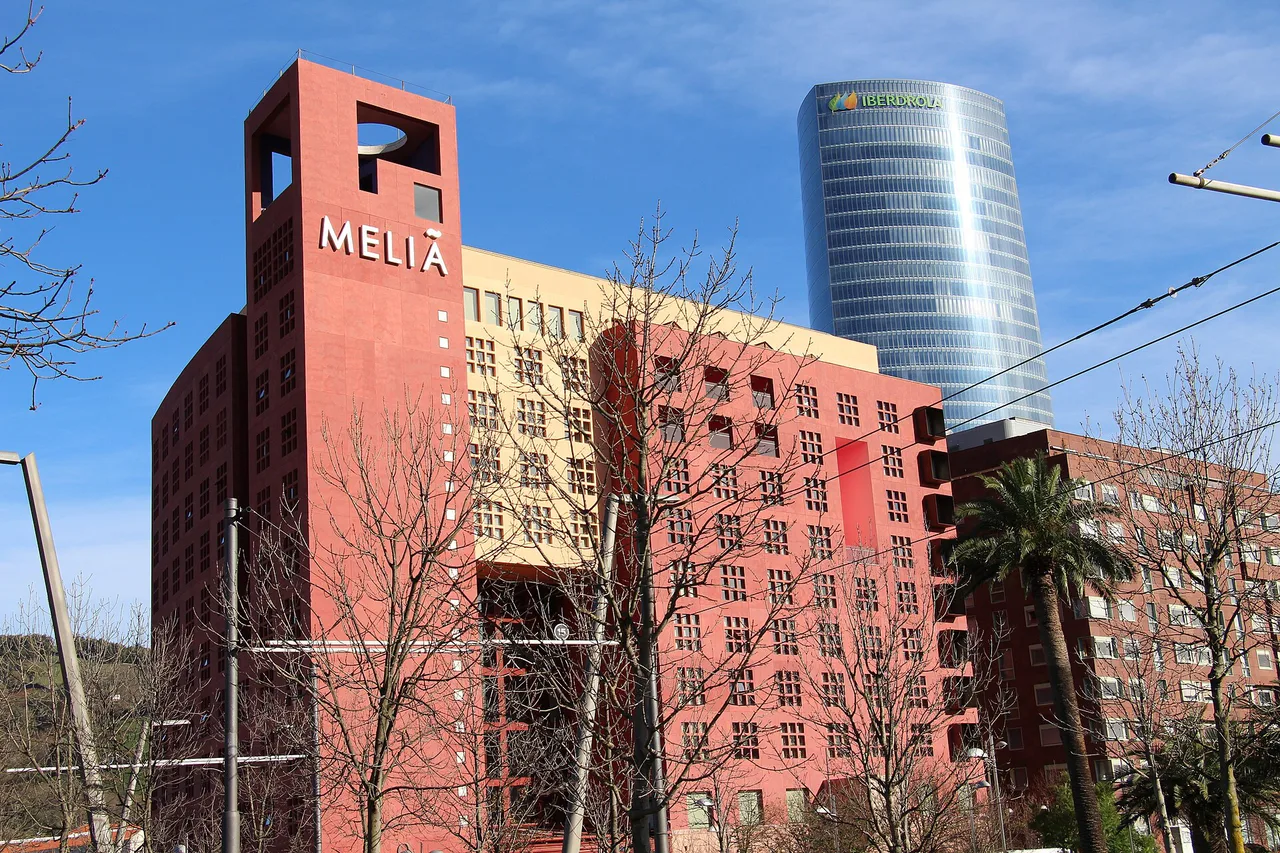
Meliá reports a summer campaign that sold more without relying on a lower average rate. Its Wonder Week increased sales by 16% against the previous edition and the average rate by 4.35%, according to the half-year report published on July 30, 2026. The combination matters because it changes the interpretation of the promotion: the reported growth does not consist solely of exchanging price for volume. How much came from additional stays, a different product mix or bookings that would previously have arrived through another channel remains unresolved. Meliá half-year report.
The campaign sits within a broader advance in direct business. Between January and June, combined sales through Meliá.com and the application rose by 14% year on year. MeliáPro, the channel serving travel professionals, grew by 15%. These are three different comparisons: one specific campaign, two aggregated consumer channels and a B2B platform. Their coexistence describes a distribution system gaining activity, but adding them would produce a meaningless figure. The economic opportunity emerges when the hotel converts that activity into stays with a better contribution.
The case also contains a tension between marketing and product. The company highlights repositioned Paradisus hotels among the destinations that attracted a positive response during Wonder Week. A refurbished building, a new luxury proposition or a reopening changes what is being sold, rather than merely the effectiveness of its advertising. Assessing the campaign requires reading both developments together: Meliá is promoting an offering whose composition changes while its owned channels expand.
The 16% contains more than one story
The report filed with Spain's securities regulator, the CNMV, establishes the promotional result, although it does not publish Wonder Week's number of bookings, nights or participants. Neither does it specify the exact dates of the two editions being compared or their available inventory. This is the central evidence limitation: sales and average rate summarise commercial performance but cannot reconstruct incremental profitability. The document provides evidence of reported growth, rather than an experimental assessment of the campaign.
An arithmetic check helps explain the combination of figures. If sales consisted exclusively of accommodation nights multiplied by a comparable rate, dividing 1.16 by 1.0435 would produce approximately 1.1116. Under that assumption, implied volume would increase by around 11.2%. This is a conditional editorial calculation, not a published Meliá figure for room nights. Its value is to show that the higher average rate alone would not explain the rise in sales if composition remained stable.
That assumption may fail for reasons specific to this campaign. The hotels booked, length of stay, room categories and included services can change. The point at which a booking is recognised may change too. Wonder Week brings together European, Caribbean and Southeast Asian destinations; a shift in that mix can raise the aggregate rate even without any particular hotel increasing its prices. The percentage needs to be read with that underlying commercial composition in view.
The company identifies the Balearic and Canary Islands, the Levante and Andalusian coasts, Mexico, the Dominican Republic and Southeast Asia as preferred destinations. It does not publish the campaign's regional sales distribution. The list nevertheless establishes the diversity of the product: one promotional message combines different seasons, journeys and hotel capacities. The global average rate is therefore useful as an indication of value sold, but insufficient to identify where that value originated.
The distinction between booking and stay completes the interpretation. A campaign can bring forward purchases of future trips and concentrate them within a few days. That anticipation has value for the hotel because it improves demand visibility. However, the amount booked may still change through cancellations, amendments or additional services. July's commercial result and the economic outcome of the associated stays refer to different moments in the same business.
The direct channel competes to retain the relationship
The 14% growth through Meliá.com and the application relates to the first half, rather than exclusively to Wonder Week. The report describes a direct customer base contributing to promotional momentum. That base makes it possible to present the offering again to people who already know the brand. The marketing mechanism is specific: an owned relationship and digital storefront allow demand to be activated without beginning every sale with anonymous discovery.
The relevance of that relationship becomes clearer in the Spanish distribution context. Statista Consumer Insights reports that 73% of eligible respondents had booked accommodation through Booking.com and 30% through Airbnb. The survey comprises 1,598 Spanish residents aged 18 to 64 who booked accommodation online during the preceding twelve months, with fieldwork between July 2024 and June 2025. These are multiple responses about providers used, rather than shares of revenue or of Meliá bookings. Statista survey.
Booking.com reaches more buyers than direct booking
Providers used for online accommodation bookings in the preceding twelve months. Spain, survey fielded July 2024 to June 2025.
Tap or hover for details. All values are also available in the data table.
Collapse notes
Statista Consumer Insights, Spain, July 2024–June 2025. Online survey of 1,598 people aged 18–64 who booked accommodation online in the preceding twelve months. Multiple answers. Share of respondents citing each provider, not reservation share, revenue or every visitor to Spain; not Meliá customers.
Explore the data table
| Category | Respondents |
|---|---|
| Booking.com | 73% |
| Airbnb | 30% |
| Directly with the accommodation | 13% |
| Trivago | 13% |
| eDreams | 10% |
The figures reveal a purchasing experience in which intermediaries are commonplace. They do not establish that these users reject direct booking or belong to MeliáRewards. For a hotel chain, the commercial question is what reason it offers a traveller who compares on platforms to complete this stay through its own channel. Wonder Week provides a promotional occasion; the application and website provide an environment in which the chain can retain the relationship after that occasion.
Attribution becomes complicated precisely when a traveller uses several storefronts. Someone may discover a destination on a platform, check availability on the hotel's website and book after receiving a promotion. Assigning the entire sale to the final message would obscure part of that search. At Meliá, the increase in direct sales matters for the channel in which the transaction closes, while interpreting marketing requires distinguishing that final transaction from all the preceding stimuli.
The website and application should not be considered equivalent simply because their figures appear together. A browser purchase can follow an occasional visit; an installed application offers a different continuity of access and service. The report provides a combined result, preventing the growth from being assigned to either channel individually. That aggregation leaves a relevant commercial question unanswered: how much of the advance comes from returning customers and how much from first-time purchasers?
The potential saving on intermediary distribution depends on the full cost of selling directly. Buying traffic, maintaining the application, handling enquiries and funding a commercial benefit also consume margin. Moving a booking into the owned channel improves contribution only when the difference in costs and value exceeds those expenses. Wonder Week's documentation does not publish that calculation, but it does establish where the outcome would need to be observed: in campaign bookings and their subsequent stays, rather than solely in website sessions.
Product improvements change marketing's result
During the same half-year, Meliá reports an 11.7% increase in revenue per available room, or RevPAR. Consolidated revenue reached €1,047.4 million, up 7.1%. These are group and period indicators with scopes different from the promotional result. They place the campaign within a business that was already increasing hotel revenue. Attributing them to Wonder Week would erase the contribution of destinations, assets and operations outside the promotion.
Hotel repositioning adds a particularly important explanation of value. Meliá highlights the reception of Paradisus Bali, Paradisus Fuerteventura and Paradisus Cancún. It also states that the reopening of Paradisus Bali accompanied a 121% increase in Australian-origin sales through owned channels during the half-year. That percentage applies to that source market and period. The example itself shows how newly available product can transform the comparison base for digital distribution.
Such a high Australian growth rate calls for attention to the starting point. Without the previous monetary amount, 121% cannot establish whether that market contributes more absolute sales than Spain, the United Kingdom or the United States, which the report identifies as the main source markets. The reopening adds a specific condition: the storefront is selling capacity and an experience that were not previously available in the same form. Advertising can activate that appeal, but cannot create it on its own.
The shift towards luxury also changes the group's economic mix. According to the report, these brands represent 20% of hotels and 18% of rooms, but 36% of hotel operating contribution. The three proportions concern the portfolio, rather than Wonder Week participants. Their contrast explains why selling an additional room in a repositioned hotel can carry a different commercial weight from expanding volume in another category.
This composition prevents a higher average rate from automatically proving greater willingness to pay for the same product. A larger share of luxury rooms can raise the average while individual prices remain stable. Interpreting Wonder Week's 4.35% would require comparing equivalent hotels, categories and stay dates. The aggregate figure already offers a valuable signal: the promotion did not end with a lower average rate. Its specific cause remains tied to the product entering the sale.
Hotel supply, moreover, does not expand without limit when conversion improves. A room has a particular date and finite capacity. If Wonder Week sells inventory that would otherwise remain available, it can add contribution. If it brings forward a stay at a promotional rate when that stay would later sell for more, it can displace value. Deciding which hotel and which night participates matters as much as the message used to communicate the campaign.
One promotion can perform different commercial jobs
In leisure destinations, earlier bookings can reduce uncertainty about occupancy. In a recently repositioned hotel, a campaign can accelerate trial of the new proposition. For a traveller already familiar with Meliá, the occasion can act as a reminder to return. These functions are not interchangeable: each requires a different comparison point. The report aggregates the outcomes, so overall growth does not identify which function explains the largest share of additional sales.
The B2B channel supplies another commercial route. MeliáPro grew by 15% during the half-year, and the company underlines its relevance to both urban and leisure hotels. This brings in professionals and buyers whose relationship differs from an individual booking in the application. Its advance alongside B2C suggests owned distribution with several entry routes. Attributing MeliáPro's growth to the success of the consumer promotion would confuse those routes.
Source markets introduce a second level of variation. The report identifies increases of 39% in Canada, 29% in Portugal and 19% in Germany within owned-channel growth through June. These are not Wonder Week percentages. Their commercial implication is that the same digital system can grow at very different speeds depending on customer origin and available product. The 14% total summarises a mixture of those trajectories, rather than an identical improvement in every market.
Campaign communication must respond to that mixture without promising uniform availability. Combining destinations and inventory lets a customer discover alternatives, but also creates a risk that the displayed price does not fit the trip they want. In this case, where average rate rises alongside sales, maintaining consistency between the visible offer, selected dates and final price is more informative than counting only visits attracted by the promotional headline.
Continuity after booking also forms part of direct selling. A date change, a hotel enquiry or a cancellation can alter the value recorded when the campaign ended. By retaining the channel through which the purchase was made, Meliá has a service relationship around that booking. The economic advantage depends on subsequent events: a completed stay and a later choice of the brand have a different meaning from a confirmation that is ultimately cancelled.
Separating a good campaign from a good season
Wonder Week took place during a period in which the group describes resilient global demand and better indicators in several destinations. Comparing the edition with the previous year mixes campaign and environment. A more favourable season can raise sales even with similar messages. The relevant attribution question is whether participating hotels and dates improved more than comparable inventory exposed to that same external context.
The context of higher rates and activity extends beyond one chain. Statista and Booking.com’s European Accommodation Barometer finds that 63% of Spanish managers surveyed in early 2026 reported an increase in average daily rate over the preceding six months, and 64%, in occupancy. The corresponding shares in the 2025 edition were 48% and 40%. These are businesses reporting improvement, not percentage growth in prices or room nights. The comparison helps separate favourable market conditions from Wonder Week’s specific contribution.
More Spanish managers report higher rates and occupancy
Businesses reporting increased or strongly increased performance over the preceding six months. Two survey editions, Spain.
Tap or hover for details. Select a series above to show or hide it.
Collapse notes
Statista / Booking.com: 80 Spanish managers per edition, telephone interviews. 2025: 24 February to 22 April; 2026: 5 February to 24 March. Accommodation mix adjusted for comparison. Share of businesses, not percentage change in rates or occupancy, or Meliá’s result.
Explore the data table
| Category | Average daily rate increased | Occupancy increased |
|---|---|---|
| 2025 edition | 48% | 40% |
| 2026 edition | 63% | 64% |
That comparison requires retaining the state of bookings before the promotion. Otherwise, a purchase brought forward can appear entirely new. It also requires following value after changes and cancellations. For this campaign, the booked amount and the realised stay amount would be especially useful observations. They would distinguish an improvement in the pace of selling from an improvement in revenue actually retained by the hotel.
Another decisive distinction would separate customers already connected to the chain from new buyers. The same 16% can contain repeat purchases from the direct base, movement of an intermediated booking or acquisition of a traveller with no previous Meliá experience. Each origin changes acquisition cost and the likelihood of returning. Without that breakdown, the result confirms more promotional sales while leaving the nature of the growth they build unresolved.
Finally, contribution per night would bring discounts, distribution and service into the assessment. In a campaign selling hotels across different categories and destinations, neither total sales nor average rate is sufficient to rank performance. Lower growth in inventory with better margins could be economically preferable to higher growth obtained by displacing more valuable bookings. This is the connection between marketing decisions and capacity management that the case reveals.
The next balance lies in the stays
The published information supports a specific conclusion: Meliá reported more Wonder Week sales at a higher average rate, within a half-year of expanding owned distribution and changing product. That finding deserves more attention than interpreting the campaign as a simple discount. At the same time, promotional growth cannot be isolated from the reopenings, repositioning and market differences recorded in the same report.
The next decisive figure would be the realised value of bookings from that edition, compared across equivalent hotels and dates and incorporating distribution costs. That would resolve the tension left by the 16% and 4.35%: whether the commercial occasion sold available capacity more effectively or concentrated demand that would have arrived anyway. For Meliá, the owned channel will have built lasting growth when it retains that contribution and the traveller relationship after the promotional window closes.
In this article

Marian Vasile
Marian Vasile is a MarTech and growth professional. His work spans product marketing, SEO, paid advertising and deep online tracking, including behavioral analytics and attribution.