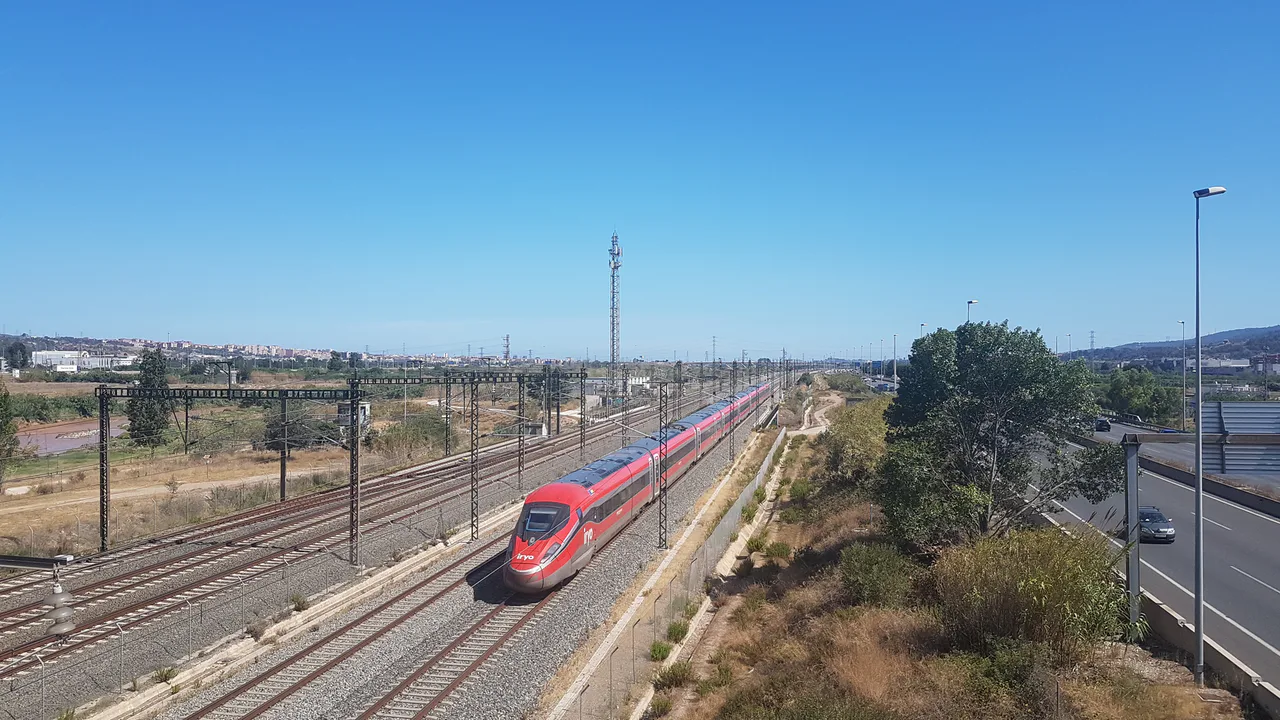
iryo introduced seQura technology on July 1, 2026 , allowing passengers to pay for tickets in instalments for the first time. The agreement adds a three-month interest-free option and six- and ten-month plans for amounts up to €3,000. The development acts on the digital purchase of a journey: it creates alternatives for distributing its cost and opens a collaboration the companies want to extend into their relationship with travellers.
The partnership brings together a high-speed operator in the Spanish market and a technology platform founded in Barcelona. Its commercial mechanism is specific: intervening at the stage where an intention to travel becomes a purchase. The announcement places checkout, payment experience and possible future loyalty initiatives within iryo's customer-relationship strategy. The payment provider consequently enters a journey that starts with demand for transport and continues through the decision about how to buy it.
The chosen moment is the start of July. The announcement connects the launch with a period of high mobility and tourism, presenting flexibility as a way to help customers plan their journeys. The first announced function is instalment payment for tickets. Exclusive benefits and other repeat-purchase initiatives appear as opportunities the companies will continue exploring, representing a subsequent development stage for the collaboration rather than the detailed launch of a rewards programme.
Three options with a defined scope
The terms communicated for iryo distinguish three interest-free months from the six- and ten-month options. The ceiling of €3,000 is mentioned for those longer plans. The wording matters because the agreement offers several durations without describing every option as free. Reading the offer means retaining what is specified for each plan, rather than turning the entire range into one promise of interest-free payment regardless of duration or configuration.
Payment terms announced in the iryo–seQura partnership
Payment options described in the July 1, 2026 announcement. Three months is described as interest-free; six and ten months are listed for amounts up to €3,000.
months
Tap or hover for details. All values are also available in the data table.
Collapse notes
Options announced for this integration. Durations do not compare financing cost; only the three-month option is expressly identified as interest-free.
Explore the data table
| Category | Announced term |
|---|---|
| 3-month option | 3 months |
| 6-month option | 6 months |
| 10-month option | 10 months |
The plan's duration changes when expenditure is distributed, rather than the transport service being booked. A customer makes a decision about a journey, while payment introduces another decision about settling its price. The integration relates those two elements inside the digital experience. This is the function through which seQura enters the traveller's purchase journey, after interest in travelling exists and the transaction needs to be completed through the operator's commercial process.
seQura's current Divide en 3 page , consulted in October, explains the general mechanics of its three-instalment product: the first payment is made at purchase and the next two are collected monthly. This establishes how the provider describes the product's operation, while the July announcement sets out the specific options within its iryo partnership. The general product and the particular integration supply different levels of information about the commercial proposition.
The product's frequently asked questions detail the sequence: select the method, provide a national identity document number and mobile number, and make the first payment. Subsequent instalments are charged automatically to the card, with confirmation sent by email. Collection falls on the same day of the month as the purchase. This adds an operational sequence to the three-instalment label, beginning with the initial transaction and continuing through a defined schedule of later charges.
The general documentation also distinguishes interest from other possible costs. It presents Divide en 3 as free when the merchant offers that configuration, while allowing for a shop to apply a single opening charge, displayed during the process and collected with the first instalment. iryo's announcement describes its three-month option as interest-free. Retaining that wording explains the agreement without automatically transferring every configuration from the provider's wider catalogue to the operator's tickets.
The wider seQura catalogue includes other durations and products for different sectors. Its flexible-payments page offers options adapted to the merchant and buyer profile, distinguishing instalments from other payment methods. The railway agreement has its own three-, six- and ten-month configuration. Sector-level adaptation is part of the platform's proposition and explains why the limits of an individual integration are read from that integration's specific announcement rather than from the entire portfolio.
Checkout as part of customer acquisition
A purchase does not finish when a customer decides to travel. The customer must also complete the process turning that decision into a ticket. The agreement acts at this commercial stage through an integrated payment alternative. For marketing, the relevant connection is continuity between generating interest and enabling the transaction to close under options the traveller can choose from within the available offer. Payment becomes one component of the digital purchasing experience.
seQura's presentation divides its technology across moments in the journey: before purchase, during purchase and afterwards. It connects the first stage with acquisition, the second with conversion and the third with loyalty. Different tools appear in that description, from simulators and risk assessment to payment-management functions and rewards. The iryo partnership begins with instalment payment, inside this broader commercial understanding of how the provider intends to accompany a customer's purchasing activity.
The Divide en 3 page describes an experience remaining on the merchant's website, without asking users to upload documents. It adds prefilled details for registered users and returning customers and markets instant approval as part of the service. These are features through which seQura presents its checkout solution. The argument concerns the way a transaction is completed and the continuity experienced by somebody familiar with the system, alongside the duration of the payment plan itself.
Before purchase, its catalogue includes a price widget and instalment simulator. These are tools for presenting the offer, distinct from the collection of payment that follows. seQura's commercial proposition therefore includes how a payment option is displayed and understood as well as how it is processed. This distribution of functions places checkout within a wider journey: commercial information comes before selection and execution of the method, giving different parts of the provider's technology different roles in the purchasing experience.
The travel calendar and the purchase calendar
The monthly series published by Statista using INE figures provides a specific historical reference for the category's calendar. In 2024, long-distance intercity rail transport in Spain recorded 3,284,000 passenger journeys in January and 4,554,000 in July. July had the highest figure of the twelve months and exceeded January by 38.7%, calculated from the published values. This is historical context preceding the 2026 alliance: it shows the variation in activity observed within one complete year.
Monthly long-distance intercity rail journeys in Spain, 2024
All twelve observed months of 2024. July recorded 4,554 thousand passenger journeys, compared with 3,284 thousand in January; the observed difference is 38.7%. The table covers the long-distance intercity rail category, not iryo alone.
thousand passenger journeys
Tap or hover for details. All values are also available in the data table.
Collapse notes
Provisional historical figures for 2024. Passenger journeys are not unique people, checkout conversions or 2026 iryo/seQura results. One year’s monthly pattern is not a seasonal forecast.
Explore the data table
| Category | Passenger journeys |
|---|---|
| Jan 2024 | 3,284 thousand passenger journeys |
| Feb 2024 | 3,484 thousand passenger journeys |
| Mar 2024 | 3,916 thousand passenger journeys |
| Apr 2024 | 3,969 thousand passenger journeys |
| May 2024 | 4,190 thousand passenger journeys |
| Jun 2024 | 4,340 thousand passenger journeys |
| Jul 2024 | 4,554 thousand passenger journeys |
| Aug 2024 | 4,210 thousand passenger journeys |
| Sep 2024 | 4,282 thousand passenger journeys |
| Oct 2024 | 4,341 thousand passenger journeys |
| Nov 2024 | 3,673 thousand passenger journeys |
| Dec 2024 | 4,031 thousand passenger journeys |
The monthly pattern is more nuanced than a simple division between summer and winter. June reached 4,340,000 journeys and August 4,210,000. After July's peak, September recorded 4,282,000 and October 4,341,000. The latter figure was almost identical to June's. November fell to 3,673,000 and December closed at 4,031,000, above the start of the year. Long-distance activity therefore maintained a substantial volume in months following the summer holidays. The series provides a reference for locating an early-July launch without turning the behaviour observed in 2024 into an automatic forecast for another year.
The statistical unit is the passenger journey, expressed in thousands in the original table. It describes transport activity rather than counting unique customers: the same person can make more than one journey. Nor is it the time at which a ticket was purchased. The chart organises journeys by the month of transport; the seQura integration acts when a traveller books and pays. Both calendars relate to the rail business, but they concern different stages of the commercial relationship.
That distinction locates checkout's role precisely. Demand for travel creates purchase occasions; the operator presents its offering and the payment method completes the selected transaction. The monthly journey count helps explain the category's scale and timing. Three-, six- and ten-month arrangements describe another variable: how the outlay for an individual purchase can be distributed. A busier transport calendar and a longer payment calendar are different phenomena within the same travel experience.
Flexibility and risk assessment belong to the same service
seQura describes its infrastructure through three components: checkout technology, risk intelligence and flexible-payment options. Together, these explain its role in the agreement. iryo adds a payment method for travellers; seQura supplies a commercial solution organising both the application experience and the assessment required to offer instalments. Ease of use and risk management are different parts of that provision, bringing an interface and the operation behind it into one commercial proposition.
On its commercial pages, the platform calls its risk technology sQoring and discusses assessment adapted to the business and market. It also presents preapproval among functions before purchase. The content shows that instalment payments involve decisions beyond an interface for choosing a plan. The offer combines experience design with infrastructure for assessing and managing transactions, rather than treating the payment option solely as a visual element added to checkout.
The provider markets these capabilities through category specialisation. Its general page distinguishes retail, education, repairs and travel, among other areas, and says the experience is adapted to the sector and channel. iryo belongs to this expansion into services and experiences: a transport purchase enters a system already working with merchants in Europe and Latin America. The announcement puts that network at more than 6,000 businesses, locating the technology partner within a wider commercial distribution model.
A launched function and a relationship intended to grow
Fabrizio Favara , iryo's CEO, places the agreement within the objective of offering a more comfortable, flexible travel experience aligned with customer needs. In the announcement he connects the payment alternative with planning journeys and managing purchases. The focus is the traveller's experience and the choice the new method adds to the commercial process, expressed through a payment option linked to a service the customer has chosen to buy.
David Bäckström , seQura's CEO, presents instalments as the first visible function and describes a longer-term relationship objective. He discusses infrastructure supplying flexibility, control and benefits. The companies add that they will explore exclusive experiences and advantages, loyalty and repeat-purchase initiatives. This is a development agenda following the initial announced function, keeping the first payment feature identifiable while explaining why the collaboration extends beyond the immediate transaction in its commercial ambitions.
The purchase also opens a payment-management relationship
The flexible-payments page also includes management of a payment date or plan, placing these functions after purchase within its catalogue. They belong to the ecosystem it presents to merchants. The iryo agreement describes infrastructure intended to accompany travellers before, during and after buying. The communications together explain how seQura understands its activity beyond one screen for selecting instalments, with functions connected to different moments in the commercial relationship.
For Divide en 3, account management includes changing the collection card or completing a plan early. Its explanation of changing cards describes a one-euro validation charge deducted from the final instalment. To settle the remaining amount, documentation lists card payment, bank transfer or deposit. These are payment-product administration functions, extending the service beyond purchase and describing the relationship with seQura, while the transport service itself belongs to iryo.
Adaptation also appears in the merchant proposition. seQura offers prebuilt integrations or ready-to-use libraries and a team covering customer support, conversion optimisation and marketing. Payment is marketed as a combination of technology and commercial support. The railway case places that proposition inside a specific purchasing experience with the options announced for tickets, making it one application of a wider platform rather than a generic offer copied unchanged across every sector.
A Spanish-market operator and a Barcelona-founded partner
iryo began operating in 2022 and the announcement describes it as a private high-speed operator in Spain. Its shareholders include the majority owner, Gruppo Ferrovie dello Stato Italiane, alongside Air Nostrum and Globalvia. That structure distinguishes activity in the Spanish market from the nationality of every investor. The story connects this operator with a Barcelona-founded platform whose own legal notice documents its Spanish identity and commercial registration.
The corporate description included with the partnership identifies iryo's initial fleet as twenty new trains and an investment of €800 million. This is context for the scale of the transport service presented by the company. The new feature enters its digital commercial experience: it changes the available ways to pay rather than the journey specified by a ticket. The transport operation and the payment option consequently remain distinct parts of the proposition.
seQura describes operations in Europe and Latin America and millions of shoppers alongside more than 6,000 merchants. The railway agreement broadens the kinds of purchase to which it directs its technology. Its growth argument combines distribution through a new partner, adaptation to travel and a relationship the companies intend to develop after the first payment. Each element performs a different role within the strategy communicated by the two businesses.
Who's who and how to read the figures
iryo is the railway operator adding payment options to its tickets. Fabrizio Favara appears as CEO in the announcement. seQura is the technology partner; its legal notice identifies SeQura Worldwide S.A., based and registered in Barcelona. David Bäckström appears as the platform's CEO. The addition was announced on July 1, 2026 , and presented as the first instalment-payment option since iryo began operating, making it the event at the centre of this story.
Three interest-free months is one option within the agreement. Six and ten months are the other announced durations for amounts up to €3,000. seQura's general catalogue contains additional configurations for other businesses and does not replace those terms. More than 6,000 merchants describes the provider's reported network in Europe and Latin America; twenty trains and €800 million belong to the iryo corporate context included in the same source.
Checkout is the stage at which a purchase is completed; conversion is the transition to a completed transaction; and repeat purchasing describes subsequent buying. Risk assessment belongs to the payment infrastructure. Future loyalty initiatives are part of the agenda the partners intend to explore. These distinctions explain the story's commercial mechanism: a payment function added to the travel purchase and a collaboration with further development opportunities beyond that initial feature.
In this article
Marian Vasile
Marian Vasile is a MarTech and growth professional. His work spans product marketing, SEO, paid advertising and deep online tracking, including behavioral analytics and attribution.