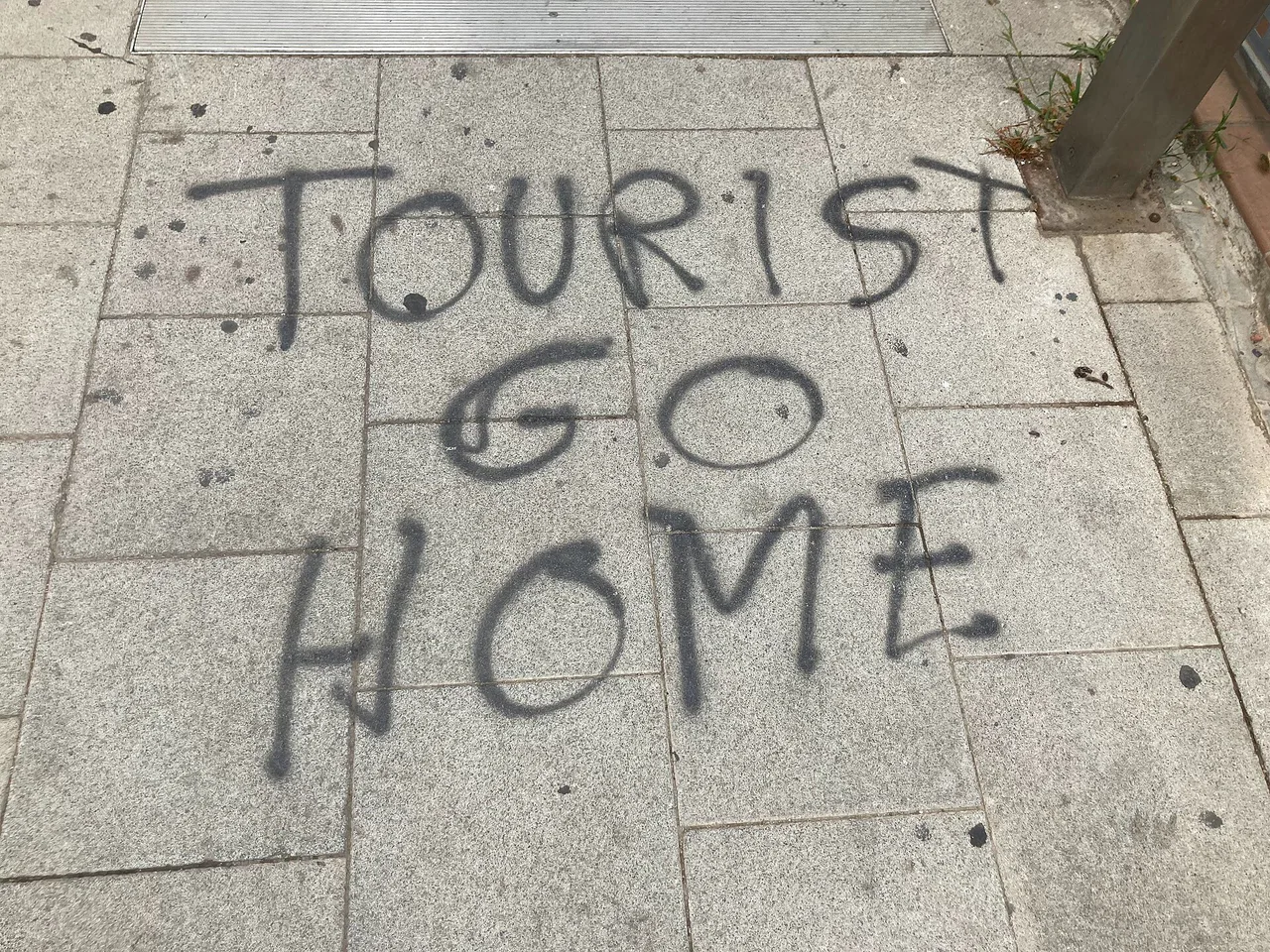
Housing and everyday coexistence have gained ground on protest in Spain's digital conversation about tourism. Torres y Carrera 's Tourism Barometer 2026 describes that shift during August and identifies holiday prices, heat and wildfires among the concerns accompanying the trip.
The Spanish communications consultancy published its findings on 24 September after examining 40,000 records from 28 July to 26 August: 20,000 social results and 20,000 news results. The research offers a reading of the subjects circulating during those weeks and how they changed at the height of the summer season.
The finding matters to tourism marketing teams for a specific reason. Conversation around a destination contains messages different from those the brand chooses to promote itself. The material includes accommodation costs, tourist apartments, owners' associations, discomfort in the heat and the consequences of wildfires. These issues connect the promise of the trip with what happens in the place people are being invited to visit.
Torres y Carrera combines digital listening, artificial intelligence and human work in a series it began in 2024. Its September edition incorporates social publications and news coverage. The result shows how one sector produces conversation about holidays, housing, environmental emergencies and new reasons to travel, with different implications for its communication.
A conversation sample across two information spaces
The barometer's technical note divides the 40,000 records into two equally sized groups. That allocation makes room for both social conversation and the account offered by the media. A social result and a news story are different units: one shows expressions and reactions, while the other helps identify the issues entering the news agenda.
The document interprets the two spaces together. In its discussion of overcrowding, it says the shift from protests towards housing also appears in news results. That overlap helps explain why a communications team may encounter the same issue in a resident's post and in a news story, although each presents it with different language and purpose.
The sentiment distribution published in the report places neutral conversation at 41.6%, negative conversation at 35.5% and positive conversation at 22.9%. These are categories applied to the material studied. The negative component therefore sits alongside a larger neutral group and a body of positive messages. The barometer describes tensions and opportunities within the same observation period.
Sentiment in the tourism conversation analysed
Sentiment distribution published in the September 2026 Tourism Barometer by Torres y Carrera, covering digital listening from 28 July to 26 August.
Tap or hover for details. All values are also available in the data table.
Collapse notes
Sentiment categories in the conversation studied; these are not percentages of survey respondents.
Explore the data table
| Category | Classified conversation |
|---|---|
| Neutral | 41.6% |
| Negative | 35.5% |
| Positive | 22.9% |
Reading that distribution requires keeping its unit intact: classified conversation, rather than people answering a survey. A post about a cancellation, a housing story and a comment about a booking can address different issues even if they share a sentiment label. The useful marketing information emerges by connecting the tone with the specific subject and the moment when it appears.
Housing brings the debate to the place of stay
At the beginning of the period, the barometer identifies an overcrowding conversation closely associated with demonstrations and citizen mobilisation, particularly in the Balearic Islands. During August, the focus moves towards holiday rentals, the conversion of housing or commercial premises and coexistence. The issue reaches decisions affecting buildings and neighbourhoods as well as visible protest.
The study's presentation describes a development the consultancy has followed since 2024. That year, protests against overcrowding gained visibility on social networks and in international media. In 2025, regulation, housing and the economic model became more prominent. The 2026 edition places household finances and everyday life at the centre of that continuing story.
This change in subject has consequences for the content a tourism brand considers relevant. Pictures of accommodation and activities explain part of the experience. Conversation about the location also concerns who uses its buildings, how space is shared and the relationship established between visitors and residents. The research brings those questions into a single reading of the destination.
The distinction between those audiences runs through the account. Visitors look for somewhere to stay and enjoy their time; residents live with tourism activity during the rest of the year. Listening picks up signals from both. Treating them as an undifferentiated audience would lose the connection between travellers' expectations and local concerns that the barometer documents.
Georgina Leibovich , the consultancy's corporate-area director, places the change within more than two years of observation. In the presentation, she says attention has moved closer to household budgets, housing and coexistence. Her interpretation connects the research with corporate communications: recognising the issues beginning to define the relationship between an economic activity and the place in which it operates.
Price becomes part of the experience people describe
The report says conversation about holiday prices gains prominence as August progresses. Subjects include accommodation, reduced available budgets, shorter holidays and cheaper alternatives. These are different ways of discussing the same constraint: what the trip costs and which possibilities that cost leaves open to the visitor.
The sequence matters because price does not appear only when people compare a reservation. It also accompanies their assessment of a trip once it has begun. Length of stay, accommodation type and the activities people can afford influence the account they give of their holidays. The barometer captures that combination of commercial decisions and everyday experience.
For accommodation marketing, the reading supplies more precise context than a general reference to price sensitivity. The conversation distinguishes between paying for somewhere to sleep, shortening a holiday and looking for another place or format. Each issue points to a different decision in the customer journey, from the original comparison to the assessment of what the visitor ultimately enjoyed.
Housing adds another dimension to the same economic vocabulary. Accommodation prices concern the visitor, while access to a home affects the resident. Both can appear in tourism conversation and carry different consequences for a destination's reputation. The barometer connects them without reducing the discussion to a single purchasing preference.
That proximity between cost and coexistence explains the commercial usefulness of listening beyond a brand name. The research follows sector issues that shape how an offer is interpreted. A message about affordable holidays circulates in an environment where other people are discussing the cost of living in the place. The context changes what that promise means to different audiences.
Heat enters the conversation about accommodation
Climate has its own place in the study. The analysed publications include destinations affected by extreme temperatures, hotels used as climate shelters, discomfort during heatwaves and people expressing an intention not to return to certain places. Accommodation consequently appears as part of the response to a condition affecting the whole trip.
The distinction drawn by Torres y Carrera is specific: heat is shaping the tourism experience, while the material studied does not yet describe a significant reorganisation of the destination map. For interpreting the barometer, the experience on location is the central observation. The document does not convert every temperature comment into a different booking decision.
In communication, that approach directs attention towards particular aspects of the stay. Comfort during an episode of heat has an immediate meaning for someone already travelling. Conversation about a hotel as a climate shelter belongs to that moment of service use, with a different content from the inspiration that preceded the journey.
The result also broadens the reading of the customer journey. Searching and booking are two moments in the relationship with a destination; conditions during the visit and an expressed intention to return add others. The study finds references to those moments within the same listening exercise. Its value lies in showing how environmental issues connect with expressions about the stay and its possible repetition.
Wildfires produce a localised conversation
Wildfires feature prominently in the general summer conversation. When it concentrates on references linked to tourism, the report identifies a more localised impact: tourist and campsite evacuations, cancellations, natural-area closures, affected rural accommodation and fewer visitors. The national scale of environmental debate translates into different problems for individual places.
The document also includes subsequent campaigns to restore tourism activity. That sequence brings together two moments of communication with different needs. During the emergency, conditions of the stay and interruptions dominate; afterwards, the destination tries to rebuild its image and economic activity. The barometer observes the transition between these accounts within the sector.
For a brand connected with a territory, the place name can appear alongside references directly affecting a travel decision. The closure of a natural area has a specific relationship to planned activities; a cancellation changes the booking; a recovery campaign seeks to reopen discussion of what is available again. The report treats these subjects as part of the tourism experience.
The commercial reading comes from that geographic and temporal precision. A destination can move from attention surrounding an emergency to a need to explain its recovery. Listening to how the subject changes makes it possible to place communication within that actual sequence, rather than treating every wildfire reference as one uniform conversation about Spanish tourism.
An eclipse opens another window of demand
The solar eclipse of 12 August 2026 supplies a different story within the same summer. Torres y Carrera identifies a conversation peak coinciding with that date and references to occupancy, bookings, spending, rural tourism and travel towards the path of totality. Inland destinations appear in association with a reason to travel on a precise date.
The phenomenon shows how a reason to make a journey can reorganise the account of a territory for a few days. Attention concentrates on observing the eclipse and extends to accommodation and surrounding activities. In the conversation captured by the study, astronomical tourism connects an event with decisions about staying and spending in the location.
The report also observes references to the eclipse of 2 August 2027, including advance reservations and pressure on prices and availability. Here, the calendar links the experience of 2026 with planning another visit. Listening identifies an issue entering conversation before the following season, with a direct connection to advance booking.
This example gives the study a commercial dimension beyond managing a reputational concern. The same research that detects friction also identifies a travel motivation. For tourism businesses, relevant information includes both issues making the experience more difficult and events creating a specific reason to look for accommodation at a particular time.
Demand grows in the same summer as the debate
The conversation described by Torres y Carrera coincides with a month of strong visitor arrivals. Provisional FRONTUR figures , published by Spain's National Statistics Institute on 2 October, count 12,256,087 international tourists in August 2026, an increase of 9.2% from the same month of 2025. From January to August, the total reached 70,362,493, up 5.4%.
The Balearic Islands, the territory highlighted by the barometer when it discusses the early protests in the observation period, were also the leading destination for those international tourists in August. They received 2,596,458, or 21.2% of the national total. Catalonia received 2,380,108, accounting for 19.4%, and Andalusia 2,065,044, or 16.8%. Their annual growth rates differed: 2.6% in the Balearics, 9.1% in Catalonia and 21.3% in Andalusia.
The three leading destinations for international tourists in August
International tourist arrivals in the three autonomous regions leading the main-destination ranking in August 2026, according to provisional FRONTUR figures published on 2 October.
tourists
Tap or hover for details. All values are also available in the data table.
Collapse notes
Main destination of international tourists. The chart shows the three leading regions, excluding other destinations and resident tourism.
Explore the data table
| Category | International tourists |
|---|---|
| Balearic Islands | 2,596,458 tourists |
| Catalonia | 2,380,108 tourists |
| Andalusia | 2,065,044 tourists |
That comparison supplies scale for the subject being communicated. Growth in arrivals can coexist with a conversation concentrating on how tourism is experienced in each place. The statistics institute describes visitor flows, while the barometer records discussion topics. Together, the readings place a summer of high demand alongside a debate moving closer to its everyday effects.
Accommodation type supplies another specific connection. FRONTUR counts 8,043,507 tourists using hotels as their principal accommodation, up 6.6% year on year, and 1,570,585 using rented housing, up 13.7%. These are tourists classified by their main accommodation, rather than counts of properties or nights. The figures show the commercial scale of two formats that appear differently in the study's conversation.
The distinction matters when considering the housing discussion. Someone booking a rental is part of the visitor flow measured by FRONTUR. A discussion about a building or neighbourhood belongs to the material followed through digital listening. The sources describe related aspects of the same sector, using different units and purposes. Keeping those meanings visible allows the business context and the communication finding to inform one another.
The institute also reports that almost 9.2 million tourists travelled without a package and almost 3.1 million with one. The first group grew by 9.3% and the second by 8.8%. Travel organisation supplies another view of the market in which accommodation providers and destinations operate: packaged itineraries coexist with choices assembled separately by the traveller, creating different occasions to seek information.
For tourism communication, that context places the concerns in the barometer within an expanding commercial activity. References to price, accommodation and coexistence emerge around demand that continues to grow. The digital research provides the content of that discussion; arrivals provide a measure of its economic and territorial scale. Each source illuminates a different part of the relationship with the destination.
From a mention to a communications decision
The barometer's martech contribution lies in organising digital material around business questions. Its process starts with social and news records, identifies subjects and sentiment, follows their development during the period and offers an interpretation for the sector. The report places artificial intelligence alongside human knowledge in that work of reading and classification.
The findings show why an aggregate mention count does not exhaust the available information. In overcrowding, the subject shifts from protest to housing; in climate, experience during the stay comes to the fore; in the eclipse, a date concentrates attention and references to reservations. Each pattern has a different meaning for content, communications and the relationship with the customer.
Leibovich describes social conversation as an early-warning system for residents' and travellers' concerns and expectations. That is the function the consultancy attributes to its research. It places a tourism offer within the context in which it is received, recognises issues beginning to gain space and explains why the account of a destination changes during the season itself.
The 2026 edition depicts a summer in which promotion sits alongside questions about housing, budgets and comfort, as well as an event attracting attention towards inland locations. The marketing usefulness of the barometer comes from connecting those pieces: who is speaking, what they are discussing and when experience, concern or an intention to travel enters conversation.
Who's who and how to read the figures
Torres y Carrera is the Spanish communications consultancy that produces and publishes the barometer. Georgina Leibovich heads its corporate area and explains the findings in the September presentation. The series began in 2024; the edition examined here is dated September 2026 and analyses the period from 28 July to 26 August.
Digital listening organises references published in social spaces and news media to identify subjects and their development. The 40,000 records comprise 20,000 social results and 20,000 news results. Negative, positive or neutral sentiment describes the classification of the analysed conversation and does not equal the proportion of Spaniards sharing an opinion.
A destination brings together visitors, residents, accommodation providers and other businesses with different interests. Overcrowding, housing, prices, heat and astronomical events appear in the study as subjects within that relationship. Reading them together explains the type of information the research offers to people preparing tourism communications.
In this article

Marian Vasile
Marian Vasile is a MarTech and growth professional. His work spans product marketing, SEO, paid advertising and deep online tracking, including behavioral analytics and attribution.