PeluqueríaShop increased Google Ads spending by 88.19% while improving return on advertising spend by 276.29%, according to the case study CrackPPC published on October 5. The professional-beauty retailer reorganised search traffic and concentrated its budget on products with stronger commercial potential.
Two other reported indicators help explain the change: average cost per click fell 69.89%, while the share of impressions that produced a click rose 40.38%. CrackPPC labels the results as a first-half review. The account developed in its case study begins with filtering traffic and organising the catalogue before increasing the amount invested in advertising.
The commercial challenge lay in the breadth of the offer. PeluqueríaShop sells to professionals and consumers, with products ranging from hair colour and brushes to straighteners, clippers and salon furniture. An advertising account distributing money across those products has to decide which demand is worth paying for, where to send it and what return justifies continuing to spend.
The agency describes an initial investment that was failing to produce the expected return: some of the budget reached irrelevant searches and products that did not fit the company's priorities. Its intervention linked three decisions often shown in different parts of an advertising account: the query triggering the ad, the catalogue segment receiving exposure and the budget supporting that combination.
A professional retailer serving several kinds of purchase
PeluqueríaShop is the online store of Beauty Trading Concept 2017, a Spanish company whose website identifies an address in Lugo and its incorporation in the Madrid Commercial Register. Its company introduction claims more than 10,000 product references and says it serves hairdressing, beauty and barbering professionals alongside people shopping for their own personal care.
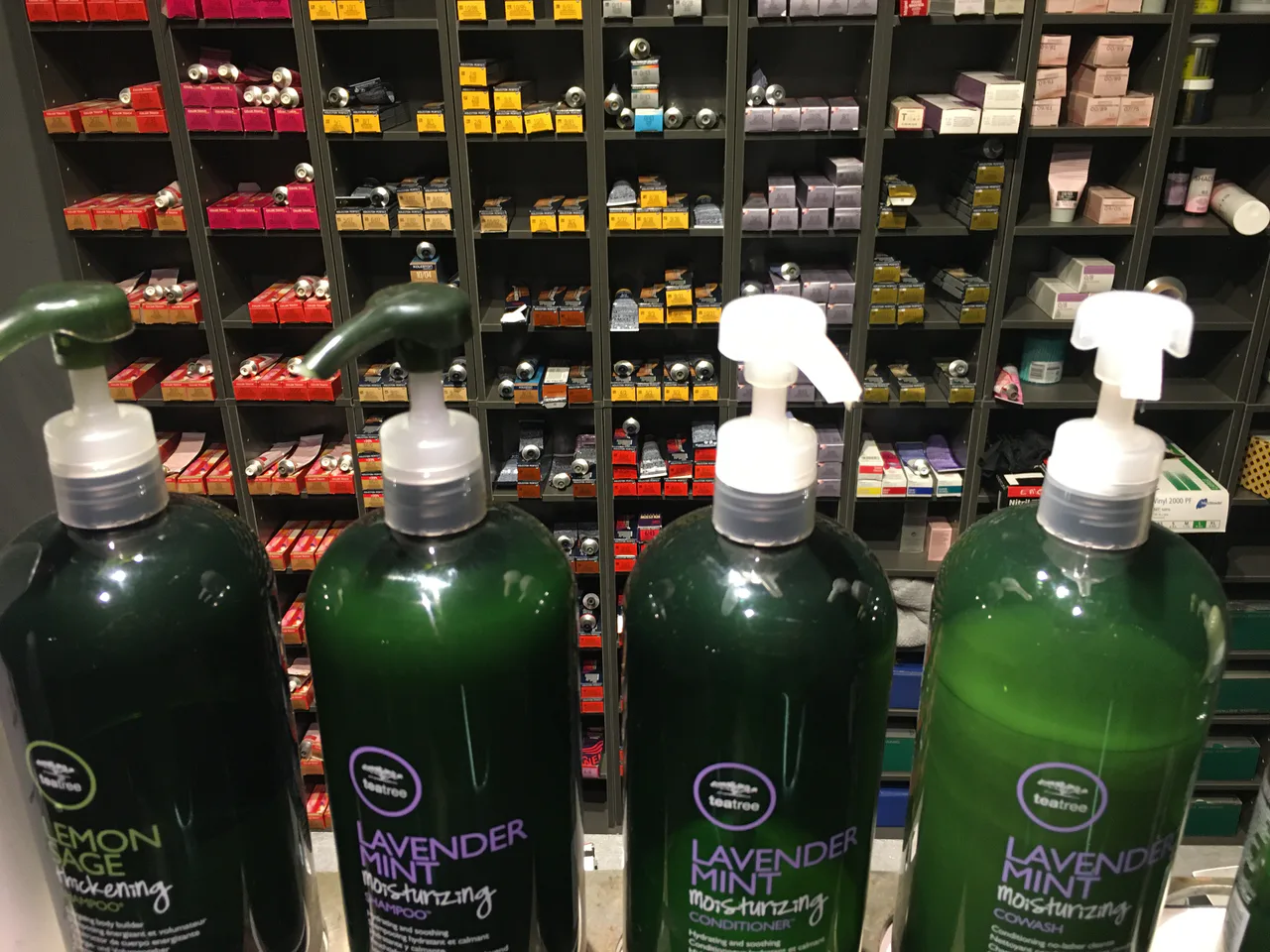
That breadth is visible in the product families the store lists: hair colour and treatments, electrical appliances, salon accessories, face and body care, makeup, manicure and barbering. The manufacturers it names include L’Oréal Professionnel, Revlon Professional, Schwarzkopf, Wella, GHD and Wahl. Those names sit in the same store as categories organised around a function, a product format or a buyer's particular need.
This mix changes what a search can mean. A manufacturer's name, a product category and a personal-care need do not describe precisely the same intention. Distinguishing them helps PeluqueríaShop connect a query with the available offer. The case study places the initial problem there: some searches brought visits but failed to contribute enough sales or commercial value for the business paying for the clicks.
The retailer also presents service arguments alongside its product range. The page reviewed on October 18 offers free shipping from €49 and delivery within 24 or 48 working hours for mainland Spain and the Balearic Islands. These are the company's current advertised conditions on that page. They complete the proposition for customers choosing a product and considering how they will receive their order.
The storefront observed in October includes Revlonissimo hair colour, a GHD Chronos straightener, Parlux dryers, cutting tools and barber chairs. This variety gives substance to the allocation problem the agency describes. The catalogue can attract very different needs, but having a product listed in the store does not by itself determine how much Google Ads budget that product should receive.
The retailer's current identity includes another recent change. Its legal notice says that, since September 15, 2026, PeluqueríaShop has integrated the activity of Avandeza , another store belonging to the same owner. The company therefore presents two trading names within one legal entity. This describes the present scope of the business and its digital presence, separately from the first-half advertising account developed in CrackPPC's case study.
The first changes concerned the searches consuming the budget
CrackPPC began by analysing the search terms bringing traffic to the account. Its account of the work describes reviewing buying intent and each query's fit with the catalogue. The agency identified generic, informational or poorly matched searches, then expanded and reorganised negative keywords. It also adjusted match types to limit entries that did not support the commercial objective.
The distinction between a keyword and a particular search query matters in this case. The former belongs to campaign configuration; the latter is what a person actually typed before triggering an advertisement. Reviewing that second layer shows where the clicks an account is paying for originate. PeluqueríaShop used this examination to reduce exposure to searches that did not fit the products it wanted to sell.
Negative keywords work as exclusions, allowing advertisers to identify searches that should remain outside their advertising. Match types govern the relationship between configured keywords and the queries that can trigger ads. The case study says both were adjusted together. It therefore describes improvement through decisions about the composition of traffic and the commercial usefulness of visits, as well as the cost of acquiring them.
The criterion was not simply to retain the cheapest searches. The agency says it evaluated whether each query signalled buying intent and corresponded to products the business wanted to promote. An inexpensive click can still consume budget without bringing a sale closer; a specific search can merit attention because it fits a catalogue item. This selection logic runs through PeluqueríaShop's account of the work.
By filtering entries with little value, the account could concentrate spending on traffic better related to the offer. The fall in average CPC reported by CrackPPC belongs to the results of that combined process. Its significance becomes clearer alongside product selection: buying visits at a lower cost has commercial meaning when those visits reach products the company wants, and is able, to sell.
Product groups brought commercial priorities into the account
The second change concerned the selection of advertised products. CrackPPC says it grouped categories and individual items using demand, sales volume, ROAS and acquisition cost, then considered those indicators alongside each product's importance to PeluqueríaShop. The result was a commercial segmentation of the assortment, rather than an indiscriminate distribution of advertising investment across every available item.
Each indicator supplied a different view. Demand showed the interest encountered by a product family or item; sales revealed its commercial movement; ROAS related attributed revenue to advertising spending; acquisition cost helped assess the money needed to generate a response. The agency considered these together when deciding where to increase exposure and where to reduce it within the same catalogue.
Business priority added a decision that an advertising platform cannot make merely from a product's name. PeluqueríaShop had to determine which categories and items it wanted to promote. The case says this commercial importance was considered alongside campaign performance. Product selection therefore remained part of the conversation between the retailer and the people managing its advertising budget, rather than becoming a separate exercise.
This helps explain why a large catalogue can require a selective strategy. Two products can both generate traffic yet perform differently when sales, spending and business priorities are considered together. CrackPPC's grouping allowed each segment to receive treatment reflecting that combination. The agency attributes to this work a reduction in exposure for products that consumed budget without contributing a sufficient return.
The account also keeps ROAS connected with volume. The agency says it reviewed return alongside the budget used and the sales generated. For a retailer seeking growth, a percentage alone does not show how much commercial activity an advertising account supports. Considering return alongside spending helps identify which segments can accommodate more investment and which require changes before receiving additional money.
Four results describe four different movements
CrackPPC reports an 88.19% increase in spending, a 276.29% improvement in ROAS, a 40.38% rise in CTR and a 69.89% reduction in average CPC. These are changes in four separate indicators. The chart retains their labels so readers can distinguish the movement in spending, the change in return, the response to advertisements and the cost of a visit.
Reported changes in the PeluqueríaShop case
CrackPPC presents these percentage changes in its first-half review. Each bar represents a different advertising-account indicator; the figures are not absolute levels of return, clicks or sales.
Tap or hover for details. All values are also available in the data table.
Collapse notes
Percentages attributed to the agency case study. The original period label is “first half”, without a specified year or comparison baseline.
Explore the data table
| Category | Reported change |
|---|---|
| Advertising spend | 88.19% |
| ROAS | 276.29% |
| CTR | 40.38% |
| Average CPC | -69.89% |
The ROAS change needs a precise reading. The indicator expresses how much revenue advertising measurement attributes to each monetary unit spent on ads. A 276.29% improvement describes a change in that relationship relative to the reference used in the case; it does not mean the final ROAS level was 276.29%. Nor is it the retailer's net profit, which includes costs beyond the Google Ads budget.
CTR relates clicks to impressions, while average CPC relates spending to clicks. A 40.38% increase in CTR is a relative change in the indicator, rather than a rise of 40.38 percentage points. Read together, the reported figures describe advertising that produced more responses relative to its appearances and paid less for each visit, according to the agency's account, while total spending increased.
The 88.19% investment increase adds the question of scale. The account did more than reduce expenditure: the case argues that it could devote more money to the channel while those indicators improved. That decision involved reallocating budget towards campaigns, categories and products with greater potential, using conversion value, ROAS and traffic costs to follow the relationship between volume and efficiency.
In this sequence, increasing the budget followed the reduction of inefficient spending and the review of product selection. This is a specific part of the work CrackPPC describes. The agency presents bid and budget management as an activity carried out by segment and connected to the response of each part of the catalogue. Account growth was built around allocation decisions, rather than an equal increase across all campaigns.
The catalogue keeps working after a visitor reaches the store
The current homepage provides a view of the next part of the commercial journey. Products appear in cards with an image, name, price and calls to buy or view products. Special promotions sit alongside featured items and new arrivals. Visitors encounter everyday-care categories as well as professional equipment, with discounts shown in euros or as percentages depending on the particular product.
Navigation adds routes through brands and customer needs. Within hair care, for example, the store lists shampoo families for coloured, curly or sensitive hair; electrical tools and barbering have their own groups. This classification provides a commercial vocabulary for describing the assortment. Advertising selects which demand to attract, and the store then provides routes for locating a product within a broad offer.
These current pages help explain what prioritising the catalogue means in an account such as PeluqueríaShop's. The offer combines care products, tools and equipment, presented through categories and promotions. These are observations of the storefront on October 18. CrackPPC supplies the account of the advertising intervention, while the store shows the commercial variety around which those decisions are made.
The visible product descriptions also distinguish versions and pack sizes. The homepage presents a 500-millilitre curl cream, a styling wax available in strong and soft-hold versions, and tools with different size options. These attributes help identify an individual item within a product family. Such catalogue precision gives context to advertising selection: a category brings related products together, while individual items retain characteristics that influence the buyer's choice.
Bundles provide another way of presenting the offer. The store displays shampoo-and-mask combinations, curly-hair care kits and a dryer sold with a diffuser and accessories. The assortment can therefore be organised around an individual product or a combination. In the observed storefront, that merchandising decision sits alongside promotions and featured items, creating different routes into the same care or equipment need.
Availability is visible too: two Olaplex kits are labelled out of stock. The detail shows that a commercial catalogue has product states, as well as names and prices. In its advertising account, CrackPPC says decisions were considered alongside the products PeluqueríaShop needed to promote. Reviewing the storefront illustrates why this conversation requires knowledge of the offer a visitor can actually encounter after leaving an advertisement and entering the store.
The professional channel also retains a recognisable proposition in the company's introduction: product availability, advice and delivery. Those arguments coexist with products that may interest final consumers. Acquisition therefore operates around a single store serving several purchasing contexts. Grouping by performance and commercial priority provides a way to organise advertising without treating the whole assortment as a uniform offer.
Retailer coordination completes the use of campaign data
CrackPPC includes coordination with the client among the elements of the intervention. Joint reviews connected investment, sales and ROAS with the categories and products the retailer needed to promote. This exchange allowed campaign performance to be considered alongside commercial priorities when deciding subsequent adjustments to the catalogue and budget. The advertising account therefore received direction from the business as well as its platform indicators.
The testimonial published in the case, attributed to Peluquería Shop under the role Digital Marketing & Web Specialist, highlights the ease of understanding investment decisions and discussing needs with the agency. That is a corporate attribution, matching the source. Its relevance here concerns the connection between information and decisions: platform indicators were discussed alongside what the retailer wanted to achieve with its products.
The case brings together a recognisable growth mechanism: filtering poorly matched searches, segmenting a broad catalogue by performance and commercial relevance, then translating those choices into budget allocation. The reported figures are the agency's account of that intervention. PeluqueríaShop's contribution to the discussion of acquisition lies in showing how the selection of advertised products and the quality of demand were managed as parts of the same commercial decision.
Who's who and how to read the figures
PeluqueríaShop is the professional-beauty store of Beauty Trading Concept 2017 S.L., selling hairdressing, beauty and barbering products to professionals and individuals. CrackPPC is the agency publishing the case and describing the Google Ads intervention. The results reported here come from that account, released on October 5, 2026. The catalogue and service conditions mentioned were observed on the retailer's website on October 18.
PPC refers to pay-per-click advertising. ROAS relates revenue attributed to advertisements to advertising spending; CTR relates clicks to impressions; CPC is average cost per click. The four figures in the chart are percentage changes reported by the agency in its first-half account. The product-reference total and shipping arguments belong to PeluqueríaShop's current company introduction and describe its commercial offer.
In this article

Marian Vasile
Marian Vasile is a MarTech and growth professional. His work spans product marketing, SEO, paid advertising and deep online tracking, including behavioral analytics and attribution.