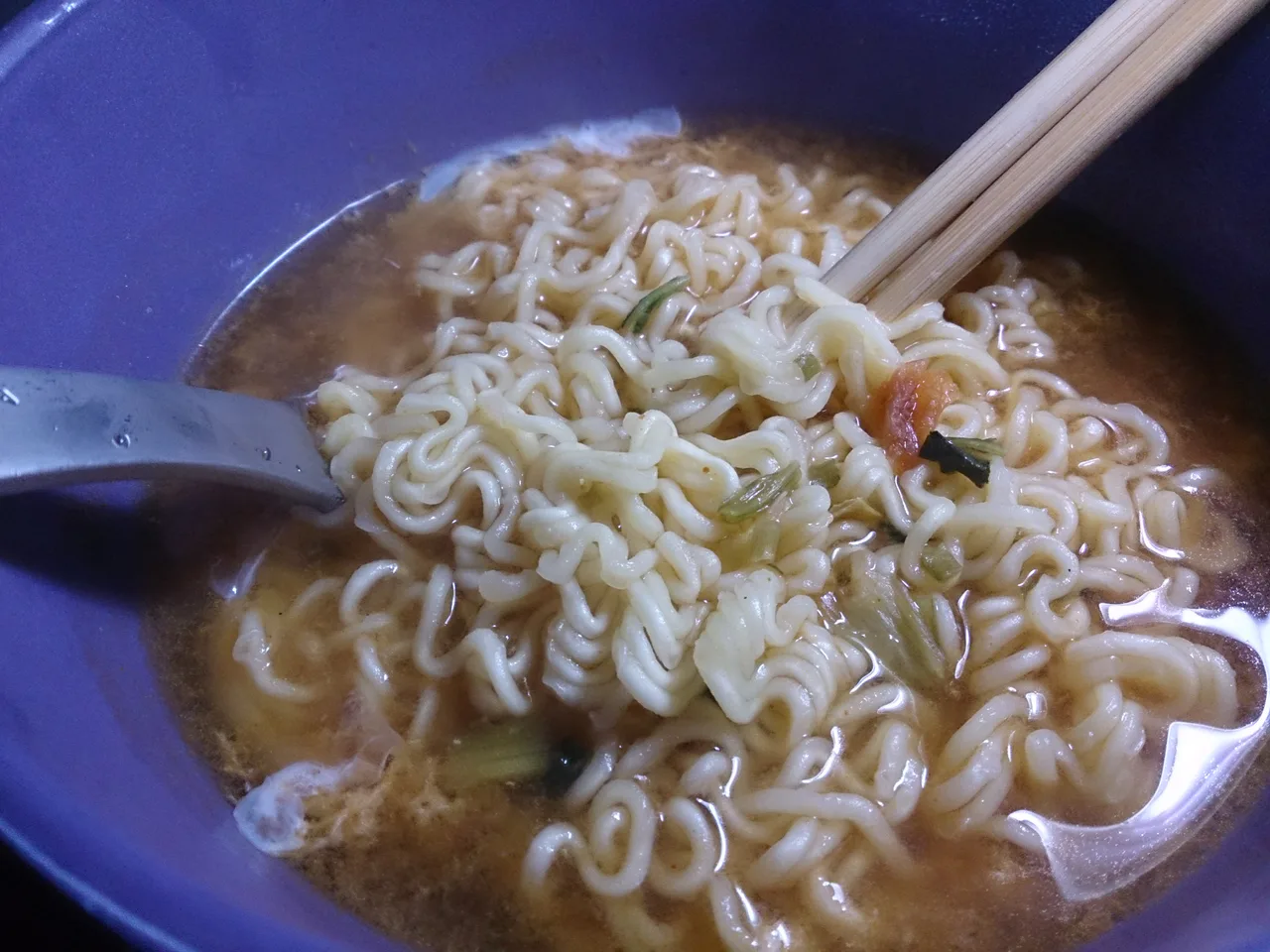
Yatekomo has made packaging from its old recipe the raw material for its latest launch. The GBfoods brand is offering a total prize fund of €100,000 to the five participants who collect the most valid cups of the formula it is replacing. The journey begins with a video featuring Miranda Visscher , CEO of GBfoods Europe, continues with a search in supermarkets or at home, and leads to a website for registration and photograph submissions. The product renovation gives consumers a specific action to complete.
The campaign, called Sayonara, runs in Spain from 14 to 31 October. MarketingNews detailed the launch on 16 October, while ReasonWhy explained the mechanics on 15 October. A week earlier, on 8 October, representatives of GBfoods and PS21 had presented the strategy while it was still in development at Enamorando al Consumidor Barcelona. That sequence shows how an intention to change the category becomes a promotion: the brand problem is explained first; an executive then acknowledges it publicly; consumers finally receive a task tied to the product itself.
A 96 million-serving market with an uneven growth path
The World Instant Noodles Association, WINA, estimates Spanish instant-noodle demand at 96 million servings in 2025. Its series moves the discussion away from an assumption of continuous expansion: it records 90 million in 2021 and another 90 million in 2022, falls to 79 million in 2023 and recovers to 94 million in 2024. The 2025 increase amounts to two million servings, or approximately 2.1%, calculated from the published figures. The previous year had recorded a rebound of around 19% from a substantially lower base. Those increases describe different stages of a recovery rather than a constant annual growth rate.
Spain: estimated instant-noodle demand
WINA annual estimates for all instant-noodle brands and formats in Spain, from 2021 to 2025. The unit is millions of servings.
million servings
Tap or hover for details. All values are also available in the data table.
Collapse notes
Demand estimates for the entire category, not people, individual cups or Yatekomo sales. WINA says estimates are generally based on external research and can be revised. The table states an update of 6 August 2026 and a subsequent revision to Vietnam and the world total on 13 October. Changes calculated from the shown values: 2024/2023 ≈19.0%; 2025/2024 ≈2.1%; 2025/2021 ≈6.7%.
Explore the data table
| Category | Estimated demand |
|---|---|
| 2021 | 90 million servings |
| 2022 | 90 million servings |
| 2023 | 79 million servings |
| 2024 | 94 million servings |
| 2025 | 96 million servings |
Between 2021 and 2025, the net increase is six million servings, about 6.7%. The trajectory contains a decline, a recovery and a subsequent slower rise. That sequence matters when interpreting Yatekomo's renovation: the latest annual figure shows a growing category, but one that does not maintain the same pace every year. The brand is working on its product proposition within this market. The series does not attribute those movements to particular ingredients, promotions or companies, so aggregate demand cannot establish those causes or identify an individual brand's contribution to the category.
The 2024 recovery added fifteen million servings and placed demand four million above its 2021 and 2022 level. The next year added another two million, reaching the maximum of the five available observations. These movements differ in size while retaining a common unit, providing a setting for GBfoods' account of reinvention. The renovation is being presented after that category recovery, with a product and communication strategy seeking a distinctive argument inside an already established market. The annual sequence describes the commercial background against which the brand has chosen to make its change noticeable.
The creative work covers Spain and Italy, according to ReasonWhy, and the table offers a contrast between those markets. Italy rises from 37 million servings in 2021 to 53 million in 2025, an accumulated increase of approximately 43.2%. Its latest rise, from 51 million in 2024, amounts to 3.9%. Both countries add two million servings during 2025, but from different starting points. That distinction is relevant for a brand explaining its transformation at European level: relative growth and absolute demand provide different readings of the commercial setting. The figures cover instant noodles as a category rather than Yatekomo sales or unique consumers. They frame the agency's documented geographic scope, while the prize competition described here addresses Spanish consumers.
A market measured in tens of millions of servings contains repeat purchases and familiar products. In that setting, announcing a recipe change needs a reason for consumers to look again. Sayonara uses the old packaging as that reason: it connects something that may remain in a kitchen cupboard with the new proposition. The category context and brand action meet in that specific commercial problem. The company draws on accumulated familiarity with the product to introduce renovation, while the search allows people to recognise physically what is being left behind. The old cup becomes part of making the new product noticeable.
The chief executive becomes part of the advertising argument
Visscher's intervention distinguishes the campaign. The head of GBfoods Europe acknowledges her dissatisfaction with the previous recipe and presents reformulation as a review of the standards the company wants to offer. Her presence brings the business decision into the foreground. The advertisement identifies a person with the authority to change the product and asks her to explain why she has done so. The former packaging becomes the object the company's leading executive is discussing, rather than an invisible predecessor to a new design.
This changes the starting point of the social conversation. A conventional advertisement might display the new cup and list its attributes. Here, curiosity comes from the company questioning a formulation it has sold. The social video provides a recognisable statement people can discuss, while the packaging search extends that attention beyond the screen. Participation retains the subject of the initial message: finding what the brand wants to say goodbye to. That continuity connects the prize with this particular product transformation, giving the promotion a reason to exist within the launch.
A reformulated product with a promise customers need to recognise
GBfoods describes the new noodles as made with ingredients it defines as 100% natural, without palm oil or artificial additives such as monosodium glutamate. MarketingNews also reports the company's statement that the reformulation retains the brand's characteristic taste and receives acceptance similar to the previous formula. Those are complementary messages within the launch: change what is in the cup while preserving a recognisable experience for existing customers. The first explains the renovation; the second addresses the possible reluctance of someone who already likes the product.
At their 8 October presentation, Salva Gómez , EU Category Director at GBfoods, and Sergio García , Strategy Director at PS21, had already located the challenge there. An improved recipe could become difficult to distinguish if it was advertised using familiar food-launch conventions. The creative work needed to make a transformation noticeable when a shopper might otherwise overlook it. Visscher's admission turns that communications problem into a scene: the company makes its own decision to revise the product visible. A business choice becomes the starting point of the public story.
The corporate purpose connecting that transformation is Taste You Can Trust. In the company's account, Yatekomo's reformulation belongs to a wider renovation of GBfoods Europe's portfolio. The launch connects an individual brand, a convenience product and executive responsibility with that purpose. The campaign can be explained through one cup and one person, even though the organisational intention covers a broader assortment. That scale helps explain the appearance of the European CEO rather than a message delivered solely by a promotional spokesperson speaking about the competition.
From the video to the cup: participation has several stages
ReasonWhy describes a process that begins with finding cups containing the former formula. They can be located in supermarkets or in consumers' homes. People interested in participating must register on a website created for the initiative and upload a photograph of each cup. The brand asks them to retain the physical packaging: participants finishing among the five finalists must send their cups for checking. The picture therefore acts as a digital entry associated with an object that continues to exist outside the platform. Subsequent delivery connects the ranking with possession of those objects.
The journey brings together several different tasks. Watching the video explains the change; recognising old packaging requires attention to the product; photographing it turns a discovery into an entry; keeping it preserves the possibility of validation. The launch uses the phone as a bridge between these actions. Consumers are invited to identify and document the remains of the previous recipe, making the portfolio transition part of an experience they can repeat during the promotion. Their involvement has a material subject that is recognisable across the announcement and participation process.
Eighteen calendar dates to say goodbye to a formula
The announced interval, 14 to 31 October, covers eighteen calendar dates when both endpoints are included. It is a short window for a search that can start in a kitchen cupboard and continue in a shop. The deadline concentrates attention on an identifiable moment: consumers have a period in which to inspect, collect and document packaging. It also gives social content a shared event to revisit over several days, with a beginning and an ending tied to the promotion introducing the new recipe to the market.
Google Trends places the largest peak before the promotion
A Google Trends query for Yatekomo in Spain adds a perspective on attention. In the daily series from 1 to 16 October, the maximum, normalised to 100, occurs on 2 October, before the announced participation window. On 14 October, the challenge's first day, the index is 49; it reaches 80 on 15 October and 58 on 16 October. The curve shows an increase during the days the news reports were published, but it also contains an earlier episode of higher relative interest within the same selected window. The chronology remains visible rather than being reduced to a launch-day headline.
Search interest in Spain: Yatekomo
Relative Google Trends indices. 2026-10-01 / 2026-10-16.
interest index (0–100)
Tap or hover for details. All values are also available in the data table.
Collapse notes
Explore the data table
| Category | Yatekomo |
|---|---|
| 2026-10-01/2026-10-01 | 0 interest index (0–100) |
| 2026-10-02/2026-10-02 | 100 interest index (0–100) |
| 2026-10-03/2026-10-03 | 81 interest index (0–100) |
| 2026-10-04/2026-10-04 | 48 interest index (0–100) |
| 2026-10-05/2026-10-05 | 45 interest index (0–100) |
| 2026-10-06/2026-10-06 | 49 interest index (0–100) |
| 2026-10-07/2026-10-07 | 51 interest index (0–100) |
| 2026-10-08/2026-10-08 | 50 interest index (0–100) |
| 2026-10-09/2026-10-09 | 59 interest index (0–100) |
| 2026-10-10/2026-10-10 | 58 interest index (0–100) |
| 2026-10-11/2026-10-11 | 46 interest index (0–100) |
| 2026-10-12/2026-10-12 | 50 interest index (0–100) |
| 2026-10-13/2026-10-13 | 44 interest index (0–100) |
| 2026-10-14/2026-10-14 | 49 interest index (0–100) |
| 2026-10-15/2026-10-15 | 80 interest index (0–100) |
| 2026-10-16/2026-10-16 | 58 interest index (0–100) |
The position of the maximum changes the interpretation of a simple launch narrative. The chart contains earlier attention:3 October still records 81, while 9 October reaches 59. Different levels appear across the first half of the month, with the 15 October increase situated within that activity. This is more informative than isolating a striking change between two days, because it retains the period before the launch and shows what the comparison point contains. The highest observation also predates the 8 October presentation by GBfoods and PS21. It therefore belongs to the background against which the later activity is being read.
The index measures relative search interest, with 100 as the maximum of the window;80 does not mean eighty searches. The chart excludes the incomplete 17 October interval and retains a single query for Yatekomo in Spain. Observations share one scale, allowing the earlier maximum and the 15 October increase to be compared within this same curve. The chart's definition and period place those movements in the month of the launch. Detailed normalisation notes remain alongside the data for readers exploring the comparison.
The launch and the series can be read together while preserving their roles. The video, news coverage and promotion describe communication activities; the curve records interest in the term in Spain. 15 October coincides with ReasonWhy's published explanation, but temporal proximity does not by itself establish what prompted the searches. The clearest finding is that Yatekomo enters the challenge with existing search attention, and Sayonara's opening period includes an increase that remains below the 2 October maximum. That observation defines the attention story the data can support, without converting the sequence into a result attributed to one communication channel.
Three specialisms keep the launch focused on one story
The project was developed with GBfoods' marketing team and three agencies with identified responsibilities: PS21 for creativity, True for public relations, and Meme for social media. ReasonWhy places their work in Spain and Italy; the €100,000 promotion described in the coverage is directed towards Spanish consumers. Keeping that distinction preserves the difference between the scope of creative work and the geography of the competition being explained. The deployment includes several disciplines, while the central story remains the renovation of Yatekomo's noodles and the departure of the former recipe.
The specialisms connect through the same narrative material. Creativity finds its argument in saying goodbye to the old recipe; public relations has a story about a product decision and the participation of the company's CEO; social content presents that decision in a format people can circulate and discuss. The website receives those wishing to turn interest into participation. Coordination is visible in the continuity of the subject and the call to action. Each component carries the same transformation further, from an announcement into something consumers can actually do.
The preparation with PS21 was explained before the premiere
MarketingDirecto's account of Enamorando al Consumidor Barcelona provides a perspective from before the launch. On 8 October, Gómez and García presented work that had not yet been released and discussed the relationship between brand and agency. They described a shared ambition, trust in proposing ideas and the ability to adapt during development. That testimony shows the CEO's intervention and the campaign's tone as deliberate preparatory choices. They were explained before the challenge circulated publicly, while the project was being discussed as work in progress.
The session also recalled Visscher's ambition to double, triple or quadruple the business over the following years, rather than settling for 10% growth. The statement expresses the scale of the aspiration the speakers brought into the creative relationship. Within the Sayonara story, it provides context for the brief and the alliance with PS21. The subsequent promotion offers a specific execution of that ambition: make a reformulation noticeable through an executive voice and a participatory search. The reported aspiration belongs to the business plan; the announced mechanics belong to this particular launch.
Who's who and how to read the figures
Yatekomo is the GBfoods noodle brand undergoing the reformulation. Miranda Visscher leads GBfoods Europe; Josep Arcas heads GBfoods Spain; Salva Gómez took part in the earlier presentation as EU Category Director. PS21 supplies the creativity, and its Strategy Director, Sergio García, explained the agency's joint work with the brand. True and Meme have the public-relations and social-media responsibilities. The company identified by Gallina Blanca's own legal notice is The GB Foods Europa, S.L.U., registered in Barcelona's commercial register. These roles explain who speaks for the product and who develops its communication.
The 96 million figure for 2025 means servings across the entire Spanish category estimated by WINA; annual percentage changes are calculations from its table. Google Trends supplies a relative 0 to 100 scale rather than search volumes. The €100,000 is the announced fund for five prize-winning positions. Registration, photography and physical checking are stages of participation. The 100% natural wording is GBfoods' commercial description of ingredients in the new recipe. Category, attention and prize figures explain different dimensions of the launch and retain their respective units.
In this article

Marian Vasile
Marian Vasile is a MarTech and growth professional. His work spans product marketing, SEO, paid advertising and deep online tracking, including behavioral analytics and attribution.