Callaghan increased reported campaign revenue by 61.9% in its summer-sale comparison, according to the case study CrackPPC published on August 18, 2026. The agency also reports a 110% increase in click-through rate and a 61.5% reduction in average cost per click. Behind those results, it describes work connecting shoppers' searches, catalogue information and decisions about where to invest the advertising budget.
The story is interesting because footwear brings together a demanding set of commercial choices. A brand sells designs, models, colours and sizes, while each shopper can start for a different reason: they already know the manufacturer, want a particular category or need footwear for a specific use. A campaign that attracts visitors must connect those intentions with products that are available to buy. For Callaghan, the reorganisation began by separating that demand before allocating the budget.
CrackPPC presents the project as an effort to grow the advertising account while controlling returns. Its account brings together four activities: separating campaigns by intent, improving the product feed, adjusting budgets and bids according to the value generated, and using the summer sale as an activation built on that structure. Discounts appear alongside work shoppers rarely see, including correcting catalogue information and reviewing the queries that trigger an advertisement.
Three indicators describe different stages of a purchase
The three published changes trace the journey from exposure to an advertisement through to revenue attributed to the campaigns. CTR, or click-through rate, relates clicks to impressions. Average CPC expresses the cost of those clicks. Revenue captures the commercial value the agency reports for its summer-sale comparison. These measures describe different stages, making them useful for understanding what the reorganisation was intended to change.
Callaghan: reported summer-sale results
Relative changes reported by CrackPPC in the case published on August 18, 2026. Revenue, CTR and CPC describe income, response to the advertisement and traffic cost.
Tap or hover for details. All values are also available in the data table.
Collapse notes
The case’s summer-sale comparison. Relative changes, not absolute rates or results for the footwear retail sector.
Explore the data table
| Category | Reported change |
|---|---|
| Revenue | 61.9% |
| CTR | 110.0% |
| Average CPC | -61.5% |
A relative increase of 110% in CTR means that the reported rate became 2.1 times its reference level. It does not mean that 110% of people who saw an advertisement clicked it. Similarly, a reduction of 61.5% in average CPC leaves that cost at 38.5% of the reference level used. These are ways of interpreting the published percentages, separating a relative improvement from an absolute click-through rate or a specific price paid for a click.
Revenue increased by 61.9% in the same presentation of the case. The agency places its results in a comparison of performance during the summer sale. That commercial context matters: the project centres on a promotional season, with messages, products and budgets intended to respond to changing demand. The case was published in August; the activity it describes is the campaign work CrackPPC explains for that seasonal comparison.
The stated objective was to increase the value generated by advertising and improve the efficiency of acquisition. The team therefore says it prioritised conversion value and advertising return over traffic volume considered in isolation. Choosing that criterion changes daily management: a campaign bringing many visitors does not automatically receive more investment. The agency relates that decision to revenue, product response and commercial availability.
A brand search does not have the same role as a category search
The first intervention organised campaigns around different forms of demand and levels of user intent. CrackPPC separated brand searches from queries concerning categories, products and new-customer acquisition. That recognises that someone typing Callaghan may already have a preference, while another shopper starts with a type of footwear they want to find. Either visit can become a purchase, but the commercial starting points are different.
The agency explains that segmentation prevented audiences with different behaviour from competing for the same budget. It also made each campaign's contribution easier to examine. In management terms, the structure reserves room for demand linked to the brand and room for queries where the shopper is still choosing a solution. Advertising spending stops treating every search as a single undifferentiated pool of traffic.
Search terms were reviewed continually. The team looked for commercially relevant queries and excluded poorly qualified traffic, adjusting the relationship between the search, the advertisement and the destination page. This work continues after a campaign has been set up: the expressions people use reveal whether an advertisement is appearing against an appropriate need. The initial structure and subsequent query reviews belong to the same process of selecting demand.
Advertisements were adapted to each category and commercial moment, incorporating Callaghan's distinguishing product attributes. The landing page also has a role in maintaining continuity. When a query concerns a type of product, the advertisement needs to lead to an offer that preserves that context. The case describes this relationship between what a person searches for, the message they encounter and the products they reach, rather than locating the improvement entirely in advertising copy.
The feed turns a catalogue into information advertising can use
The second component was the product feed used in Shopping. A feed structures commercial information so that the advertising platform can identify and display catalogue items. CrackPPC says it reviewed titles, descriptions, categories, product types, colours and models. The intention was to improve the correspondence between searches and advertised products. The quality of those fields therefore participates in acquisition, even though the shopper ultimately sees a product card and image.
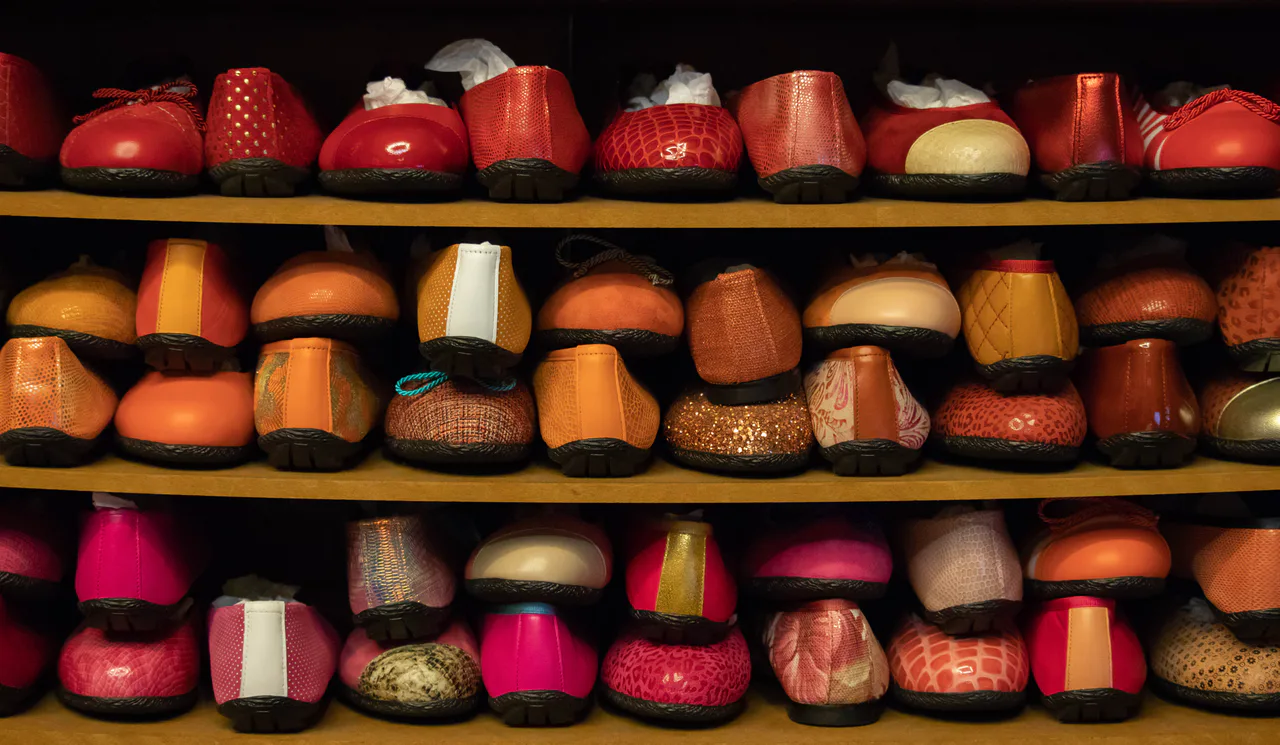
The difference between a model and a variant is visible in the current store. The homepage consulted on October 18 presents references sharing a model number in several colours, alongside families such as Mare X, Algoritmo, Rocker, Terra and Zero-shoe. That kind of catalogue contains relationships a vague list of names can conceal. Colour, family and commercial designation help describe what is being offered and connect it with more specific searches.
The October storefront provides context for the brand's commercial variety, while the agency's case describes the summer-sale work. The shop is already presenting its AW26 autumn-winter collection for men and women and distinct product propositions. It is not a reconstruction of the catalogue advertised during the promotion. It illustrates how an advertising operation has to accommodate changing seasons, products and selling points throughout the year.
Feed optimisation also covered availability, price and product approval status. These fields connect advertising with the practical possibility of buying. An item may have a relevant name and attract attention, but it still needs consistent commercial information to participate in a campaign. The agency places these checks alongside the enrichment of titles and descriptions, treating catalogue relevance and catalogue quality as parts of the same work.
Product data was also connected to performance. CrackPPC analysed campaigns, categories and items to identify which parts had greater potential to generate revenue and returns. Investment was directed towards products and segments responding better, considering conversion value, ROAS, demand and commercial availability. The feed describes the product; performance analysis helps decide which parts of the assortment should receive more exposure at each commercial moment.
A comfort proposition needs to travel through each buying journey
The quality policy published on the brand's own website places that proposition in a specific industrial history. It identifies Grupo Hergar as a group from Arnedo in La Rioja, founded in 1968 and working in the design, manufacture and sale of men's, women's and children's footwear under the Callaghan and Gorila brands. The document lists product, distribution, image and price among the pillars of its activity. Those relationships help explain why the advertising case combines product information with decisions about distributing investment, bringing the characteristics of the offer into the organisation of paid acquisition.
The same policy presents research into materials, processes and technologies as elements of differentiation. This is the company's description of how it builds its offer and competes, a proposition that then needs an understandable expression in the digital storefront. Product pages, families and campaign messages participate in that commercial translation: they turn a general innovation proposition into articles a shopper can identify and compare. The agency describes adapting advertisements to Callaghan's attributes alongside its work on feed titles, categories and models. That gives the catalogue work a connection with the brand's wider positioning, rather than treating it as a detached technical exercise performed only to keep advertisements running.
Callaghan's store organises its communication around comfort, cushioning and product technology. The current homepage uses messages such as “Multiplica el confort” and “Multiplica la amortiguación”, links to Adaptaction technology and gives distinct product families their own space. These are brand selling points that advertising can develop differently according to the search and category. CrackPPC places that adaptation of messages among the activities carried out in the project.
That organisation provides context for separating intent. One person may search for a specific reference because they already know it; another compares options within a category. Product names, attributes and destination pages provide different levels of detail for those situations. The agency's structure attempts to preserve the differences in its campaigns, without expecting every visitor to arrive with the same knowledge of either the brand or the catalogue.
The homepage also includes product content beyond lists of items: it presents personalised 3D technology, barefoot propositions and links to further information. Commercial arguments that need explanation sit alongside models and colours available to buy. In that setting, acquisition can lead to a product selection or to an explanation of a family, depending on the intent the advertisement is addressing. The catalogue and its accompanying information form related parts of the store's offer.
The mechanism described keeps a connection between those pieces. A query helps identify intent; an advertisement develops an appropriate message; the feed identifies the product; and the destination offers continuity for selection. Specialising a catalogue in advertising is not simply a matter of increasing campaign numbers. It means using information that already distinguishes products and needs to guide what is shown and where the budget is invested.
Budgets move with the response of the catalogue
Budget management was the third line of work. CrackPPC explains that investment was reviewed continually to avoid restricting campaigns delivering a good return or concentrating spending in segments contributing less. Decisions included revenue, advertising return, traffic cost and changes in demand. In the case, the budget is an allocation that can change with commercial response, rather than a fixed distribution between campaigns.
The connection with the assortment is especially relevant during a promotion. The product attracting interest still needs to be available, while response can vary between categories or moments in the season. The agency explicitly connects its decisions with commercial availability and changing demand. That brings selling conditions into media management: an opportunity for exposure is assessed alongside the ability to fulfil it with a product a shopper can actually buy.
Conversion value adds another distinction from managing an account solely by counting conversions. A conversion records an outcome; its value helps place the economic contribution the platform attributes to that action. CrackPPC explains that it considered both levels of information alongside return and cost. The case therefore describes a media operation in which interaction measures and revenue have different roles in decisions about growth.
The agency presents this approach as a way to scale campaigns performing better and contain investment where the return did not justify more growth. That makes the relationship between growth and selection concrete. Expanding an account does not require giving every product more budget at once. In the account described, investment moves towards opportunities showing a stronger response and is reviewed as seasonal and catalogue conditions change.
The sale activates a structure prepared beforehand
The summer sale was treated as a tactical activation within the account's annual strategy. CrackPPC adapted messages to the promotional proposition, increased visibility for discounted products and redistributed budget according to performance. The promotion added a time-sensitive reason to buy, but it was executed on the campaigns and product data the team had reorganised. Discounting and advertising structure appear as complementary elements of the case.
During the promotion, the team intensified reviews of queries, categories and products to respond to changes in demand and competitive pressure. That activity fits the nature of a seasonal campaign, in which interest and the available offer can move quickly. Rather than describing an offer launched and then left unchanged, the agency recounts a sequence of adjustments connected to what was happening in the campaigns and the catalogue.
The testimonial included in the case comes from Basilio García Morón , identified as general manager. It highlights the agency's involvement in understanding the business, direct communication and proposals aligned with its objectives. This is an assessment published by CrackPPC that helps explain the working relationship. The operational account makes that collaboration more concrete through search queries, product information, messaging and spending decisions during the commercial activation.
The business significance lies in those connections. Callaghan has a differentiated product proposition and a catalogue that changes with the seasons. CrackPPC describes translating those characteristics into advertising management, from searches through to the allocation of investment. The reported revenue, CTR and CPC results accompany a strategy in which growth depends on selecting and connecting the catalogue's commercial opportunities more effectively.
The approach also makes the product feed a shared commercial resource rather than a file maintained apart from campaign management. The same model, colour, availability and price information that identifies an item helps determine how it participates in advertising. In the agency's account, correcting those fields and examining product response occur together. Catalogue maintenance and budget allocation consequently meet in decisions about which articles deserve visibility during a particular selling period.
Who's who and how to read the figures
Callaghan is the footwear brand featured in the case. The official store's purchasing conditions identify Calzados Retrak , S.L., based in Arnedo and registered with La Rioja's Commercial Registry, as the entity authorised to operate that online retail service. That relationship identifies the store operator; it does not establish Retrak as the owner of the brand. CrackPPC is the agency publishing the campaign strategy and results.
The case was published on August 18, 2026 and presents changes for a summer-sale comparison. Revenue is the campaign income reported in the case; CTR relates clicks to impressions; average CPC is the average cost per click. The percentages are relative changes against the case's reference. The feed is the structured product information used by Shopping, while brand searches are separated from category or product queries in the advertising structure.
In this article

Marian Vasile
Marian Vasile is a MarTech and growth professional. His work spans product marketing, SEO, paid advertising and deep online tracking, including behavioral analytics and attribution.