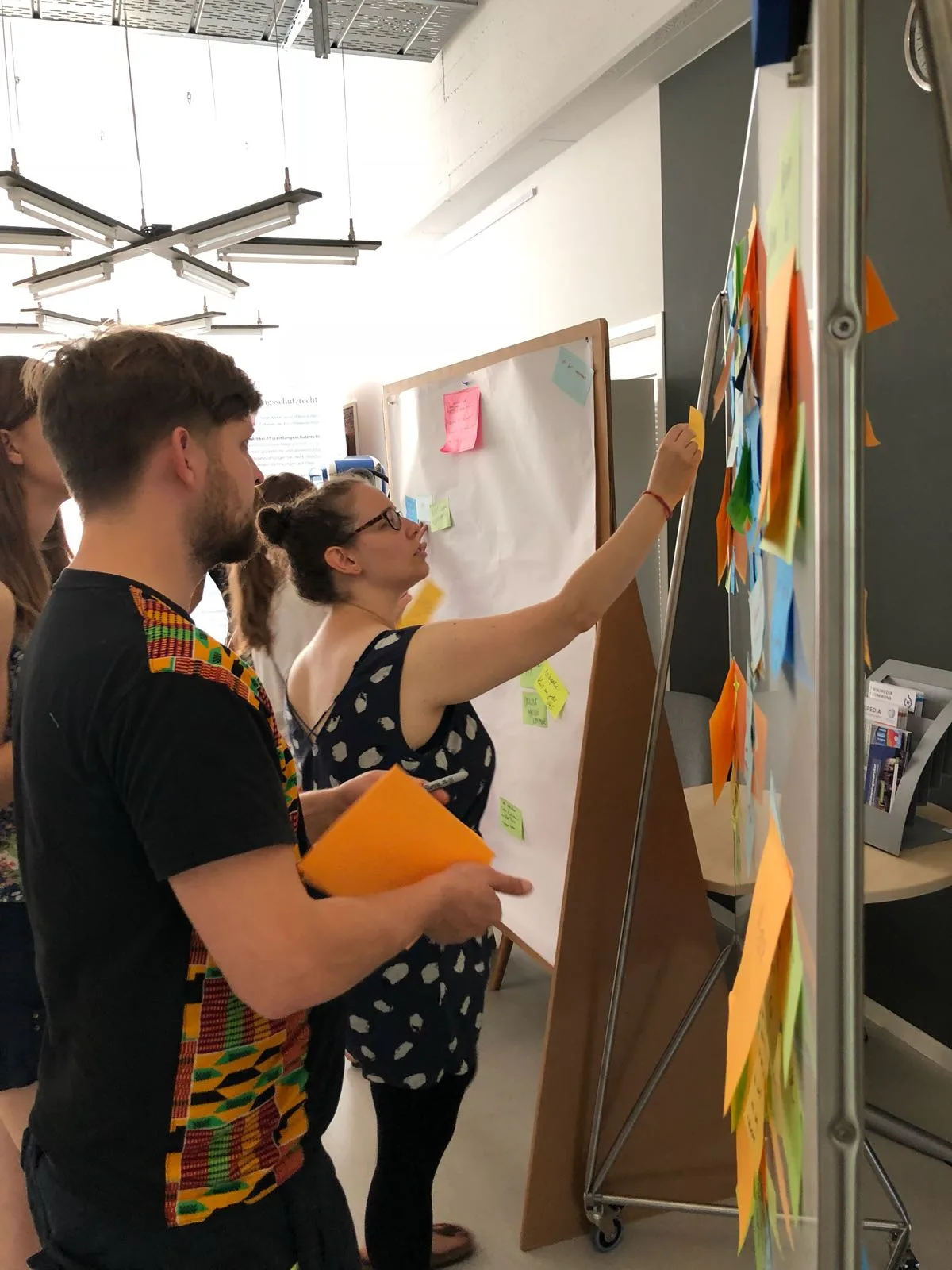
Requesting another feature can describe an imagined solution without explaining the task needing help. Designing around actual work starts with preparation, decisions, tools, dependencies and outcomes. Customers contribute experience while the team retains responsibility for change and deliverable capability.
Reported activity identifies actions rather than their individual reasons
Statista Consumer Insights asks about social-media activities in the past four weeks. Its Spanish fieldwork from July 2024 to June 2025 with 13,006 online respondents aged 18 to 64 records private messaging at 57%, commenting at 39% and content posting at 33%. These tasks are not interchangeable: general social activity does not explain what a person tried to resolve within a product.
Spain: three reported social activities in the preceding four weeks
Consumer Insights, N 13,006, online panel aged 18–64. Fieldwork July 2024–June 2025.
Tap or hover for details. All values are also available in the data table.
Collapse notes
Statista Consumer Insights, observed survey rather than forecast despite the URL namespace. Multiple answers; four weeks preceding each interview rather than the complete fieldwork period as activity window. Not recorded app events, product-research participants or brand adoption. Activities are not added and individual motives are not inferred.
Explore the data table
| Category | Reports the activity |
|---|---|
| Send private messages | 57.0% |
| Comment on posts | 39.0% |
| Post pictures, videos, texts or status updates | 33.0% |
The example shows interaction counts’ boundary. Opening a resource can concern preparation, unfinished information or helping somebody else. Research defines a decision question and observes task beginnings and outcomes beyond internal screens without recording the participant’s complete commercial life.
The GOV.UK contextual-observation guide distinguishes silent observation, occasional questions and continuous explanation. Each changes understanding and interference with work. Records preserve the intervention rather than presenting the session as uninfluenced natural behavior.
Preference and requirements provide different evidence
EAE’s study published in February 2024 and recorded by Statista reports liking real-person advice among 56.9% of 1,000 Spanish participants aged 18 to 70, relevant-product notifications among 28.9% and disliking personalized interactions among 12.9%. These are statements about brand relationships rather than proof of a feature enabling a particular task.
Spain: three statements about brand interaction
EAE, N 1,000, ages 18–70. Published February 2024; exact field dates unavailable.
Tap or hover for details. All values are also available in the data table.
Collapse notes
EAE / Statista. Original Customer Experience Trends p. 62 confirms values; p. 52 describes the base. Statements can coexist rather than an exclusive distribution, observed behavior or communication consent. Not a trend comparison with another-period/population Consumer Insights panel. 12.9% does not establish that everyone else wants personalization.
Explore the data table
| Category | States the preference |
|---|---|
| Likes real-person advice | 56.9% |
| Likes notifications of relevant products | 28.9% |
| Dislikes personalized interactions | 12.9% |
Preference supplies a hypothesis connected to a situation: what it enables, when it arises and the existing solution. Promising future capability use does not establish adoption. Observation can explain mechanisms without estimating representative frequency; surveys can describe statements without resolving the mechanism.
Participation retains purpose, choice and information boundaries
Selection follows tasks and relevant experience, frequency and assistance variation, including departures where authorized access exists. Close or expert customers may have learned to overcome barriers driving others away. A convenient sample does not automatically represent the market or complete customer base.
The GOV.UK research-consent guide recommends explaining purpose, activities, observers, recording, usage and retention before participation. Conversation permission does not automatically authorize quotation publication or material reuse. Committed help is not conditional on participation, and new circumstances can require revisiting agreement.
Preparation minimizes sensitive documents and data while retaining context needed for structure, sequence and decisions. Removing names does not guarantee anonymity when recordings or combined details identify an operation. Shared findings describe mechanisms rather than turning private evidence into public persuasion.
Observation retains events before interpretation
Returning to a page is an action; inferring confusion needs further evidence. External notes and help can be reasonable strategies rather than errors the product must remove. Questions clarify purpose and retain unknowns, separating need, preference and proposed solution.
Analysis groups mechanisms without discarding serious exceptions or building a variant for every comment. Improvements state the changed barrier, beneficiaries and necessary external conditions. Operations, support and instructions coordinate; a finished screen does not itself resolve pending approval or delivery.
Change is assessed through usefulness and complete effort
Resolution relates eligible attempts to completed tasks under stable criteria and a window. Assisted and independent completion retain different mechanisms and costs. Pertinent adoption requires need and access; when only interaction is known, reporting calls it interaction.
Time includes earlier preparation and later correction where they belong to the task. Comparable cohorts and concurrent changes limit conclusions: improvement after launch does not automatically identify its cause. Teams can modify or withdraw unhelpful hypotheses while preserving existing work’s continuity. Customer involvement earns value through better-resolved needs rather than confusing idea approval with useful-capability adoption.
In this article

Marian Vasile
Marian Vasile is a MarTech and growth professional. His work spans product marketing, SEO, paid advertising and deep online tracking, including behavioral analytics and attribution.