The starting point of the Sprinter case published by DruID on 25 July 2026 is a commercial relationship distributed across numerous systems. Customers might arrive through a mobile search, a social recommendation, a shop or a promotion; the retailer needed to recognise them throughout that journey. The provider describes an implementation covering 257 physical stores, two ecommerce platforms and one unified loyalty programme. It also reports migrating more than seven million accounts while retaining their holders' credentials and accumulated loyalty points.
The scale becomes more meaningful when considering what was transferred. This was an existing user base, together with elements allowing its members to continue using the brand's services. An account contains more than a password: it links access, purchases, preferences and club benefits. For a sports retailer combining shops with digital selling, preserving that relationship during a migration affects both customers' everyday experience and the company's ability to continue a commercial conversation across channels. The technical change involves a relationship with a history.
Fragmentation begins before the shopping basket
DruID describes information dispersed between physical and digital systems, difficulty recognising the same person and a loss of context between ecommerce, stores and loyalty. The commercial problem began before a transaction was completed. A search, a visit and a purchase could belong to the same relationship even when the systems handling each moment did not preserve a shared view. The case also identifies underuse of customer identity within ecommerce as part of the situation the project was intended to address.
The solution is presented across that wider journey. The document includes physical stores, ecommerce, the website and app, email and SMS campaigns, the loyalty programme, point-of-sale systems and corporate middleware. The latter connects applications and services within the company's technology environment. Including those components explains why the implementation extends beyond changing a sign-in screen. Both the channels generating customer interactions and the systems processing them need to work with a relationship the business can recognise and continue across different points of contact.
The provider's account uses familiar moments in sports retail: a social recommendation, a shop visit, a purchase, a promotion and the emergence of a new personal sporting goal. These contacts have different functions. Inspiration brings a shopper closer to a product, a store allows the choice to develop, and the club organises benefits accompanying further purchases. The implementation is intended to preserve context across that sequence, rather than treat every interaction as the independent beginning of another relationship with the brand.
Migrating accounts while retaining what customers already had
The leading figure is the transfer of more than seven million users to DruID. The case accompanies it with three specific elements: retained credentials, preserved accumulated points and continued access to services. The significance of that combination is continuity. The company changes part of its infrastructure, while customers retain things they already use to identify themselves and participate in the programme. The migration therefore carries access information together with a visible part of the existing loyalty relationship into the new environment.
Points perform a commercial role different from that of a password. The password allows the holder to establish access to an account, while points represent advantages accumulated within the programme. Retaining both links security of identification with recognition of an earlier relationship. That detail makes the seven-million figure relevant to marketing: it describes an established base that needs to remain usable across purchasing and loyalty journeys, with the previous value attached to its accounts preserved during a change in technology.
Sprinter Club's own conditions make the commercial relationship more concrete: for every 200 points, a participant can request a 15% coupon through the customer area for a subsequent purchase. Reaching the balance does not automatically generate the discount. The issued coupon is valid for 365 days, and the conditions exclude combining it with other offers and promotions. Points also cannot be used on the purchase through which they are earned. These are different states of a commercial benefit: accumulation, a request, issuance and eventual use.
Identification in a store requires more than a website sign-in
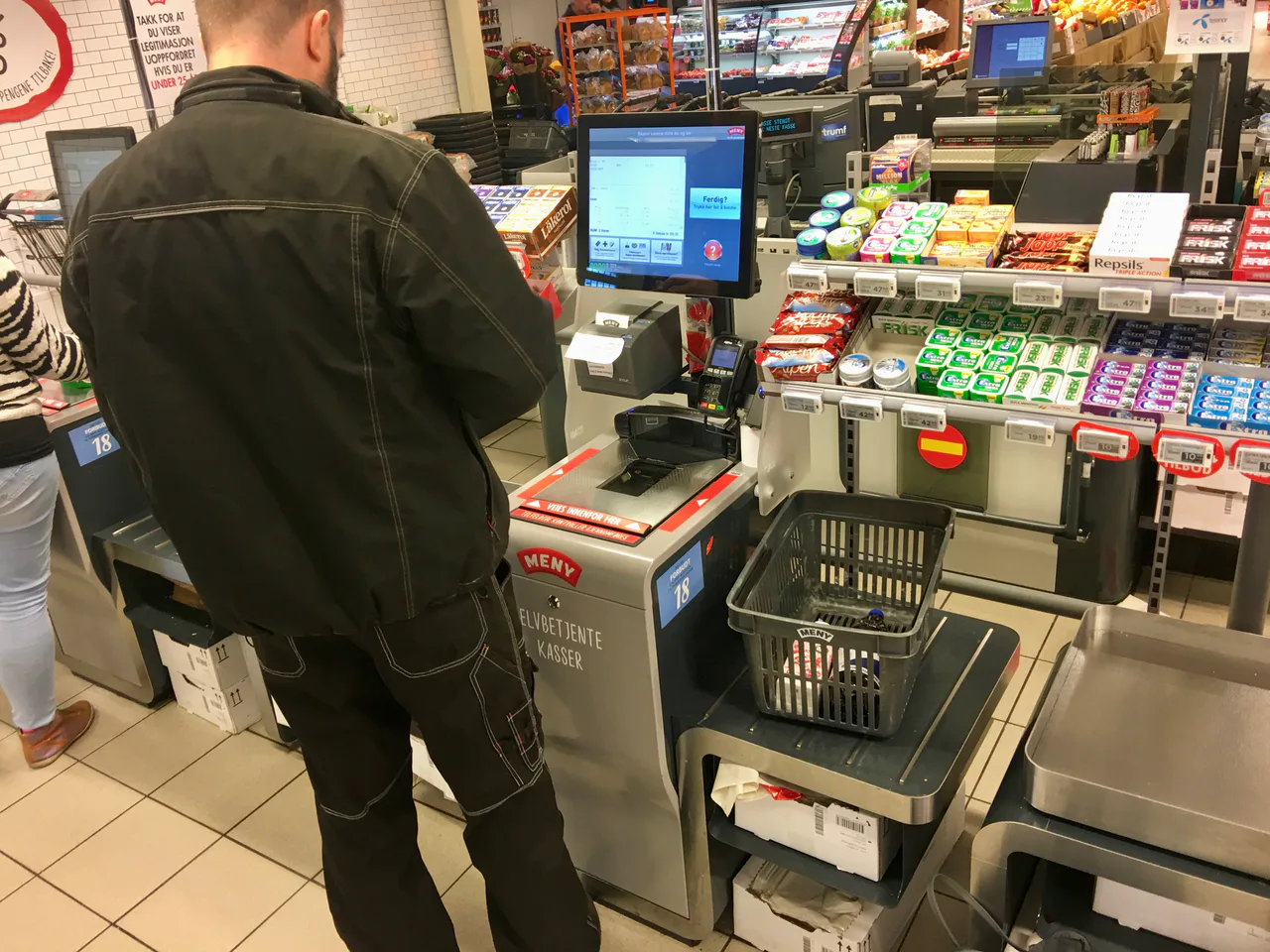
Physical integration receives specific attention in the case. DruID describes acquiring and activating customers at the checkout, through multichannel applications and by means of QR codes. The entry point can vary, and identification needs to adapt to it. At a till, contact takes place as part of a purchase being handled by the store; a QR code provides another route from a device. The provider places that flexibility within the personalised, consistent experience the project was intended to support.
For customer acquisition, the significance is that a store participates in the digital relationship. A retailer with 257 establishments within the reported scope has numerous places where shoppers can identify themselves or activate their connection to the club. The implementation does not locate the account solely at the beginning of an ecommerce session. It also puts identity into physical customer-contact points and applications supporting commercial activity. The place of entry consequently ceases to determine, on its own, which part of a customer's relationship is recognisable to the business.
A specific example of the value of identifying a member appears in the club's conditions: someone who has supplied their date of birth receives a 10% coupon generated the day after their birthday. The benefit appears in the customer area and at the store's point-of-sale terminal when the person identifies themselves. It is valid for 365 days and applies to footwear, clothing and accessories sold and dispatched by Sprinter. A profile field is consequently connected to a purchasing occasion and two places where the customer can access the benefit.
Two ecommerce platforms and one club
Connecting two ecommerce platforms introduces another integration dimension. Within the project's reported scope, a customer can interact with more than one digital selling environment while the loyalty programme is presented as a single club. DruID explains that a user belongs to that common programme from registration or the first purchase, receiving its advantages and services. The account serves as a reference for that membership even when the commercial experience is distributed between technological components performing different tasks.
Returns illustrate another task connecting purchases with the account. Under the club's conditions, returning a purchase means deducting the points earned; a partial return removes those relating to the garments involved, while a complete return removes all points associated with that purchase. A balance can become negative when a participant has already redeemed points before returning the order that generated them. The programme therefore contemplates movements after a sale that change the state of an account and its relationship with the benefits available to the customer.
The document also includes creating a single identity for customers and employees among the project's objectives. This broadens the kinds of access the infrastructure needs to accommodate without turning them into the same purchasing relationship. A customer uses commercial services and the club; an employee participates through their role inside the organisation. The importance of an identity layer lies in supporting those access journeys and the needs of the different teams involved, while retaining coherence within each experience and the services being provided.
What an account retains within Sprinter Club
The club's own conditions, which give an initial effective date in July 2024, explain the commercial substance behind that continuity. Membership is open to adults, who can join on the website, in the application or with assistance at the company's own Spanish stores covered by the programme. After registering, participants have 72 hours to validate the account through the email received. Registration and verification consequently accompany relationships beginning online as well as those starting inside a shop.
The programme assigns one point per euro spent on eligible purchases. Purchases from external marketplace sellers, gift cards and donations do not earn points, and shipping charges are excluded. The account also provides access to the balance and purchasing section, where the terms say an online purchase appears five minutes after being made. If purchase points are missing, they provide 30 calendar days to claim them using a receipt or order number. The account consequently connects identification with the documentation of particular transactions, as well as the running balance of benefits.
The terms also connect identification with using benefits. In stores they contemplate a name, registration-confirmation email or other identification methods; online, a username and password provide access to manage points. Unused points expire after 365 days, and programme communications include reminders about benefits and approaching expiry. These are elements customers can consult and use over time. The account consequently links purchasing history to later opportunities to participate under the programme's rules, making the continuing relationship concrete across different transactions and contacts with the retailer.
Preferences and consent within commercial activation
Email and SMS campaigns appear among the unified channels. Alongside them, DruID describes centralised management of identities, preferences and consent. The connection matters because recognising someone and managing how they relate to the brand are linked tasks with different consequences. The account supplies continuity; preferences and permissions accompany the ways in which the company can develop its communications. The case places them within the same architecture of customer relationships, connecting the information used by commercial channels with the conditions governing its use.
That arrangement connects teams intervening at different stages. Marketing prepares communications and experiences, technology integrates services, security deals with access, and compliance participates in managing permissions. DruID's account specifically emphasises adapting to those needs. In the sports-retail implementation, identity, consent, the club, design and ecommerce are presented as components that must be coordinated to deliver the expected service. Customer information consequently performs a shared role across commercial operations and access conditions, rather than belonging to just one campaign or one application.
The provider's current website develops this proposition as a combination of CIAM, a CDP and consent management. CIAM means customer identity and access management; a CDP organises customer data for use across different environments. DruID links the two to traceability, understanding users and activation. This presentation helps locate the product used in the case: authentication is one of its functions, alongside connecting information that allows the commercial relationship to be followed. The supplier's broader description provides context for the identity capabilities documented in the implementation.
Security and the purchasing journey in the same conversation
The case includes the option of adding a second authentication factor. This gives an account holder a way to strengthen protection within a project also seeking convenient access to services. The documentation connects security and experience, which customers encounter together when identifying themselves. To the retailer, the account is a commercial resource because it carries context and benefits; to its holder, access needs to allow those services to be used with suitable protection. The implementation brings those considerations into the same customer journey.
Monitoring is another activated capability, linked by DruID to security, customer understanding and CRO, or conversion-rate optimisation. The provider places it within analysis of the experience during purchasing. That establishes a particular role for identity: interactions can be interpreted as parts of a recognisable journey. Observing the process can be related to entry points and account context, rather than remaining limited to disconnected contacts involving a screen, a store and a subsequent communication. Monitoring is presented as a capability supporting that understanding of the customer experience.
DruID's general proposition organises the journey into acquisition, identification, traceability, profiling and activation. It first integrates the points through which people arrive, then recognises access and organises interactions into context for the relationship. In the Sprinter case, that sequence takes the form of specific components: tills, QR codes, the website, app, ecommerce, club and campaigns. The commercial logic is to connect these elements while retaining the continuity of accounts that already existed. The reported migration provides a concrete example of that broader identity-based proposition.
Several technological participants around the implementation
The testimonial included in the case comes from Valerio Frigols Brines, identified as an Account & Delivery Manager at Sopra Steria . His assessment connects the DruID implementation with the agility of customer journeys and secure, integrated access management. The presence of that participant establishes the technology-collaboration context in which the supplier presents its work. Integration is described as having to respond simultaneously to business, technology, security and compliance requirements, reflecting the range of needs around a relationship extending across stores and digital services.
Corporate identities place the participants in context. Sprinter's legal notice identifies the retailer's operator as Sprinter Megacentros del Deporte S.L., based in Alicante and entered in its commercial registry. DruID Identity Solutions S.L. is named as the provider website's operator, with its registered address and commercial registration in Madrid. The case therefore brings together a Spanish sports retailer and an identity platform documenting how it connects customer relationships across establishments and digital services.
Who's who and how to read the figures
Sprinter is the sports retailer identified in the case; its Spanish company is Sprinter Megacentros del Deporte S.L. DruID is the identity, data and consent platform publishing the implementation. Sopra Steria appears through the testimonial of its account and delivery manager. The case was published on 25 July 2026 and modified on 7 October. The publication date belongs to the project's account, while the figures describe the reported implementation scope. They retain their meaning as a snapshot of the work described by the supplier.
More than seven million is the number of accounts transferred with access credentials and points preserved. The 257 stores and two ecommerce platforms are connected environments; the unified loyalty programme is one. CIAM designates customer identity and access management, CDP the organisation of customer data, and CRO conversion-rate optimisation. These terms locate technology's role in this story: keeping a commercial relationship recognisable as it passes through several channels, while retaining what the user already held within it. The case connects technical continuity with the practical operation of a retail loyalty relationship.
In this article

Marian Vasile
Marian Vasile is a MarTech and growth professional. His work spans product marketing, SEO, paid advertising and deep online tracking, including behavioral analytics and attribution.