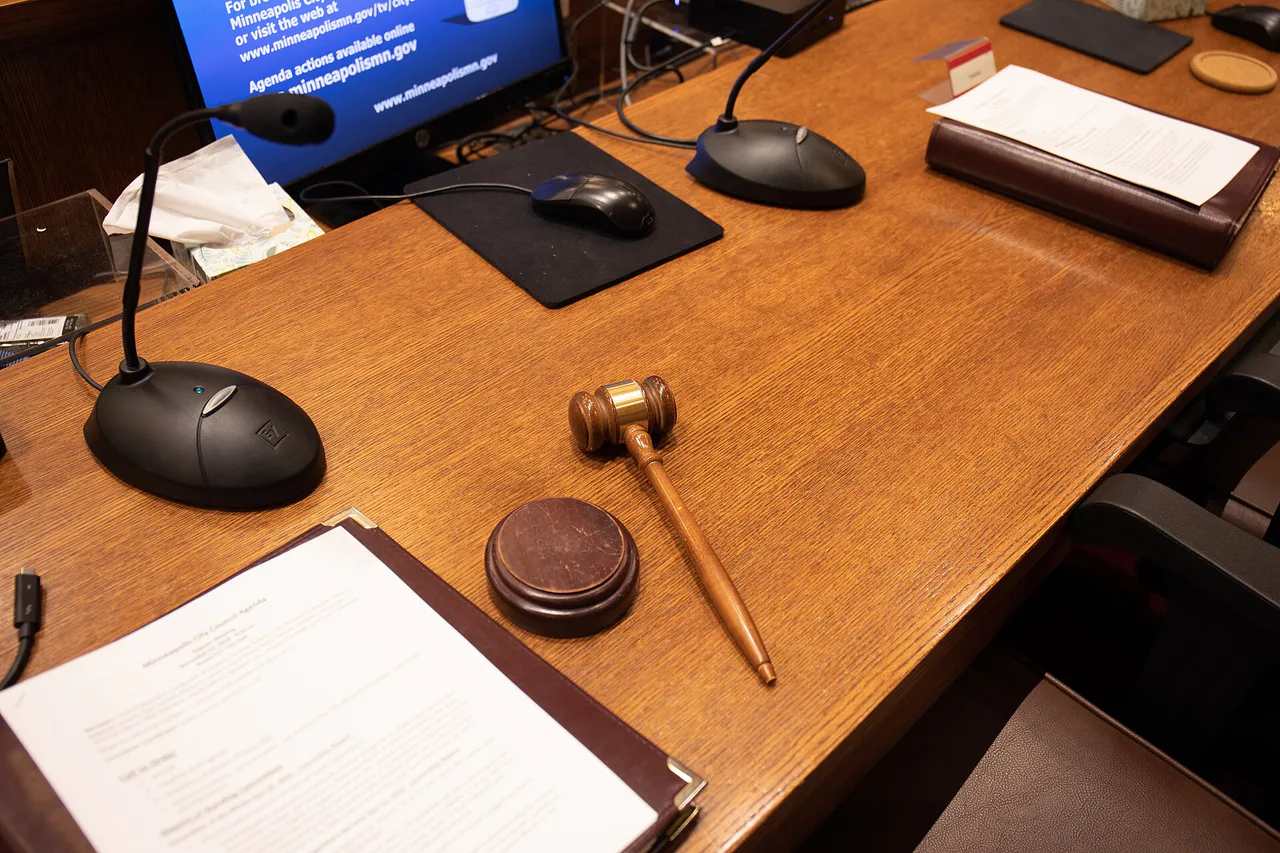
A motion attributed to the wrong council member sends the clerk back to the recording. That is where part of ClerkMinutes’ commercial value is decided: how much work it takes to check and correct the draft before approving the minutes. The time AI needs to produce text covers only one stage of the service a municipality pays for.
Town Web includes ClerkMinutes in its proposition for local governments . The product belongs to HeyGov, Inc.; its corporate page identifies Dustin Overbeck, the founder of Town Web, as a co-founder of that team. The commercial connection is specific: the office publishing agendas and documents on a municipal website also needs to prepare and check the material it will publish.
The growth opportunity is to demonstrate that entire journey. A clerk’s office can compare previously approved minutes with a draft generated from its recording, identify the necessary changes and measure review time. That exercise turns a promise of speed into a decision about work and budget.
The recording belongs in the sales demonstration
The speaker-review documentation explains how to listen to the audio or video beside a line to check who spoke. It allows a speaker’s identity to be changed throughout the transcript or a single line to be corrected. It also distinguishes two people whom the system has grouped under the same speaker number.
These operations have a commercial consequence: the buyer can see how a specific error is resolved. A demonstration that includes an incorrect attribution, a check against the audio and the correction makes the remaining work visible. The supplier gains evidence that is more useful than a sample selected only because it comes out clean.
The guide to recording quality acknowledges that overlapping voices and distant microphones make identification harder. For meetings lasting several hours, it recommends checking the second half as well, paying particular attention to motions, seconds and votes. These are operating conditions worth showing before purchase.
Defensible savings must include preparing the audio, identifying speakers and reviewing the output. If a location needs better microphones or an updated member list, that work affects first use and the support the supplier will provide. This analysis assigns neither a cost nor an error rate to Town Web or HeyGov: it identifies steps their own documentation says must be addressed.
Interest in AI has yet to become a municipal purchase
Gallup helps place that explanation in its workplace context. In the fourth quarter of 2025, 42% of U.S. employees in government or public policy reported using AI in their role at least a few times a year, compared with 77% in technology. Statista presents this comparison from the survey conducted between October 30 and November 13, 2025.
Any AI use still differs substantially across industries
Employees using AI in their role at least a few times a year, fourth quarter of 2025. Five selected industries.
Tap or hover for details. All values are also available in the data table.
Collapse notes
U.S. workplace context, not ClerkMinutes adoption or demand for municipal software. Fieldwork: October 30-November 13, 2025. The full wave includes 22,368 employees; the AI-use table includes 21,007 responses, with 1,514 in government or public policy. This industry includes more roles than municipal clerks. The measure concerns individuals’ reported use, not organizations purchasing AI.
Explore the data table
| Category | Use at least a few times a year |
|---|---|
| Technology | 77% |
| Finance | 64% |
| K-12 education | 56% |
| Government or public policy | 42% |
| Retail | 33% |
The difference calls for a specific sales argument. An industry percentage does not reveal how many municipalities want to buy automated minutes, and government or public policy includes many roles beyond a clerk’s office. It does show why the supplier needs to explain a recognizable task: who prepares the document, how it is checked and what work the tool removes.
The subscription needs a recurring task
The second comparison separates familiarity from habit. In the same industry, reported daily AI use rose from 2% in the second-quarter 2023 wave to 8% in the fourth-quarter 2025 wave. The 42% using AI at least a few times a year and the 8% using it daily describe different frequencies; neither measures ClerkMinutes’ performance.
Daily AI use in government reaches 8%
Employees in government or public policy reporting daily AI use in their role. Five survey waves, not a complete quarterly series.
Tap or hover for details. All values are also available in the data table.
Collapse notes
Repeated weighted surveys, not a panel following the same individuals. Unweighted industry bases across the five waves: 764, 750, 642, 1,377 and 1,514. Fieldwork: May 11-25, 2023; May 11-25, 2024; May 7-16, August 5-19 and October 30-November 13, 2025. It measures neither savings nor minutes accuracy nor likelihood of buying ClerkMinutes.
Explore the data table
| Category | Daily use |
|---|---|
| Q2 2023 | 2% |
| Q2 2024 | 4% |
| Q2 2025 | 4% |
| Q3 2025 | 6% |
| Q4 2025 | 8% |
For a product charging a recurring fee, the next meeting needs to go through the same process with less preparation. Repeated use allows a buyer to check whether voice identification, the agenda structure and earlier corrections reduce work or whether each session requires rebuilding it. That is a renewal question a single trial run leaves open.
ClerkMinutes’ published pricing gives the decision a concrete scale. Starter allows five meetings a month and costs $129 a month on monthly billing, or the equivalent of $99 a month with a $1,188 annual charge. Growth allows 10 meetings and costs $299 a month, or a $249 monthly equivalent billed at $2,988 a year. Plans also differ in users, departments and other features.
Included capacity is not actual use. Dividing Starter’s $129 monthly price by five meetings gives $25.80 per meeting when the full allowance is used; at two meetings, the amount is $64.50. These are calculations from the published price, excluding staff time and other expenses. They show why a municipality needs to know its workload before comparing offers.
The trial needs to reach a checked document
The free trial lasts 14 days and requires no card. If a suitable meeting does not fall within that period, an earlier recording the municipality is entitled to use allows it to examine the product without waiting for the next meeting. Previously approved minutes provide a reference for checking speaker attribution, decisions and format. This is a proposed evaluation, not an outcome the company has reported.
The editing and export options retain corrections in a text or CSV copy of the transcript; the documentation advises keeping the original recording. That process allows a difficult passage to be checked, changes to be recorded and generation speed to be separated from the work that follows.
The sale can then be assessed through municipalities that complete reviewed minutes during the trial, purchase a suitable plan and use it again at the next meeting. These are proposed evaluation criteria, without internal conversion or renewal figures. The economic choice comes at the end of the process: paying a subscription for a document that takes less work to verify.
In this article

Marian Vasile
Marian Vasile is a MarTech and growth professional. His work spans product marketing, SEO, paid advertising and deep online tracking, including behavioral analytics and attribution.


