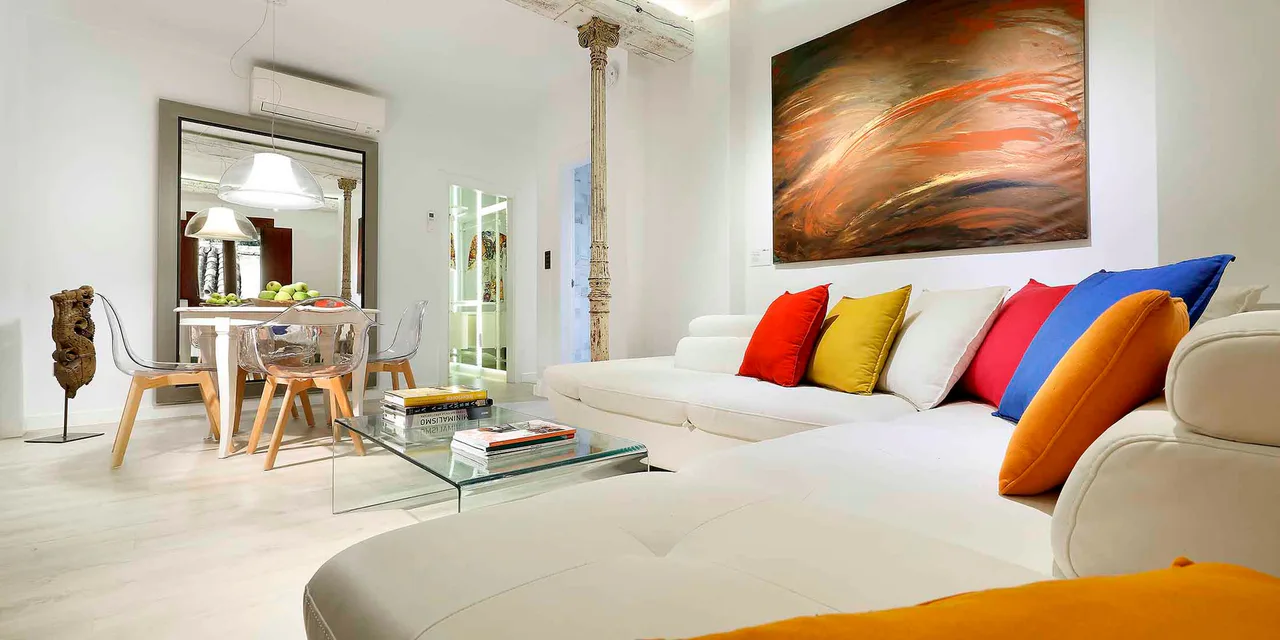
Stueo’s Professional plan offers 200 project packages a month, white-label branding and DOCX/XLSX exports. The commercial distinction lies in the work a studio can deliver to a client: an identifiable, shareable proposal alongside an image showing how a room might look.
The published annual offer costs $1,175.88, equivalent to $97.99 a month, before the tax conditions shown at checkout. Billing is annual while allowances renew monthly. The purchasing unit combines a subscription relationship with a volume of client work.
The professional demonstration needs to reach delivery
Domestic exploration can end when a person finds an idea they like. For a designer, that moment starts other tasks: explaining why an option fits, gathering revisions and turning the conversation into project decisions. A tool has greater commercial value when it reduces some of that work.
AI-assisted work already combines formats. In NRG’s February 2024 U.S. survey reported by Statista, 57% of core creatives who had used these tools had produced text with their help and 51% had produced images. The broader creative class showed a different mix: 65% and 44%. These are neither Spanish interior designers nor Stueo customers. The contrast helps explain why a professional sale should show how an image becomes an explained proposal, without treating the two groups as independent audiences.
Assisted creative production combines text and images
Types of output produced with generative assistance in the United States, February 2024.
Tap or hover for details. Select a series above to show or hide it.
Collapse notes
NRG: online survey of 1,504 creative-class professionals aged 18–64. Specific bases for AI users and core creatives are not separately disclosed. The creative class includes core creatives; groups must not be added together. Reported use, not work volume, quality or Spanish-studio data.
Explore the data table
| Category | Core creatives | Creative class, including core creatives |
|---|---|---|
| Written text | 57% | 65% |
| Images | 51% | 44% |
| Web design | 21% | 13% |
| Video | 19% | 13% |
White-label branding puts the presentation inside the studio’s client relationship. A shared link shows it without asking the client to reconstruct the proposal. Exports help move information outside the application. These functions make the sale more concrete than an abstract promise of unlimited creativity.
A product demonstration needs to follow that full journey: starting photograph, proposal, revision and deliverable. The time required to prepare and correct the result determines whether the studio is buying useful assistance or another editing task. Showing only before and after does not settle that comparison.
Time saving is a different perceived benefit from personalisation. In the same study, 58% of creative users said the tools saved time, compared with 41% citing editing or refining output and 26% citing adaptation for clients. These are perceived benefits rather than measured minutes. A Stueo demonstration can put that promise against a concrete comparison: the work required to present, correct and export an acceptable proposal, with technical verification remaining the studio’s responsibility.
Time saving is the most cited benefit, without a minute estimate
Benefits reported by creative users of generative applications in the United States, February 2024.
Tap or hover for details. All values are also available in the data table.
Collapse notes
NRG: online survey, creative class aged 18–64, total N1,504; user base not separated. Non-exclusive categories; percentages must not be added. Perceived benefits in 2024, not verified savings, profitability or Stueo results.
Explore the data table
| Category | Respondents |
|---|---|
| Save time | 58% |
| Edit or refine output | 41% |
| Increase output volume | 40% |
| Customise for clients | 26% |
A convincing image retains a technical limit
Stueo’s terms , updated September 25, 2026, describe results as visual concepts and exclude their use as architectural drawings or contractor instructions. Measurements and quantities can contain errors. That precision needs to remain beside a professional presentation.
The designer still checks dimensions, materials and feasibility before purchasing or building. Visualization can speed up a client conversation; it does not remove the cost of verifying what fits, what can be installed and what can be executed. Its economic contribution depends on saving presentation work without transferring uncertainty into a physical decision.
When the subscription is used also matters. Unused finite allowances roll into only the following month, according to the terms. A studio whose projects are seasonally concentrated needs to compare that rule with its delivery calendar. Advertised capacity and capacity actually used are not automatically the same.
Professional acquisition should reach studios whose processes include frequent presentations and revisions that can benefit from those packages. The strongest sales argument is a recognizable deliverable and the work it avoids. The client retains the aesthetic decision; the designer retains responsibility for carrying it into the real room.
In this article

Marian Vasile
Marian Vasile is a MarTech and growth professional. His work spans product marketing, SEO, paid advertising and deep online tracking, including behavioral analytics and attribution.


