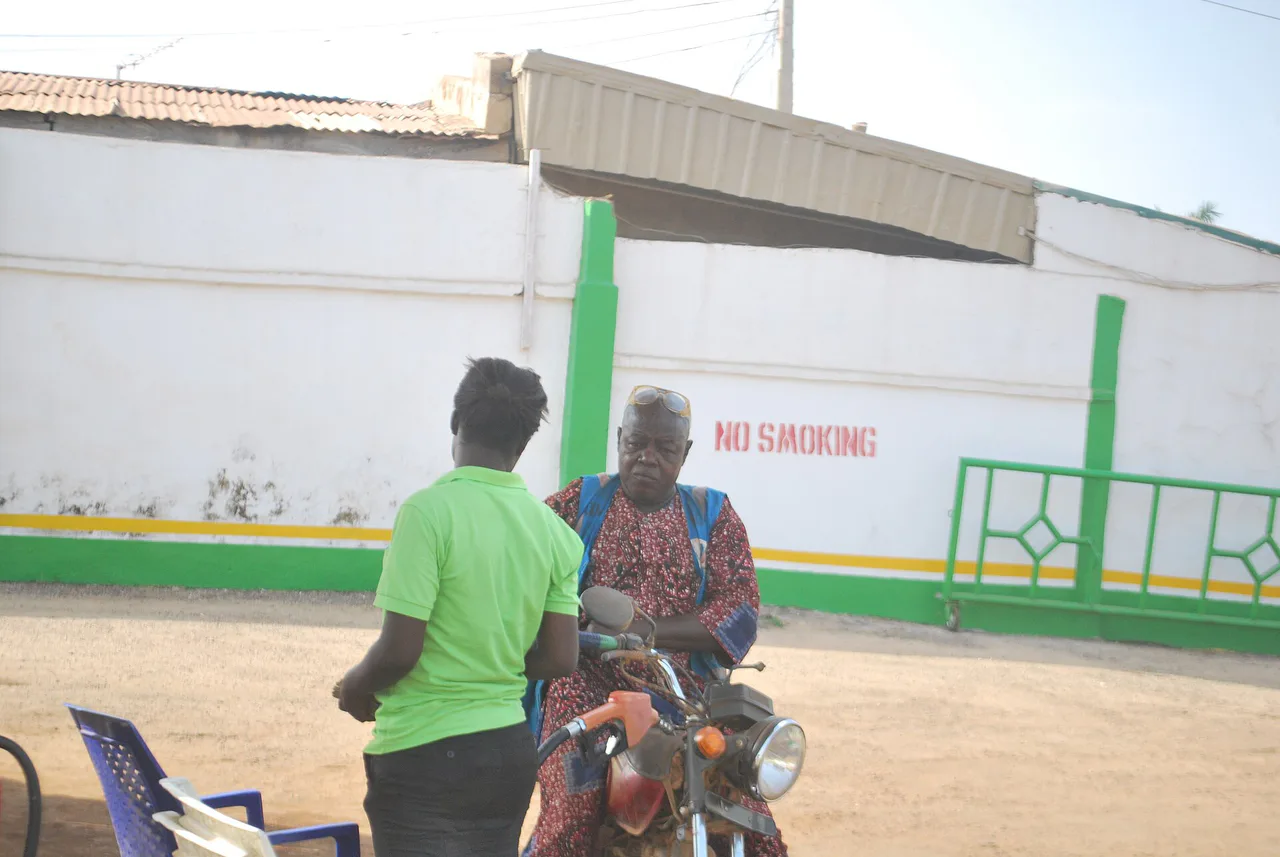
A fuel reward can influence two decisions at once: which card a driver takes out and which terminal a petrol station uses. Moniepoint links both decisions in the published terms of its Lagos fuel promotion. The commercial opportunity lies in making a single transaction reinforce account use and acceptance across its network.
The campaign terms describe 7.5% cashback, capped at 1,000 naira per transaction, for Moniepoint card payments on Moniepoint terminals at participating Lagos stations. The document leaves dates to each campaign communication; this examination of the mechanism does not confirm that the offer is active today.
The combination matters more than the percentage alone. A card incentive can attract a consumer, while a merchant incentive can favour a terminal. Requiring both instruments in the same purchase brings those decisions together. Profitability depends on how many additional transactions it produces and how much behaviour persists after the subsidy ends.
The cap turns a percentage into a fixed amount
The 1,000-naira maximum changes the proposition above a purchase of about 13,333 naira. Beyond that amount, cashback stops rising even as the bill increases. This follows from dividing the cap by 7.5%; it is not an observation of customer transactions.
In a calculation example involving an eligible 20,000-naira purchase, the maximum is equivalent to 5%; at 40,000 naira, it becomes 2.5%. Both transactions would receive at most the same amount. Showing the applicable amount before payment explains the benefit more clearly than repeating a percentage in an advertisement.
This detail also disciplines commercial spending. The cap limits the cost of a rewarded purchase, but it does not establish that the purchase is new to the bank. If the driver would already have used the same card and terminal, the institution subsidises existing behaviour. If the driver switches instruments and later returns without a reward, the incentive has acquired a relationship with more room to develop.
A larger network increases competition for the next payment
The CBN series published by Statista places national POS transaction volume at 13,075 million in 2024 and 15,662 million in 2025, rounded to the nearest million. The original bulletin allows both years to be checked. That scale explains why repeated use deserves attention: the next transaction is a commercial decision that can be won again.
POS transaction counts increased between 2024 and 2025
Transactions recorded in Nigeria, in millions. National point-of-sale terminal series.
million transactions
Tap or hover for details. All values are also available in the data table.
Collapse notes
Statista values rounded to the nearest million, checked against 13,075,332,777 and 15,661,611,001 transactions in the original CBN bulletin. These are national transaction counts, not unique people, retail sales or Moniepoint results. Other years are omitted to retain a verified comparison from the same publication.
Explore the data table
| Category | POS transactions |
|---|---|
| 2024 | 13,075 million transactions |
| 2025 | 15,662 million transactions |
Growth in transaction counts does not reveal how many new customers an institution acquired or attribute it to promotions. It does not equal spending in shops either: terminals form part of an infrastructure with different uses. Assessing a loyalty programme requires observing its participants and the behaviour that changes, with a comparison that separates the reward from activity that would have happened anyway.
For fuel purchases, the choice of location adds another condition. A campaign restricted to participating stations can be easier to explain through a clear list and visible identification at payment. Bringing a customer to a petrol station without making the eligible terminal identifiable wastes part of the investment that attracted them.
The reward must reach an account the customer uses
The competitive context includes routes beyond the terminal. In the national 2025 classification reproduced by Statista, Web Pay records 21,106.86 million transactions, compared with 15,661.61 million for POS, 8,637.94 million for Mobile Pay and 1,655.51 million for ATM. The source names are retained; these are not purchase shares or categories to add together into a consumer wallet.
Electronic payments follow several routes in Nigeria
National transaction volume in 2025 for four selected channels, using the source categories.
million transactions
Tap or hover for details. All values are also available in the data table.
Collapse notes
National administrative counts, not a survey or a population of Moniepoint customers. Web Pay, POS, Mobile Pay and ATM retain the bulletin categories. Four channels are shown without summing them or converting them into spending shares. The figures do not measure fuel purchases, cashback adoption or sales; one person can make many transactions and use different channels.
Explore the data table
| Category | Recorded transactions |
|---|---|
| Web Pay | 21,106.86 million transactions |
| POS | 15,661.61 million transactions |
| Mobile Pay | 8,637.94 million transactions |
| ATM | 1,655.51 million transactions |
The consequence for Moniepoint is concrete: winning a card payment is insufficient to understand subsequent account use. A buyer can receive money, transfer it and pay through different routes. Commercial measurement should connect the rewarded purchase with receipt of the reward and the next voluntary use of the service, without presenting the national total as the company’s customer base.
The general loyalty terms provide 90 calendar days to use or transfer rewards when the applicable communication sets no other period. Campaigns can impose specific conditions: clause 5.3 of the fuel promotion prohibits cash withdrawals and transfers to third parties. Verification or reversal provisions also make it necessary to distinguish an advertised reward from one available to use.
The strongest commercial proof of that journey fits on one screen: the transaction generating the benefit, the recognised amount, crediting status and applicable expiry date. Customers who understand what they received can assess the service; those who remember only the percentage have to reconstruct the promise themselves.
The recipient of cashback changes its economics
A historical merchant programme published by Moniepoint for 16 July to 16 September 2025 calculated certain incentives as a percentage of the fee charged, with tiers tied to weekly volume. That design rewarded the terminal operator; it was not a refund of the same percentage of the consumer’s purchase.
Keeping these recipients separate avoids a misleading commercial comparison. A customer reward changes what someone receives for choosing a payment instrument. A merchant reward changes the net income retained from processing it. Both can coexist, but their costs and effects require separate assessment before assigning them a retention improvement.
The growth priority is to show that the link between card and terminal remains useful after the incentive. The deciding criterion is the contribution from additional, repeated transactions after paying rewards and the service they require. A visible percentage attracts attention. Understandable, usable cashback followed by recurring use can justify the investment.
In this article

Marian Vasile
Marian Vasile is a MarTech and growth professional. His work spans product marketing, SEO, paid advertising and deep online tracking, including behavioral analytics and attribution.


