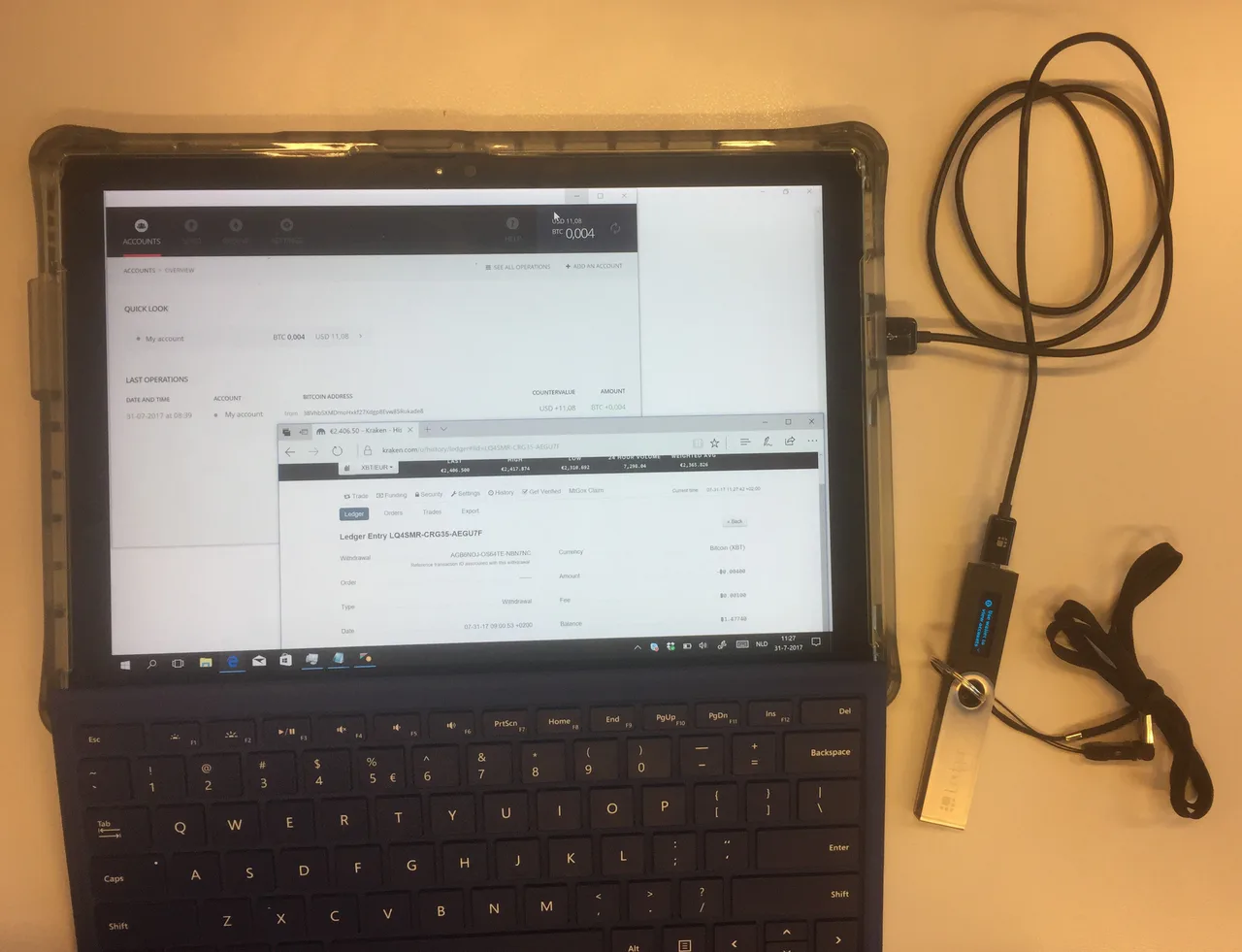
A cryptocurrency deposit sent to Kraken may still be unavailable to trade. Its documentation requires network confirmations before the balance is credited. That interval is part of the product the client experiences, even though it starts after the click that brought them to the platform.
The commercial consequence is specific: an account created, a transfer initiated and a first trade describe different stages. For Kraken Pro, a useful explanation of the platform has to follow the journey until the user understands what has arrived, what is pending and which cost applies to the chosen action. Counting registrations without that distinction leaves out work that takes support time and shapes the subsequent experience.
The visitor's intention changes the explanation they need
The European Central Bank's SPACE 2024 survey provides Spanish context that should be kept separate from any platform's figures. Among people who reported owning crypto-assets in Spain, 57.46% cited investment alone; 18.95%, payments alone; and 19.77%, both uses, according to Statista's table based on the study . The remaining 3.82% combined refusals to answer and don't-knows.
Investment leads the stated intentions of Spanish crypto-asset owners
Reported purpose of crypto-assets in Spain, SPACE 2024. Share of the owner subgroup.
Tap or hover for details. All values are also available in the data table.
Collapse notes
Spain: total sample of 4,060 adults; the owner subgroup base is not published separately. Telephone and online interviews in two rounds, Sept. 26-Nov. 16, 2023 and April 9-June 3, 2024; weighted results. Stated intentions, rather than transactions, clients or Kraken usage frequency. Statista retains two decimal places; the original ECB chart rounds.
Explore the data table
| Category | Crypto-asset owners |
|---|---|
| Investment only | 57.46% |
| Payments only | 18.95% |
| Both uses | 19.77% |
| Refusal / do not know | 3.82% |
The distinction matters for commercial content. Someone moving an asset needs to understand its arrival and availability; someone comparing interfaces needs to know which actions each offers and how their use is charged. Combining both needs under a generic invitation to get started saves explanation at the beginning, but moves it to a later screen or a support query.
The wait belongs to a network and a crediting rule
In December 2025, Statista published a comparison using Kraken's deposit confirmation estimates: 40 minutes for Bitcoin, 14 for Ethereum on its main network and 10 for Cardano. These are approximate crediting times under confirmation rules, rather than a blockchain's capacity to process transactions per second.
Deposit crediting had different estimated waits by network
Historical Kraken deposit confirmation estimates recorded by Statista on Dec. 4, 2025.
minutes
Tap or hover for details. All values are also available in the data table.
Collapse notes
Historical snapshot of Dec. 4, 2025, three selected networks from Statista's 45 entries. Provider estimates, rather than a survey or a sample of observed transactions. This does not measure transactions per second, end-to-end settlement, price or investment suitability. Current documentation cites 45 minutes for Bitcoin. Estimates assume inclusion in the first possible block and can be exceeded.
Explore the data table
| Category | Estimated confirmation time |
|---|---|
| Bitcoin (BTC) | 40 minutes |
| Ethereum (main network) | 14 minutes |
| Cardano (ADA) | 10 minutes |
The current support page , updated Oct. 5, 2026, says the estimates assume the transaction enters the first possible block. If that does not happen, the wait can be longer. Its current explanation cites about 45 minutes for Bitcoin, compared with 40 in the 2025 snapshot.
For acquisition, that condition gives a Spanish explanation a specific job: establish what is pending, who confirms the next step and when a delay needs attention. The time taken for a confirmation and the time someone takes to understand it are different problems. Reducing the second through clear instructions does not require a promise that Kraken controls the first.
It also changes the reading of metrics. A user waiting for credit cannot be classified as a definite abandonment just because they closed the session. Separating deposit initiated, deposit credited and first trade makes the journey observable; comparing cohorts requires compatible periods to elapse. These are proposed analytical criteria, rather than results reported by the company.
A subscription and an interface do not share every fee
The commercial structure adds another documented distinction. The official fee page says Kraken+'s trading fee waiver covers up to $10,000 or the local currency equivalent in monthly volume through Kraken's buy, sell and convert functions. It excludes spot, futures, API and OTC trades on Kraken Pro; the page also explains that spreads and card processing charges can still apply.
That detail requires the scope to sit beside the promise. A visitor attracted by a subscription may move to Pro and encounter a different fee structure. The fee page reviewed provides a current reference, while the specific amount depends on the product and applicable conditions. Acquisition becomes less precise if it mixes those routes when comparing costs.
A page that identifies the interface, funding method and fee structure does commercial work before asking for a transaction. It may cause some people to rule the product out. That outcome also provides information: a registration that depends on misunderstanding a fee waiver does not demonstrate a better economic proposition.
The margin is decided after the question is resolved
The relevant commercial measure brings together the revenue generated by a relationship and the cost of acquiring and serving it. The value transferred or traded does not itself equal platform revenue, and more frequent trading does not establish a better outcome for the client. Keeping those distinctions prevents an activity metric from becoming an argument to trade more.
The useful questions for assessing acquisition content arise within the journey: whether a client understood the wait before contacting support, identified the fees for the product they actually chose and could complete the action that brought them there. Answering them would require internal data and comparisons between groups; the public sources do not provide either.
Kraken Pro therefore has a specific criterion for judging the quality of its commercial explanation: the initial promise should remain true when the money arrives and the fee applies. Defensible growth can be observed in relationships that can continue with those conditions understood, including the client's right not to proceed.
In this article

Marian Vasile
Marian Vasile is a MarTech and growth professional. His work spans product marketing, SEO, paid advertising and deep online tracking, including behavioral analytics and attribution.


