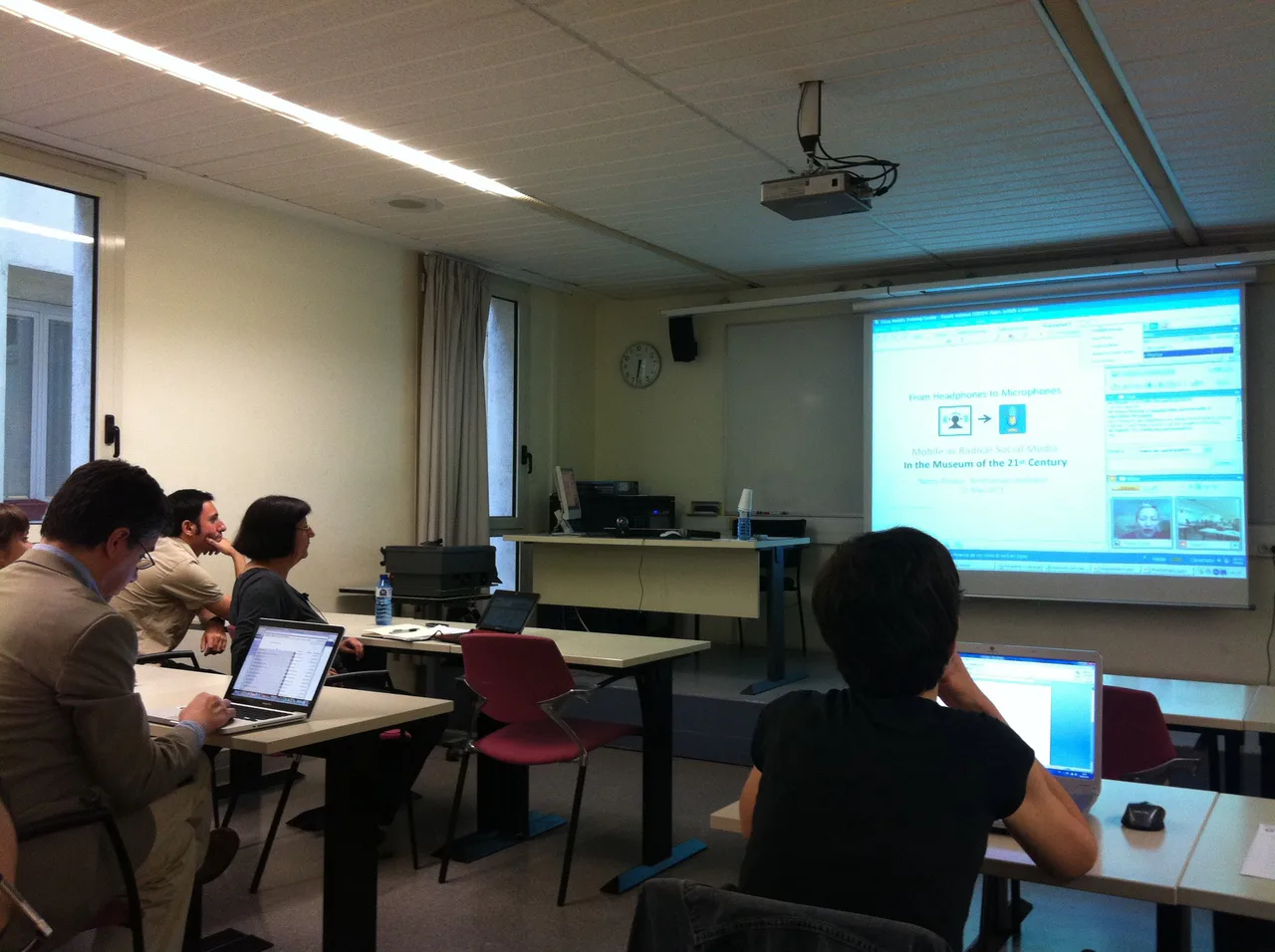
A webinar asks for time before asking for a commercial decision. Its cost is justified when live delivery clarifies an uncertainty a stable answer cannot serve equally well and continuation preserves that question. Registering people without defining what they receive confuses an educational audience with opportunities the team does not yet understand.
The session’s promise identifies what participants can decide afterward: compare conditions, recognize a dependency or prepare a task. That usefulness is delivered without purchase. Commercial continuation is relevant to people with compatible needs who choose to proceed; attendance, downloading and opening a message do not establish that commitment.
Webinars are a used format rather than guaranteed demand
In the August 2025 Orbit Media survey published through Statista, 32% of 808 content professionals had published webinars in the preceding 12 months. Interviews received 42%, and long-form guides 51%. The chart describes stated production choices rather than event attendance or sales rates.
Orbit Media 2025: three formats capable of explaining a decision
808 content professionals, online survey in August 2025 about formats published in the preceding 12 months.
Tap or hover for details. All values are also available in the data table.
Collapse notes
Orbit Media / Statista. Multiple responses must not be added. Recruitment frame and country distribution are unpublished in available evidence. The original link now offers the 2026 edition, N 1,042, rather than retroactively completing 2025, N 808. This does not measure webinar effectiveness, costs, attendees or opportunities.
Explore the data table
| Category | Had published the format |
|---|---|
| Webinars | 32.0% |
| Interviews | 42.0% |
| Long-form guides and e-books | 51.0% |
The comparison requires justifying live delivery against other explanations. A short answer requiring no exchange can be provided on a page with less preparation and attendance effort. When several conditions interact or seeing a process and asking questions helps, the session can contribute different work. Duration follows that question rather than filling a scheduled hour.
The explanation should serve evaluators as well as product users
In the US in 2025, Edelman and LinkedIn asked internal RFP decision-makers about final vendor-choice criteria. Statista records 85% rating business-needs understanding very or moderately important and 76% rating understanding industry trends similarly. These are attitudes within a buying subgroup rather than webinar-attendee opinions.
Edelman / LinkedIn 2025: three vendor-choice criteria in a B2B subgroup
Hidden decision-makers with final RFP authority, United States. Online survey March 17–April 3, 2025.
Tap or hover for details. All values are also available in the data table.
Collapse notes
Edelman / LinkedIn / Statista. Original p. 4–5 defines roles and total sample N 1,934; p. 22 confirms question and four-point scale, top 2. Exact subgroup N is unpublished. This does not measure webinar attendance, conversion or effects. Criteria must not be added or interpreted as intent to hire the presented offer.
Explore the data table
| Category | Very or moderately important |
|---|---|
| Understand business needs | 85.0% |
| Understand industry trends | 76.0% |
| Be a relevant expert | 74.0% |
The editorial consequence is explaining a decision with costs and limits as well as demonstrating capability. A criterion may need sharing with somebody approving budget or checking compatibility. Material should retain meaning outside the session. The Edelman study includes webinars in its definition of public thought leadership provided free or after registration; access is not acceptance of a paid service.
Invitation and access preserve the same promise
The invitation states question, audience, preparation, language, duration and subsequent availability. It discloses any offer presentation. Confirmation provides time, access and help without turning registration into an indefinite promotional sequence. Information needed for the promised event remains separate from optional qualification questions.
The W3C guidance on accessible events and presentations recommends describing relevant visual information and preparing accessible materials. A chart needs units and an oral explanation of its comparison; learning also needs consultation independent of a screenshot. Accessibility belongs in preparation and its costs.
The W3C remote-meeting guidance distinguishes platform features, content and organizational and participant practices. Selecting a tool does not establish accessibility of the whole session. Entry, audio, questions and materials require attention a presenter cannot improvise while explaining.
Continuation responds to each participant’s actual state
Attendees may want review; absentees first need access to the explanation. Messaging does not claim both saw the demonstration. Promised material is delivered without requiring another commercial decision. A guide, a conversation about a need and support for an active customer are different paths rather than equivalent new sales.
Individual questions can require information unsuitable for public disclosure. The explanation preserves the general condition, and an explicitly chosen assessment begins from the authorized need. Entire conversations are not transferred, and voices, questions or images are not reused as commercial evidence without relevant authorization.
Follow-up ends when the need disappears, a negative answer arrives or an applicable preference changes. Several owners do not repeat invitations across channels. Pending answers remain pending until verified; recording and materials receive a correction beside the affected passage.
Commercial outcomes retain population, window and total work
Valid registrations, actual access and compatible requests are different units. Attendance divides defined accesses by eligible registrations; qualified opportunity requires compatible need, the ability to serve it and willingness to proceed, using the same criteria for attendees, absentees and later readers. Several interactions within one decision do not create several opportunities.
Costs include preparation, production, accessibility, coordination and subsequent attention within a declared scope. The window allows the buying process time and retains pending work. Buying after attendance does not establish causal effect: attendees may have had stronger prior intent. Reporting describes observed association rather than assigning every journey sale to the session.
Review asks what information was missing and which continuation the operation could serve. It can correct the invitation, narrow scope, create a stable resource or retire an outdated session. Repetition merits funding when it delivers a recognizable answer and subsequent work preserves usefulness, including for people who learned enough to proceed independently.
In this article

Marian Vasile
Marian Vasile is a MarTech and growth professional. His work spans product marketing, SEO, paid advertising and deep online tracking, including behavioral analytics and attribution.